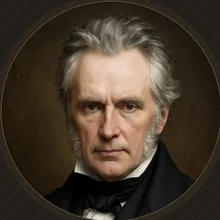
English edition in progress. Some sections are still available only in French. Lire en français
New Ask your questions about the Bible and get answers that cite their sources (assistant in French). Freely I have received, freely I give Try it

Where Do Our Protestant Churches Come From?

A story of lineages, revivals, debates and faith.

From the first witnesses to today’s Protestant families, a visual journey to understand their origins, their differences and their shared heritage.

A question about the Bible?

Free · Continue your search in the assistant (in French).

Before entering the story

Understanding the project and choosing your path

This introduction sets out my intention, a few pointers for reading, the biblical thread that guides the narrative, and the caution needed when reading its historical lineages.

Foreword

Why this site

I am an evangelical Protestant and, for a long time, I found it hard to place my own church in history. Where does it come from? Which are its “cousins”? Why are there so many different names for churches that nonetheless share the same faith in Jesus Christ?

There is no shortage of books on the subject, but they are often dense, sometimes dated, and rarely written for the general public. So I wanted to bring together in one place, free of charge and in clear language, the essentials for understanding where the Protestant churches come from, what sets them apart and what unites them.

This site is the guide I would have liked to find.

It is written for Catholics or non-believers who wonder what the word “Protestant” means, as much as for believers who know the Bible but still know little of the history of their church.

Each of these churches has its own collective memory, shaped by persecutions, spiritual revivals, debates and divisions,but also by the faith and courage of men and women who wanted to put the Bible into everyone’s hands, to translate it into every language, and to let everyone read and study it.To tell this story is to pass on their memory and to honour the witness they left us.

If this site encourages someone to open the Bible, understand this faith better, or step inside a church, it will have fully achieved its purpose.

This journey is meant to be corrected and enriched: if you notice an error or an omission, let me know.

The guiding thread

Nearly twenty centuries to fulfil a promise

The journey begins in the 1st century with seven preparatory milestones; the detailed timeline of the Protestant families begins in 1170 with Peter Waldo. Around the year 33, the risen Jesus entrusts his disciples with a mission. The Waldensians, the Reformation, the revivals and today’s evangelical churches then take their place in this story, each in their own way and in their own time. That is the thread to keep hold of as you travel through the 49 pages.

(BSB)

“All authority in heaven and on earth has been given to Me. Therefore go and make disciples of all nations, baptizing them in the name of the Father and of the Son and of the Holy Spirit, and teaching them to obey all that I have commanded you. And surely I am with you always, even to the end of the age.”

(BSB)

But you will receive power when the Holy Spirit comes upon you, and you will be My witnesses in Jerusalem, and in all Judea and Samaria, and to the ends of the earth.”

About . This verse belongs to the longer ending of Mark (16:9-20), received in the tradition of many churches but absent from some ancient manuscripts; several modern translations flag this. It is mentioned here in full transparency, alongside and, and not as the sole foundation of the missionary mandate.

Seven milestones before the timeline

Between Pentecost and Peter Waldo, the promise did not wait: the gospel had already crossed the Roman Empire, Gaul, the British Isles, Germania and the Slavic world.

1st century → 1170
c. 33 Jerusalem Pentecost: the promise of begins to be fulfilled.
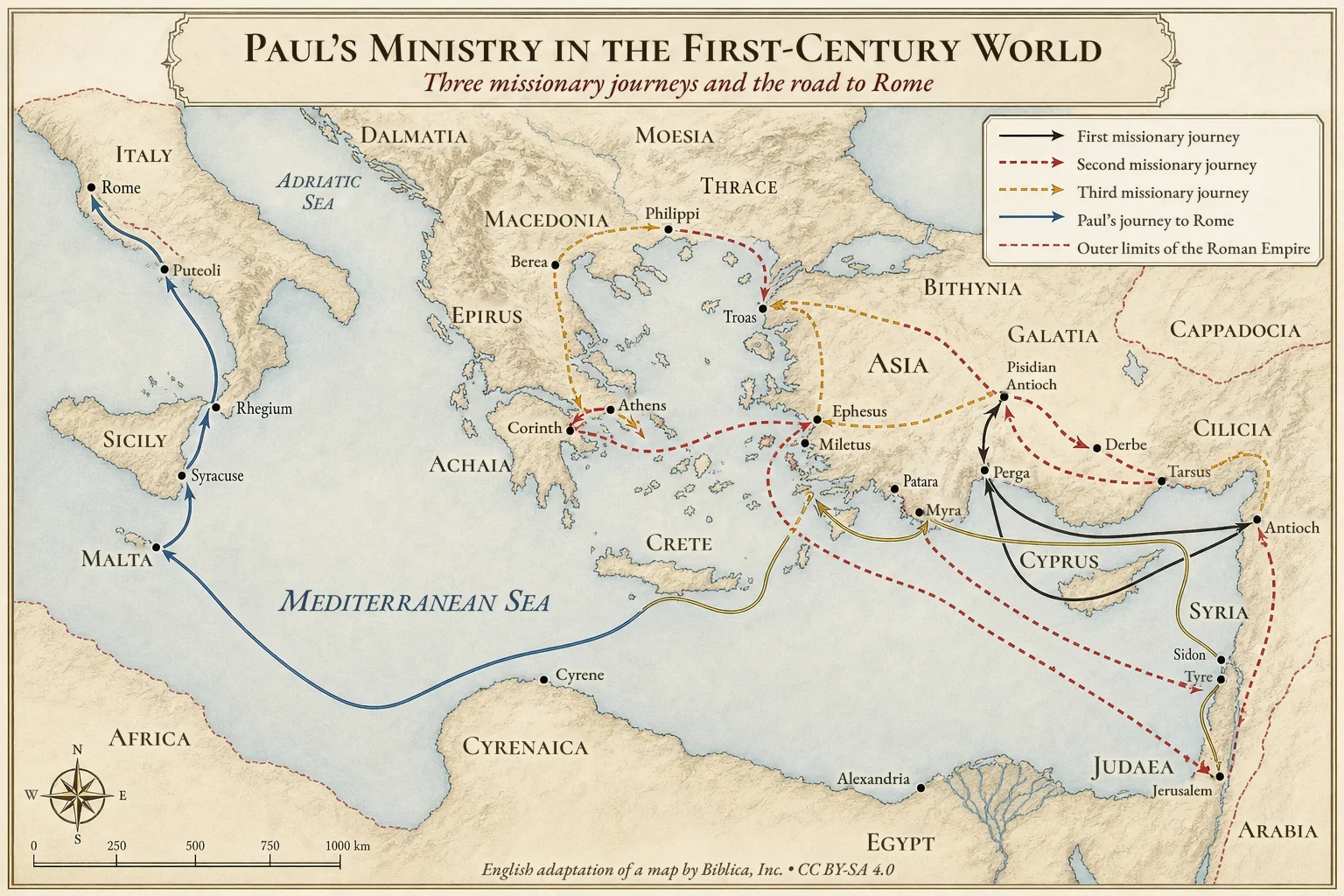
c. 50-60 Mediterranean Paul’s journeys carry the gospel from Antioch to Rome.
177 Lyon The martyrs of Lyon: one of the earliest attested communities in Gaul.
325 · 381 Nicaea, Constantinople In 325 Nicaea affirms the full deity of the Son; the creed adopted at Nicaea is expanded and refined at Constantinople in 381. It becomes the main shared Trinitarian reference point.
597-723 Canterbury, Germania Augustine evangelises England, Boniface the Germanic lands.
863 Moravia Cyril and Methodius translate the Scriptures into the Slavic tongue.
c. 1170 Lyon Peter Waldo: the detailed timeline begins here.

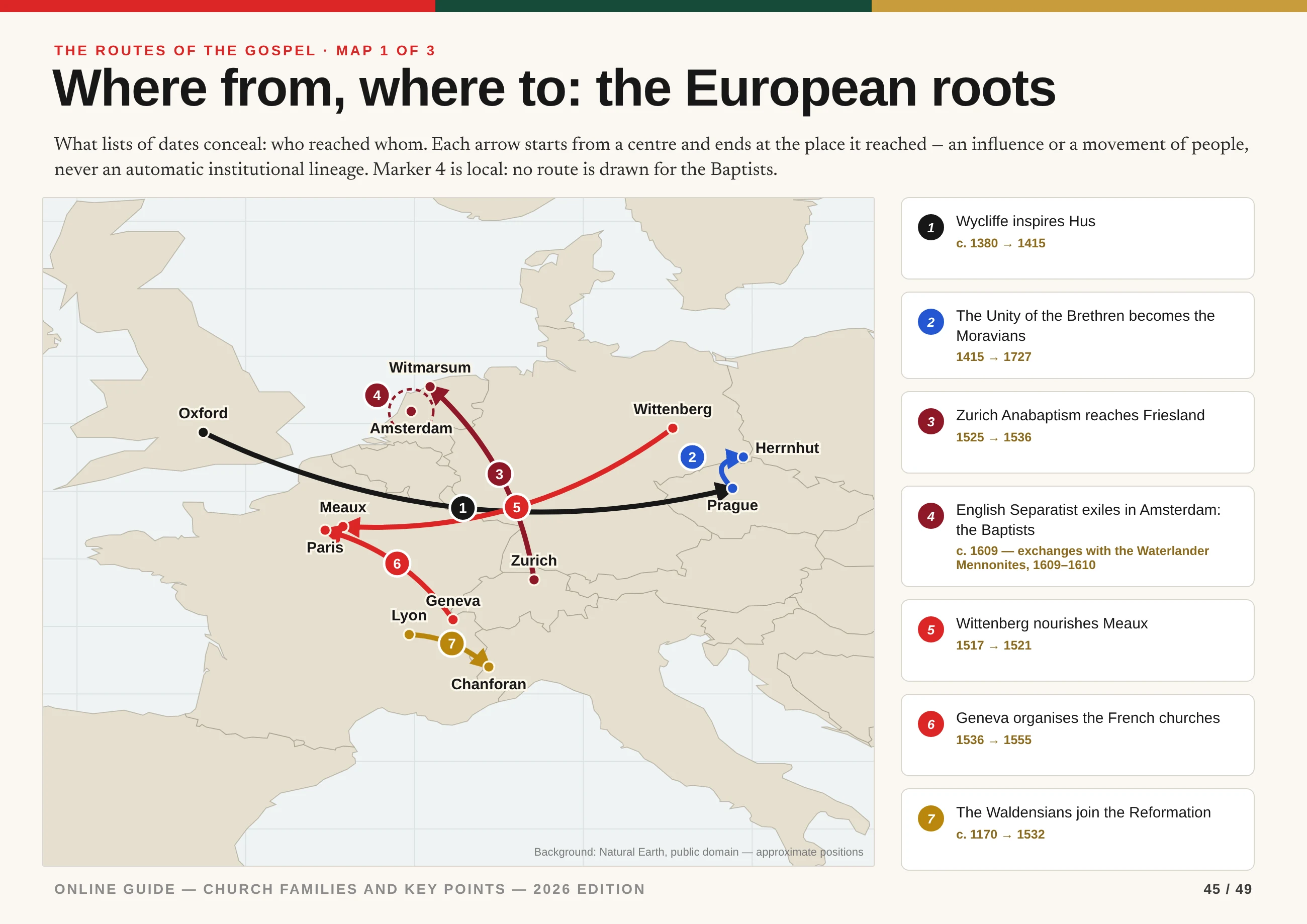
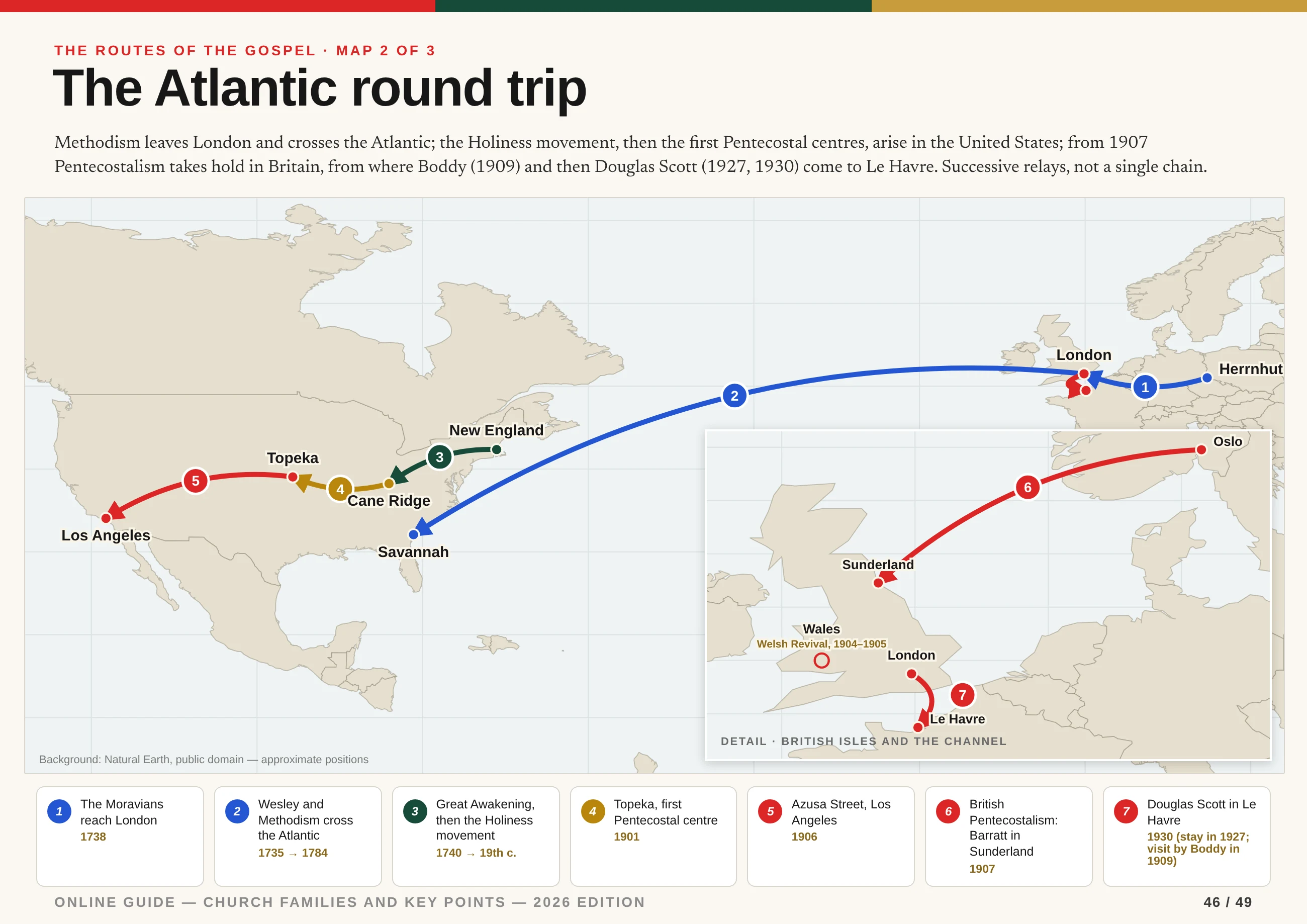
Pictured, the second milestone, the first fulfilment of the promise: over three missionary journeys, then a final journey to Rome as a prisoner, Paul helps to found churches from Syria to Italy. His routes are the model for all those that the maps in this guide will follow in turn, from Wittenberg to Yaoundé.

Map of Paul’s ministry in the 1st-century world, showing his three missionary journeys and his route to Rome
Modern cartographic reconstruction based on the map “Paul’s Journeys” (no. 18) of the Open Bible Maps by Biblica, Inc. (© 2023–2026), licensed under CC BY-SA 4.0. Changes: map redrawn (style, colours, typography), title and labels adapted, and an English adaptation with the title, key and place names translated; the adapted map is shared under the same licence. The original work by Biblica, Inc. is available for free at www.biblica.com and open.bible.

A detail that says it all: the same city, Lyon, sees the first martyrs of Gaul in 177 and the first Waldensians a thousand years later. Nothing ever starts again from scratch.

Three and a half centuries separate Waldo from Wittenberg. What the forerunners had carried, sometimes at the cost of their lives, Luther, Zwingli and Calvin would secure on the scale of whole peoples.

The fathers of Protestantism

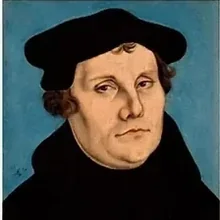
Martin Luther1483-1546Read his page
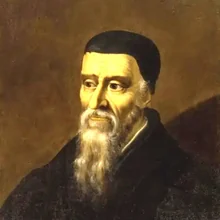
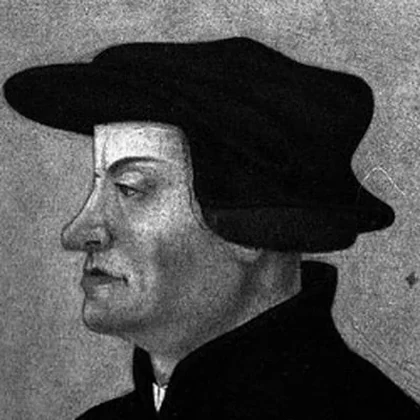
Ulrich Zwingli1484-1531Read his page
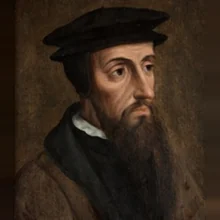
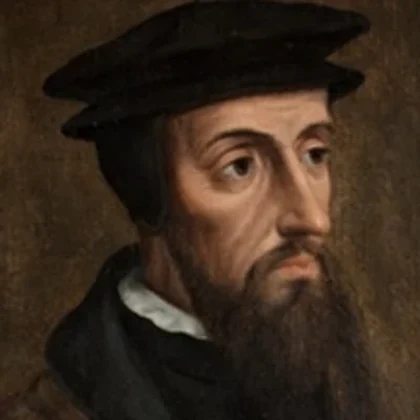
John Calvin1509-1564Read his page

What Luther, Zwingli and Calvin did

Three men, three countries, one conviction: Scripture before the institution. Within a quarter of a century, they turned an internal protest within the Roman Church into organised churches, each with a confession of faith, a liturgy and trained pastors.

Martin Luther

1483-1546 · Wittenberg, Saxony

Augustinian monk and professor of theology. On 31 October 1517 his Ninety-five Theses challenge the trade in indulgences; the printing press spreads them across Europe within a few weeks. Summoned to recant before the emperor at the Diet of Worms in 1521, he refuses. In hiding at the Wartburg, he translates the New Testament into German (1522), then the whole Bible (1534). German translations already existed, but the clarity and exceptional circulation of his greatly widened direct access to the biblical text. His discovery fits in one sentence — salvation is received by faith, as a gift, not earned by works.

From him come the Lutheran churches.

Ulrich Zwingli

1484-1531 · Zurich

Priest and preacher at the Grossmünster from 1519, he expounds Scripture book by book, from the first verse to the last, and has removed from worship whatever the Bible does not prescribe: images, organs, the Mass. More radical than Luther on some points, he breaks with him at the Marburg Colloquy in 1529: for Zwingli, the Lord’s Supper is a memorial and not a real presence. He dies at the Battle of Kappel in 1531.

From him comes the Swiss Reformed branch. In Zurich, several of those close to him — Conrad Grebel, Felix Manz — judging the reform too slow, break with him over infant baptism and baptise adults from 1525: this circle is one of the first organised centres of Anabaptism.

John Calvin

1509-1564 · Noyon, then Geneva

A Frenchman, trained as a lawyer, exiled for his faith. In 1536, at twenty-six, he publishes the Institutes of the Christian Religion, the first comprehensive exposition of the Reformed faith; he will translate it into French himself in 1541, making his language a language of theology. In Geneva he gives the church a lasting organisation — pastors, teachers, elders, deacons — and in 1559 founds an Academy that will train pastors for the whole of Europe, many of whom will go back to evangelise France at the risk of their lives.

From him come the Reformed churches, including the French Huguenots.

None of the three was seeking to found a denomination in today’s sense. The break with the Catholic Church nevertheless took different forms: Luther’s excommunication in 1521, the gradual civic adoption of the Reformation in Zurich, Calvin’s separation from the Catholic Church in 1534. The families described in this guide arise from this movement — most often after their deaths, sometimes in disagreement with them, always claiming the same authority: that of Scripture.

Three reference points to keep your bearings

The “magisterial” Reformation (Luther, Calvin, Anglicanism) reforms territorial churches, supported by the civil authorities: church membership goes hand in hand with territory and infant baptism. The “radical” Reformation (the Anabaptists, 1525) gives the church of professing believers a lasting institutional form in the 16th century: one enters it through personal faith, marked by believers’ baptism. The revivals (Pietism, Methodism, the Geneva Réveil (the 19th-century revival), Pentecostalism) periodically rekindle the flame of personal conversion within both models. Present-day French evangelicalism was born of the meeting of these three currents.

These three reference points — two models of church (territorial, and of professing believers) and one phenomenon that runs through both (the revivals) — are enough to read the whole timeline. Here is why they are needed.

Four pitfalls to avoid

Four pitfalls recur in any history of Protestantism. Knowing them in advance is usually enough to avoid them.

  1. Words change their meaning. In 1520 “evangelical” meant “faithful to the gospel”, and so Lutheran; today it names a family of churches. “Reformed” refers both to the 16th-century movement and to a present-day French denomination. The glossary of terms clarifies the meaning in each context.
  2. Lineages do not form a tree. The families borrow from one another: Methodism nourishes Pentecostalism, which then returns to Reformed churches through the charismatic renewal. Hence the first reference point: think in terms of two models of church rather than separate branches.
  3. Revivals come back. Pietism, Methodism, the Geneva Réveil, Azusa Street: the same impulse resurfaces across four centuries. Hence the third reference point: a revival is not a new family but a phenomenon that runs through the existing families.
  4. Many names, many acronyms. Twenty-four figures and some twenty acronyms appear throughout the guide. The gallery of faces (pages 12 to 16) and the glossary are there so that they are not confused.

Two pitfalls concern vocabulary, two the way we picture history: the glossary answers the first, the three reference points the second.

Colour code of the families

  • General history, civil powerPeter Waldo, Wycliffe, Jan Hus
  • Reformed and Lutherans (Huguenots)John Calvin, Antoine Court
  • Anabaptists, Mennonites, BaptistsMenno Simons, John Smyth
  • Free Evangelical Churches and Brethren assembliesFrédéric Monod, J. N. Darby
  • Moravians, Methodists, revivalsJohn Wesley, Robert Haldane
  • Pentecostals and charismaticsDouglas Scott, Clément Le Cossec
  • Shared structuresFPF 1905, CNEF 2010
  • Millerism and AdventismWilliam Miller, Ellen White
The colour code of the eight families, shown in large format on page 11. Click on a portrait to open the page of the corresponding family.
Animation · at a glance

The timeline in motion

Eight coloured threads organise the historical milestones of the journey. The turquoise thread groups traditions that share baptism on profession of faith; it does not represent a single lineage between them. The nine pages that follow tell the story of this picture in detail.

The drawing starts when the timeline comes into view — page 1 is the reference.

The timeline: from the forerunners to the CNEF

Each family follows its own coloured thread; the grey thread carries general history and civil power. On the left: the date, the place and the face of the figure concerned. In the centre, each thread begins at its family’s first event and runs to its last; a dot marks the event, and the heading takes up the family’s colour.

  1. c. 1170LyonPeter Waldo — Later depiction: no contemporary portrait is known

    general history and civil power — Peter Waldo and the Waldensians

    A wealthy merchant of Lyon gives away his goods and preaches the gospel in the language of the people. Excommunicated in 1184, the “Poor of Lyon” survive for three centuries in the Alpine valleys — and will join the Reformation at the Synod of Chanforan (1532).

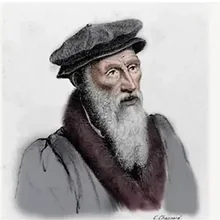
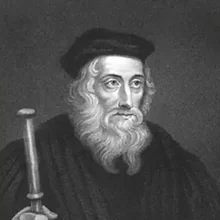
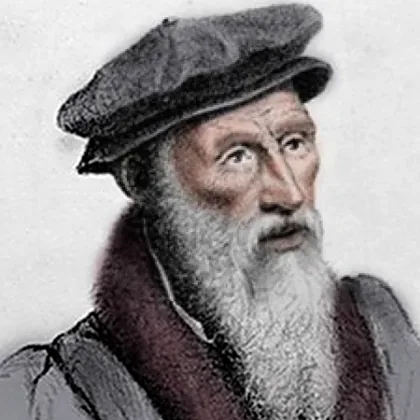
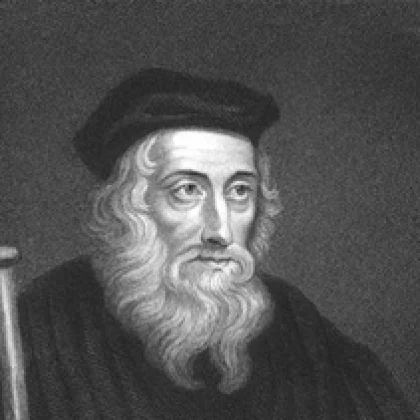
  2. c. 1380OxfordJohn Wycliffe — Later depiction: no contemporary portrait is known

    general history and civil power — John Wycliffe

    The Oxford theologian places Scripture above the pope and launches the first complete translation of the Bible into English, completed after his death by those close to him. His followers, the Lollards, persecuted, will survive underground until the Reformation.

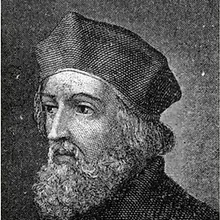
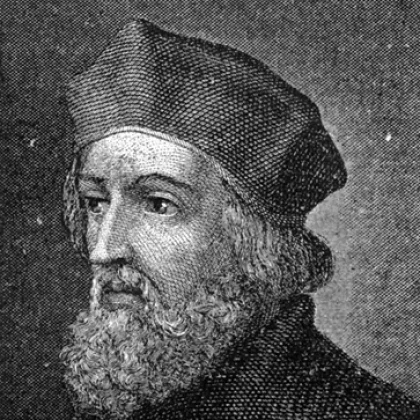
  3. 1415ConstanceJan Hus — Later depiction: no contemporary portrait is known

    general history and civil power — Jan Hus at the stake

    Having come to the council with an imperial safe-conduct that would not be honoured, the Prague preacher, a disciple of Wycliffe, is burned on 6 July 1415. His followers will found the Unity of the Brethren in 1457 — from which the Moravian Brethren descend.

Online guide · timeline · 2026 edition1 / 49

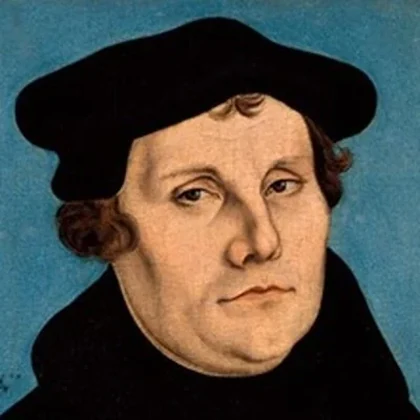
  1. 1517WittenbergPortrait of Martin Luther

    Lutheran Reformation — Luther’s 95 Theses

    An Augustinian monk challenges the trade in indulgences; the printing press spreads the text across Europe within a few weeks. Excommunicated in 1521, Luther translates the New Testament at the Wartburg in eleven weeks: the people can read Scripture in their own language.

  2. 1521Meaux

    Reformed — The Meaux circle

    Around Bishop Briçonnet, Lefèvre d’Étaples translates the New Testament into French (1523). The first dawn of the gospel movement in France; repression follows from 1523 with the first French martyr, Jean Vallière, burned in Paris.

  3. 1525Zurich

    Anabaptists and Baptists — The birth of Anabaptism

    On 21 January 1525, Grebel and Manz baptise adults on profession of faith: a break with the state church. Zurich is one of the first centres of Anabaptism. The Mennonite and Baptist traditions share baptism on profession of faith, but their historical trajectories are distinct: the first Baptists emerged from English Separatist circles.

  4. 1532Chanforan, PiedmontGuillaume Farel — Anonymous 16th-century portrait (Bibliothèque de Genève); attribution unconfirmed

    Reformed — The Waldensians join the Reformation

    Guillaume Farel, the evangelist of French-speaking Switzerland, persuades the Synod of Chanforan that the heirs of Peter Waldo should join the Reformation and fund the first French Bible translated from the Hebrew and Greek — Olivétan’s, printed in Neuchâtel in 1535. Four years after Chanforan, it is Farel who will keep Calvin in Geneva.

  5. 1534 · 1559London

    English institutional marker — The English Reformation

    In 1534 the Act of Supremacy makes Henry VIII head of the Church of England: an institutional break with Rome, without major doctrinal change. The doctrinal and liturgical transformations come later — the Book of Common Prayer (1549), the Elizabethan Settlement (1559), the Thirty-nine Articles (1563-1571). The first Baptists emerged at the beginning of the 17th century from English Separatist circles. Methodism, for its part, was born in the 18th century as a revival movement within the Church of England. This grey marker sets the institutional context of the English Reformation; the Anglican family is presented on its own page.

  6. 1536Basel, then GenevaPortrait of John Calvin

    Reformed — Calvin publishes the Institutes

    Exiled after the Affair of the Placards (1534) and the repression that followed, Calvin publishes in Basel the Institutes of the Christian Religion: the French-speaking Reformation has its theology. Geneva becomes the hub of French Protestantism.

Online guide · timeline · 2026 edition2 / 49

  1. 1555Paris

    Reformed — The Reformed churches organise

    After a first properly constituted church in Meaux around 1546, Paris acquires a pastor, elders and deacons in 1555; other churches follow. In 1559 the first national synod adopts a common confession of faith — ratified at La Rochelle in 1571 — and a presbyterian-synodal discipline. On the eve of the Wars of Religion there would be between 1,200 and 2,000 Reformed churches, depending on the sources: this is the Huguenot people.

  2. 1572Paris

    general history and civil power — The St Bartholomew’s Day Massacre

    After ten years of civil wars opened by the massacre of Wassy (1562), thousands of Huguenots are massacred in Paris and in the provinces. French Protestantism will never fully recover demographically.

  3. 1598Nantes

    general history and civil power — The Edict of Nantes

    Henry IV grants the Reformed freedom of conscience, worship authorised place by place, access to public offices and fortified towns of refuge. Declared “perpetual and irrevocable”, this peace settlement remains a concession from the king — and what one king grants, another can take back.

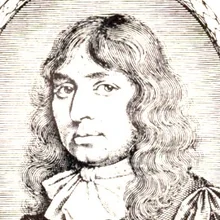
  4. 1609AmsterdamJohn Smyth — Attribution unconfirmed; image used for illustration

    Anabaptists and Baptists — The first Baptist church

    John Smyth, an English Separatist exiled in Amsterdam, baptises himself and then his congregation — probably at the beginning of 1609 —: believers’ baptism and a Reformed heritage. In the months that follow, exchanges with the Mennonites of the city transform his theology and lead him to seek admission among them. Helwys and a minority refuse this union and pursue a distinct Baptist path: back in London in 1612, Helwys founds the first Baptist church in England there and calls for freedom of conscience for all.

  5. 1685Fontainebleau

    general history and civil power — The Revocation of the Edict of Nantes

    Louis XIV outlaws Protestantism: churches razed, pastors banished, children forcibly baptised. Some 200,000 Huguenots leave for Switzerland, the United Provinces, Prussia and England — this is the Refuge; those who stay pray in secret, at the risk of being sentenced to the galleys.

Side note: Meaux, around 1546 — the first properly constituted Reformed church in the kingdom, on the Strasbourg model.

Online guide · timeline · 2026 edition3 / 49

  1. 1715Les Montèzes, CévennesAntoine Court — No portrait of Antoine Court has been found: his initials take the place of a face

    Reformed — The “Desert”: Antoine Court

    Antoine Court, aged twenty, convenes the first clandestine synod, thirteen years after the armed revolt of the Camisards (1702-1710). For seventy years, the churches “of the Desert” hold worship in the scrubland, at the risk of their pastors’ lives.

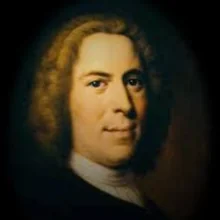
  2. 1727Herrnhut, SaxonyPortrait of Nikolaus von Zinzendorf

    revivals and Methodism — The Moravian revival

    Heirs of Jan Hus, given refuge by Count Zinzendorf, experience on 13 August 1727 a revival that reconciles them. They launch a chain of prayer kept up day and night for a hundred years and, from 1732, send out their first missionaries — to the West Indies, then to Greenland.

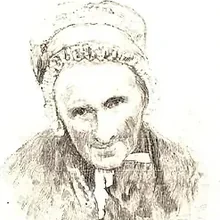
  3. 1730Aigues-MortesMarie Durand — Image of unknown origin, used for illustration; no contemporary portrait has been found

    Reformed — The Tower of Constance: Marie Durand

    Imprisoned at nineteen because she is the sister of a pastor of the Desert, Marie Durand refuses to abjure and spends thirty-eight years in the tower of Aigues-Mortes. The word carved into the well-curb is usually transcribed “REGISTER”, an Occitan form of “résister” (resist); “resister” is a modernised reading of it. Traditionally attributed to the women held captive there, this carving cannot be attributed with certainty to Marie Durand herself.

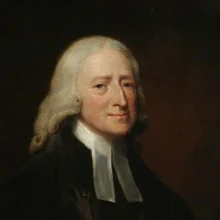
  4. 1738LondonPortrait of John Wesley

    revivals and Methodism — John Wesley’s conversion

    Through contact with the Moravians, Wesley feels his heart “strangely warmed” on 24 May 1738, at Aldersgate Street, during a reading of Luther’s preface to the Epistle to the Romans. This experience gives a decisive evangelical impetus to the Methodist movement, already begun at Oxford in 1729: open-air preaching, small groups, practical holiness and the hymns of his brother Charles.

  5. 1740New England

    revivals and Methodism — The Great Awakening

    Whitefield preaches in the open air to immense crowds; Jonathan Edwards writes to distinguish true conversion from mere excitement. The revival cuts across all the denominations: it is the matrix of modern evangelicalism.

Online guide · timeline · 2026 edition4 / 49

  1. 1787Versailles

    general history and civil power — The Edict of Toleration

    Louis XVI restores civil status to Protestants — legal recognition of births, marriages and deaths — but not yet freedom of worship: that will come with the Declaration of Rights of 1789. The Organic Articles (1802) will then organise the Reformed and Lutheran churches.

  2. 1791Normandy

    revivals and Methodism — Methodism arrives in France

    William Mahy, a native of Guernsey, is sent to the Continent: the Methodist Conference of 1791 enters “France” in its records. From Normandy the movement will spread to the South; a French Methodist union will take shape in the 19th century.

  3. 1810Nomain, Nord

    Anabaptists and Baptists — The first French Baptists

    A rural revival spreads through the Nord; the evangelist Henri Pyt, who came out of the Geneva Réveil (the revival of the 1810s–1820s), settles there in 1819, and around 1820 the first Baptist church in France is born. American missions will later come to support the movement.

  4. 1817GenevaPortrait of Robert Haldane

    revivals and Methodism — The Geneva Réveil

    Under the impetus of the Scotsman Robert Haldane, who reads the Epistle to the Romans with them, César Malan, Frédéric Monod and Merle d’Aubigné receive a decisive impulse. Adolphe Monod later becomes a major French figure of the Réveil, without belonging to the same first Genevan circle. Conversion and the authority of Scripture lie at the heart of this renewal, which spreads to the churches of France.

  5. 1832Plymouth, then SwitzerlandPortrait of John Nelson Darby

    Brethren and Free Evangelical Churches — John Darby and the “Brethren”

    The “Brethren” movement, born in Dublin and then in Plymouth, preaches a church without clergy, gathered around the Lord’s Supper. J. N. Darby, a former minister of the (Anglican) Church of Ireland, will carry it to French-speaking Switzerland from 1837, from where it will spread to the Ardèche, the Drôme and the South of France.

Online guide · timeline · 2026 edition5 / 49

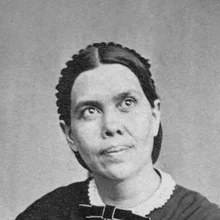
  1. 1844United StatesPortrait of Ellen White

    Millerism and Adventism — The Millerite “Great Disappointment”

    The Baptist preacher William Miller announces Christ’s return for 1843-1844; his followers will later fix the date of 22 October 1844. The expectation fails; from the fragmented movement emerge the Seventh-day Adventists (Ellen White) — and the soil from which the Jehovah’s Witnesses will later spring.

  2. 1848British Isles

    Brethren and Free Evangelical Churches — “Exclusive” and “Open” Brethren

    The Brethren movement divides: the “exclusive” Darbyites refuse all communion with other churches; the “open” Brethren, around George Müller in Bristol, accept cooperation. It is from the open stream, through varied paths in France, that the CAEF will be born; the assemblies that follow Darby in the separation of 1848 belong to the exclusive stream.

  3. 1849ParisPortrait of Frédéric Monod

    Brethren and Free Evangelical Churches — Union of Free Evangelical Churches

    At the synod of 1848 the Reformed Church refuses to adopt a confession of faith; Frédéric Monod and Agénor de Gasparin leave it for churches of professing believers, free from the state and its stipend. These are the “libristes” — today’s UEEL.

  4. 1879 → 1931Pittsburgh, Columbus

    Outside the common trunk

    outside the common trunk — From the Bible Students to the Jehovah’s Witnesses

    Arising from part of Charles T. Russell’s Bible Students (1879), Joseph Rutherford’s movement takes the name Jehovah’s Witnesses in 1931. It does not claim to be Protestant, and Protestantism does not recognise it.

    Read the comparative appendix →

  5. 1905Paris

    shared structures — Separation of the Churches and the State

    The law ends the system of officially recognised religions: the churches lose their state stipend and gain the freedom to organise themselves. The same year sees the birth of the Protestant Federation of France (FPF), which will gradually bring together many families, without uniting them all.

Online guide · timeline · 2026 edition6 / 49

  1. 1904-1905Wales

    Pentecostals and charismatics — The Welsh Revival

    Around the young Evan Roberts, a revival of prayer and conversions spreads through the mining valleys of Wales and leaves a lasting mark on British Christianity, from which several Pentecostal preachers active in France will come. Pentecostalism gains a foothold in Britain from 1907 (Sunderland, around Alexander Boddy); Boddy visits Le Havre in 1909, and it is from this British milieu that Douglas Scott will come, in 1927 and then in 1930.

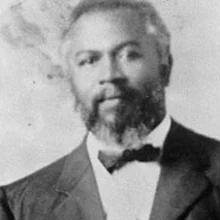
  2. 1906Los AngelesPortrait of William Seymour

    Pentecostals and charismatics — Azusa Street: Pentecostalism

    In an old building on Azusa Street, the Black preacher William Seymour leads a revival marked by the baptism in the Holy Spirit and speaking in tongues, where white and Black people pray together in the midst of segregation. Arising from the Holiness movement — itself a child of Methodism — it will reach the whole world within a generation. Its echo reaches Northern Europe and Britain from 1907; France will later receive British preachers.

  3. 1909Le Havre, Paris

    Pentecostals and charismatics — The first Pentecostal centres in France

    The mission opened in 1887 among the Bretons of Le Havre, in a Methodist, Baptist and Reformed setting, officially becomes a Pentecostal centre around Hélène Biolley, François-Marie Le Quéré, Jacques Chaumet and Félix Gallice. The same year, a Pentecostal centre is officially established in Paris around Michel Mast: some thirty members at first.

  4. 1921Nogent-sur-MarnePortrait of Ruben Saillens

    Anabaptists and Baptists — The Nogent Bible Institute

    Ruben Saillens, a Baptist pastor and preacher of the Réveil, opens a Bible institute where, for a century, pastors from almost every French evangelical family will be trained. Forty years before Vaux-sur-Seine, training is already the first common ground.

  5. 1930Le Havre, RouenPortrait of Douglas Scott

    Pentecostals and charismatics — Douglas Scott in France

    Having come to learn French before leaving for the Congo, the British preacher Douglas Scott is welcomed in Le Havre by Hélène Biolley, who runs the Ruban Bleu temperance café there. His ministry of evangelism and healing spurs the growth of French Pentecostalism: very soon some 800 people from all over France, including Protestant theologians, crowd into Le Havre.

  6. 1932-1933France

    Pentecostals and charismatics — The birth of the Assemblies of God of France

    The Assemblies of God organise: a first convention, a common confession of faith, a journal. Eight churches in 1933, some thirty in 1941 — today one of the main evangelical unions in France.

Side note: Topeka, 1901 (Kansas).

Online guide · timeline · 2026 edition7 / 49

  1. 1938France, the South

    Reformed — Reformed reunification — and the UNEPREF

    The French Reformed churches unite in a single church. Some of the churches of the South refuse a union without a binding confession of faith: they form an independent Evangelical Reformed union, today the UNEPREF.

  2. 1950-1952Lisieux, BrestPortrait of Clément Le Cossec

    Pentecostals and charismatics — The Gypsy revival: Vie et Lumière

    The first signs go back to 1950, in Lisieux, in A. Gichtenaere’s Assembly of God: after a healing experienced as a miracle, the first Gypsies are converted. In 1952, in Brest, the Breton pastor Clément Le Cossec sees a genuine revival arise among them; in November 1954, a thousand Gypsies gather there for baptisms on the shore. The mission is founded on 28 December 1957 under the name “La Délivrance”; its general assembly adopts the name Vie et Lumière (“Life and Light”) on 26 February 1961. A testimony by Wasso Ferret, cited by the Musée protestant, places a healing in Lisieux in 1951: both dates are found in the sources. (The term “Gypsy” follows the usage of the movement’s historical English-language publications.)

  3. 1957France

    Brethren and Free Evangelical Churches — A wave of church planting

    France Mission, then Perspectives, the CAEF — assemblies descended from the Open Brethren, organised as a union — and many ministries plant churches in towns with no evangelical witness. This milestone brings together several initiatives: France Mission, Perspectives and the CAEF each have their own history.

  4. 1960California, then France

    Pentecostals and charismatics — The charismatic renewal and the “Églises de la diversité”

    An Episcopalian priest in California announces to his parish that he has received the baptism in the Holy Spirit: the charismatic current spreads beyond the Pentecostal churches. In France it meets the churches born of migration — from the French Caribbean, Africa and Asia. The charismatic renewal and these migrations are nevertheless two distinct phenomena, contemporary but independent.

  5. 1965Vaux-sur-Seine

    shared structures — A shared faculty

    The Faculté libre de théologie évangélique (Free Faculty of Evangelical Theology) opens its doors and becomes a major stage in the shared training of Baptists, Free Evangelical Churches, Brethren and Pentecostals. This cooperation has precedents: the Nogent Bible Institute had already been interdenominational since 1921.

  6. 1973Leuenberg, Switzerland

    Lutherans and Reformed — The Leuenberg Agreement

    In the 16th century, disagreement over the Lord’s Supper had notably separated Luther and Zwingli. At Leuenberg, in 1973, the signatory churches affirm that agreement on the gospel makes it possible to move beyond the old doctrinal condemnations. This communion makes possible mutual welcome at the Lord’s Supper and the recognition of ministries.

    An agreement of communion is not yet a merger. Each church keeps its history and its organisation. The process nevertheless opens the way to institutional unions: the UEPAL, in Alsace-Moselle, in 2006, and the EPUdF, in 2013, are two distinct expressions of it. Not all Protestant families are signatories of the Agreement.

    Further reading: Musée protestant — The Leuenberg Agreement (in French) · Musée protestant — The Lutheran and Reformed union in France (in French).

    The Lutherans · The Reformed

  7. 1994Toronto, CanadaPortrait of John and Carol Arnott

    Pentecostals and charismatics — The “Toronto Blessing” and Catch The Fire

    Meetings led by Randy Clark at the Toronto Airport Vineyard open, in 1994, a wave of renewal that draws visitors from all over the world. In December 1995 the Association of Vineyard Churches ends this church’s affiliation. It becomes Toronto Airport Christian Fellowship in 1996, then Catch The Fire Toronto in 2010-2011, at the head of an international neo-charismatic network — present in France, in Lyon, since 2017. A spiritual influence can therefore continue after an institutional tie is broken: Catch The Fire is not a branch of the Vineyard, which is not answerable for its development after 1995.

Online guide · timeline · 2026 edition8 / 49

  1. 2010Paris

    shared structures — The founding of the CNEF

    Founded in June 2010, the Conseil national des évangéliques de France (National Council of French Evangelicals) brings together more than 70% of evangelical Protestant churches — Baptists, Free Evangelical Churches, ADD, CAEF, Methodists, Evangelical Reformed, Vie et Lumière… A historic first.

  2. 2013Lyon

    Reformed — The birth of the EPUdF

    The Reformed Church of France and the Evangelical Lutheran Church of France unite at the synod of Lyon; the UEPAL, in Alsace-Moselle, remains distinct. The Evangelical Reformed (UNEPREF), for their part, remain a separate union, a member of the CNEF.

  3. TodayFrance

    shared structures — A growing landscape

    In August 2026 the CNEF reports 2,530 places of worship, 36 member unions and 173 member associations, and a growing number of new church plants. Eight centuries after Waldo, the question is no longer “Will we survive?” but “Will we be able to remain brothers and sisters?”

Online guide · timeline · 2026 edition9 / 49

What came before us

1st century

“We are all heirs of those who went before us; each in turn receives, examines, reforms and passes on.”

What lies ahead

Today

Eight centuries after Waldo, the question is no longer “Will we survive?” but “Will we be able to remain brothers and sisters?”

End of the timeline

Page 10 / 49A change of focus · the timeline is complete

Wide angle

From the shared history
to the families of churches

From here on, the guide does not start the story again: it moves in closer.

Clarification · the short answer

“Where do our churches come from?” — rarely from a single source. Their identity has been formed in layers: the heritage of the Reformation, an understanding of the church and of baptism, revivals, missionary work, migration, church planting, groupings.

A single congregation can belong to a historical family, receive more recent influences and be a member of a union of churches: these levels complement one another without being confused.

Behind us · what the timeline has shown

The major dates, revivals, migrations, ruptures, unions and the routes by which the Protestant currents developed.

Ahead · what begins now

The leading figures, the families of churches, their own heritages, their differences of status and their meeting points.

1 · Get your bearings

Find the colour

Each family keeps the same colour from one page to the next.

2 · Put a face to a name

Discover the portraits

The gallery presents the people whose names recur in the timeline and in the family stories.

3 · Follow a heritage

Open a church family profile

Each profile traces the present-day family back to its main historical milestones, without reducing its history to a single origin.

Three kinds of link not to be confused

Historical lineage

A person, a revival or a movement contributed, directly or indirectly, to a later development. A historical arrow does not always imply continuity of organisation.

Theological or spiritual closeness

Churches may share convictions, practices or vocabulary without belonging to the same union, the same denomination or the same network.

Institutional link

An official membership, a federative affiliation or a legal succession must be established by statutes, directories or explicit declarations.

The key point: closeness does not mean affiliation.

Next page · a reminder of the families’ colour code10 / 49

Colour code of the families

  • General history, civil powerPeter Waldo, Wycliffe, Jan Hus
  • Reformed and Lutherans (Huguenots)John Calvin, Antoine Court
  • Anabaptists, Mennonites, BaptistsMenno Simons, John Smyth
  • Free Evangelical Churches and Brethren assembliesFrédéric Monod, J. N. Darby
  • Moravians, Methodists, revivalsJohn Wesley, Robert Haldane
  • Pentecostals and charismaticsDouglas Scott, Clément Le Cossec
  • Shared structuresFPF 1905, CNEF 2010
  • Millerism and AdventismWilliam Miller, Ellen White

Understanding the key

What distinguishes the eight coloured threads

These are not eight equivalent denominations: six threads follow families or movements, grey gives the historical context and black links the shared bodies.

Grey · General history

Forerunners, civil powers, persecutions and public freedoms: a contextual marker, not a family of churches. In the origins animation, a dotted grey line, distinct from this solid thread, sets apart the comparative trajectory of the Jehovah’s Witnesses.

Blue · Reformed and Lutherans

The confessional Reformation of the 16th century: biblical authority, preaching and sacraments, with churches that were historically territorial. This model cannot be reduced to the automatic membership of every inhabitant.

Turquoise · Anabaptists, Mennonites, Baptists

Churches of professing believers, and baptism tied to personal faith. The Radical Reformation gave it a lasting Protestant form, without inventing the church of professing believers outright. The Baptists have their own history: kinship is not a single lineage.

Brown · Free Evangelical Churches and Brethren assemblies

Independence and personal commitment draw them together; the Free Evangelical Churches come from the Reformed Réveil, while the Brethren favour a collegial exercise of ministries.

Purple · Moravians, Methodists and revivals

Renewal of lived faith: conversion, holiness, prayer, mission and service. These revivals can run through several families of churches.

Red · Pentecostals and charismatics

Emphasis on the present-day work and gifts of the Holy Spirit. The Pentecostals form churches; the charismatic renewal also runs through existing churches.

Black · Shared structures

The FPF and the CNEF represent their members, link them and help them cooperate: they are neither a doctrine nor a new denomination.

Green · Millerism and Adventism

A 19th-century eschatological movement, from which the Seventh-day Adventists arose. The Jehovah’s Witnesses, born of the same soil, are outside the common trunk: they are presented separately, in a comparative appendix.

Online guide · church families and key points · 2026 edition11 / 49

Medal page · forerunnersTwo coins · obverse

The portrait gallery

Each coin bears, engraved around its rim, the life of the man; the exergue sums up his legacy. Twenty-four figures, chosen among many others: a selection, not an inventory.

Coin I · forerunner

The Poor of Lyon

A Lyon merchant who became an itinerant preacher after having the Scriptures translated into the vernacular. His community will survive persecution and join the Reformation three centuries later.

Life

c. 1140 – c. 1206

Centre

Lyon

Later depiction: no contemporary portrait is known. Sources

Coin II · forerunner

Scripture above the pope

An Oxford theologian, behind the first complete translation of the Bible into English. His writings will circulate as far as Bohemia and nourish the Hussite movement.

Life

c. 1330 – 1384

Centre

Oxford

Later depiction: no contemporary portrait is known. Sources

The word “evangelical”

What it says, and what it does not

The word comes from evangelium, the good news: in the 16th century it simply refers to those who want to return to the gospel. In France, since the 19th century, it has taken on a more precise meaning, that of a Protestantism that stresses four points: the authority of the Bible, the need for personal conversion, the centrality of the cross, and commitment to witness and service.

It is therefore neither a denomination nor an American import: it is a sensibility that runs through very different families — several of which were born in France or Switzerland long before any influence from the United States. And the adjective “evangelical” is not opposed to “Protestant”: it refers to part of it.

These two men come before the Reformation. They are not called “evangelicals” in today’s sense: the word took on its meaning much later. Striking their portraits on these medallions expresses a shared commitment to accessible Scripture and its primacy, without implying a direct institutional lineage.

Online guide · church families and key points · 2026 edition12 / 49

Medal page · forerunners and ReformersSix coins · obverse

The portrait gallery

Second page: from Prague to the Cévennes, those who gave the Reformation its theology, its churches of professing believers and its revivals.

Coin I · forerunner

The Unity of the Brethren

Preacher at the Bethlehem Chapel in Prague and a disciple of Wycliffe, he is burned at Constance in 1415 despite an imperial safe-conduct. His followers will found the Unity of the Brethren in 1457, from which the Moravian Brethren descend.

Life

c. 1372 – 1415

Centre

Prague

Later depiction: no contemporary portrait is known. Sources

Coin II · Reformed and Lutherans

The 95 Theses

An Augustinian monk and professor of Bible, he challenges the trade in indulgences in 1517 and rediscovers justification by faith alone. His translation of the Bible into German puts Scripture into the hands of the people.

Life

1483 – 1546

Centre

Wittenberg

Coin III · Reformed and Lutherans

Theologian of the Huguenots

Exiled from France, he publishes the Institutes of the Christian Religion in Basel, then organises the church of Geneva, from which the pastors of the Reformed churches of France set out. His presbyterian-synodal order still shapes Reformed Protestantism.

Life

1509 – 1564

Centre

Geneva

Coin IV · Mennonites

Father of the Mennonites

A Frisian priest who joined peaceful Anabaptism in 1536, he gathers the communities scattered after the Münster disaster. His name remains attached to the Mennonites, churches of professing believers committed to non-violence.

Life

1496 – 1561

Centre

Timeline

Later depiction: no contemporary portrait is known. Sources

Coin V · Reformed · the “Desert”

Restorer of the “Desert”

At twenty, in 1715, he convenes the first synod of the Desert and reorganises the clandestine Reformed churches after the Revocation. From Lausanne he then trains the pastors who make their way back to France.

Life

1695 – 1760

Centre

Cévennes

No portrait of Antoine Court has been found: his initials take the place of a face. Sources

Coin VI · Methodists

Father of Methodism

An Anglican clergyman whose heart was “strangely warmed” at Aldersgate in 1738, he preaches in the open air to crowds of working people and organises his converts into societies. Methodism is born of this revival, with no intended break from the Church of England.

Life

1703 – 1791

Centre

London

Online guide · church families and key points · 2026 edition13 / 49

Medal page · Free Evangelical Churches, Brethren and PentecostalsSix coins · obverse

The portrait gallery

Third page: in the 19th and 20th centuries, the free churches, the Brethren assemblies, Pentecostalism, the Bible Students — and, looking further back, the first Baptist church.

Coin I · Free Evangelical Churches

Founder of the Free Evangelical Churches

A pastor in Paris shaped by the Geneva Réveil, he leaves the state-recognised Reformed Church in 1849 to found, with Agénor de Gasparin, the Union of Free Evangelical Churches. He wants a church of professing believers, independent of the state and founded on a confession of faith.

Life

1794 – 1863

Centre

Paris

Coin II · Brethren assemblies

The Brethren assemblies

A former minister of the (Anglican) Church of Ireland, he joins the first Plymouth Brethren and, from 1837, travels through French-speaking Switzerland, then the South of France. His assemblies, without clergy, gather around the Lord’s Supper and the reading of Scripture.

Life

1800 – 1882

Centre

Ireland, the South of France

Coin III · Pentecostals

Pentecostal pioneer

An English evangelist who arrived in Le Havre in 1930, he preaches the baptism in the Holy Spirit and healing at Hélène Biolley’s, at the Ruban Bleu. From this centre the Assemblies of God of France are born.

Life

1900 – 1967

Centre

Le Havre

Coin IV · Pentecostals

Apostle to the Travellers

A pastor of the Assemblies of God, from the 1950s he baptises the first Gypsy converts in Brittany and founds the Vie et Lumière (“Life and Light”) mission. It has become a worldwide Pentecostal union among Travellers.

Life

1921 – 2001

Centre

Brittany

Coin V · Bible Students

The Bible Students

A Pittsburgh businessman formed in the wake of Millerism, in 1879 he founds the magazine The Watchtower and the Bible Students movement. His successors will turn it into the Jehovah’s Witnesses, breaking with the faith of Nicaea.

Life

1852 – 1916

Centre

Pittsburgh

Coin VI · Baptists

The first Baptist church

An English Separatist who took refuge in Amsterdam, he baptises himself and then his congregation, probably at the beginning of 1609: this is the first Baptist church. He then draws closer to the Mennonites; Helwys and a minority refuse this union and found, in London in 1612, the first Baptist church in England.

Life

1570 – 1612

Centre

Amsterdam

Attribution not confirmed; image used for illustration. Sources

Online guide · church families and key points · 2026 edition14 / 49

Medal page · revivals, Adventism and Bible StudentsSix coins · obverse

The portrait gallery

Fourth page: from Azusa Street to Herrnhut, the revivals, Adventism and the Bible Students — with the Geneva Réveil and the French-speaking Reformation.

Coin I · Pentecostals

The Azusa Street revival

A Black preacher, the son of former slaves in Louisiana, he leads the Azusa Street meetings in Los Angeles from 1906. This interracial revival is one of the major centres from which Pentecostalism spread worldwide.

Life

1870 – 1922

Centre

Los Angeles

Coin II · Millerism · Adventists

The Seventh-day Adventists

After the Millerite “Great Disappointment” of 1844, her visions and writings shape the movement that becomes the Seventh-day Adventist Church in 1863. The Sabbath, health and the expectation of Christ’s return are its hallmarks.

Life

1827 – 1915

Centre

United States

Coin III · Bible Students

Jehovah’s Witnesses

A lawyer who succeeded Russell at the head of the Watch Tower Society in 1917, he centralises the movement and in 1931 gives it the name Jehovah’s Witnesses. Its non-Nicene Christology places them outside the Protestant families.

Life

1869 – 1942

Centre

Brooklyn

Coin IV · Moravians

The Moravian revival

A Saxon count raised in Pietism, he welcomes the descendants of the Bohemian Brethren onto his lands: Herrnhut is born in 1722, the revival in 1727. From 1732 the Moravians send out their first missionaries, and they leave their mark on John Wesley.

Life

1700 – 1760

Centre

Herrnhut

Coin V · the Geneva Réveil

The Geneva Réveil

A Scottish layman, in 1816-1817 he gathers theology students in his Geneva drawing room to read the Epistle to the Romans. Merle d’Aubigné, Gaussen, Frédéric Monod and Henri Pyt come out of this revival.

Life

1764 – 1842

Centre

Geneva

Coin VI · Reformed and Lutherans

Reformer of the French-speaking world

An evangelist from the Dauphiné who had been part of the Meaux circle, he wins Neuchâtel and Geneva for the Reformation and, at Chanforan in 1532, secures the Waldensians’ adherence. It is he who keeps Calvin in Geneva in 1536.

Life

1489 – 1565

Centre

French-speaking Switzerland

Anonymous 16th-century portrait (Bibliothèque de Genève); attribution unconfirmed. Sources

Online guide · church families and key points · 2026 edition15 / 49

Medal page · from Saillens to the ArnottsFour coins · obverse

The portrait gallery

Fifth page: four faces, from the Tower of Constance to the charismatic renewal in Toronto.

Coin I · Baptists

The Bible institute

A Baptist pastor, evangelist and hymn writer, in 1921 he founds, with his wife Jeanne, the Nogent-sur-Marne Bible Institute, which has since trained Christian workers from every evangelical family. He embodies a French Baptist tradition shaped by revivalism.

Life

1855 – 1942

Centre

Nogent-sur-Marne

Coin II · Reformed · the “Desert”

The resistance of the “Desert”

Held for thirty-eight years in the Tower of Constance for her Reformed faith, she refuses to abjure and supports her fellow prisoners; the word “Résister” (resist) carved into the well-curb is attributed to her. She is released in 1768.

Life

1711 – 1776

Centre

Aigues-Mortes

Image of unknown origin, used for illustration; no contemporary portrait has been found. Sources

Coin III · Anabaptists

The first Anabaptists

A Zurich humanist, at first a disciple of Zwingli, on 21 January 1525 he baptises the first adults on profession of faith: Anabaptism is born. Banished from his city, he dies of the plague the following year.

Life

c. 1498 – 1526

Centre

Zurich

Modern depiction (Oliver W. Schenk, 1972); no contemporary portrait has been found. Sources

Coin IV · charismatics · Catch The Fire

The Toronto Blessing

Pastors of the Toronto Airport Vineyard, in January 1994 they see a revival break out that draws visitors from all over the world. Their church becomes Catch The Fire, a charismatic network now present in France.

Milestone

Toronto, 1994

Centre

Toronto

Online guide · church families and key points · 2026 edition16 / 49

Portrait · forerunner

Peter Waldo — Later depiction: no contemporary portrait is known

Peter Waldo

c. 1140 – c. 1206 · Lyon · the Poor of Lyon

Later depiction: no contemporary portrait is known. Sources

  • Bornc. 1140, Lyon
  • Where he was activeLyon, then Languedoc, Lombardy and the Alpine valleys
  • LegacyThe Bible in the language of the people, and a church of poor lay people, the Waldensians

A wealthy Lyon merchant, Waldo (or Valdès) is struck around 1170 by Christ’s words to the rich young man: “go, sell your possessions and give to the poor”. He provides for his wife and daughters, distributes the rest of his goods and begins to live on charity. Above all, he has two Lyon clerics translate parts of the Gospels and the Psalms into the langue d’oc, so that ordinary people can hear Scripture in their own language.

His companions, the “Poor of Lyon”, set out to preach two by two along the roads, men and women, without being priests. At the Third Lateran Council (1179), the pope approves their vow of poverty but forbids them to preach without the bishops’ consent. They carry on, invoking (BSB): “We must obey God rather than men.” Driven out of Lyon and then excommunicated (1184), they scatter towards Languedoc, northern Italy and the high valleys of the Alps, where the Waldensian communities endure three centuries of persecution.

In 1532, at the Synod of Chanforan, the Waldensian barbes (preachers) meet Guillaume Farel and join the Reformation; they fund the first Protestant Bible in French, Olivétan’s (1535). The Waldensian Evangelical Church still exists in Italy: it is the oldest Protestant church in the world.

Why he matters for today’s churches

Three centuries before Luther, Waldo makes the two moves that would define evangelicalism: putting the Bible into people’s own language, and entrusting the proclamation of the gospel to ordinary believers. He is a reminder that the Reformation did not come out of nowhere in 1517, and that is why the timeline of this guide begins in Lyon.

“If you want to be perfect, go, sell your possessions and give to the poor, and you will have treasure in heaven. Then come, follow Me.”

(BSB) — the verse of his conversion, according to the chronicles
To continue

Online guide · church families and key points · 2026 edition

Portrait · forerunner

John Wycliffe — Later depiction: no contemporary portrait is known

John Wycliffe

c. 1330 – 1384 · Oxford · Scripture above the pope

Later depiction: no contemporary portrait is known. Sources

  • Bornc. 1330, Yorkshire (England)
  • Where he was activeOxford, then the parish of Lutterworth
  • LegacyThe first complete Bible in English, and the idea that Scripture judges the Church

An Oxford theologian and Master of Balliol College, Wycliffe is one of the most respected minds in England when he begins to challenge the wealth and temporal power of the Church. From 1376 he argues that authority is forfeited through sin, that the pope is not the master of the Church, and that Scripture alone is the rule of faith: On the Truth of Holy Scripture is the title of one of his major treatises (1378).

In 1379-1380 he rejects transubstantiation, which costs him the support of his protectors. Condemned in London in 1382, he is nevertheless neither imprisoned nor burned: he withdraws to his parish of Lutterworth, where he dies in 1384. It is there that his disciples complete what will be his legacy: the translation of the whole Bible into English, from the Latin Vulgate, copied by hand and spread by itinerant preachers, the “Lollards”.

The Council of Constance condemns his teachings in 1415, and in 1428 his bones are exhumed and burned, and his ashes thrown into the River Swift. But his writings have already reached Bohemia through Czech students who came to Oxford: Jan Hus reads them, defends them, and dies for them. Wycliffe has been nicknamed “the Morning Star of the Reformation”.

Why he matters for today’s churches

Wycliffe is the first to say, using the methods of university scholarship, what the Reformation would say a century and a half later: the Bible above the institution, and the Bible for everyone. Every evangelical church that puts a Bible in everyday language into its members’ hands carries on what he began at Lutterworth.

Your word is a lamp to my feet and a light to my path.

(BSB) — a verse that sums up his conviction: Scripture to guide every believer
To continue

Online guide · church families and key points · 2026 edition

Page 19 / 49

Portrait: Jan Hus

Portrait · forerunner

Jan Hus — Later depiction: no contemporary portrait is known

Jan Hus

c. 1372 – 1415 · Prague · the Unity of the Brethren

Later depiction: no contemporary portrait is known. Sources

  • Bornc. 1372, Husinec (Bohemia)
  • Where he was activePrague, Bethlehem Chapel; died at Constance
  • LegacyA people attached to the Bible in Czech, then the Unity of the Brethren

A priest and professor, rector of the University of Prague, Hus preaches from 1402 at the Bethlehem Chapel, in Czech rather than Latin, before large crowds. Nourished by Wycliffe’s writings, he calls the Church to poverty and to faithfulness to Scripture, denounces the sale of indulgences (1412) and affirms that Christ, not the pope, is the head of the Church. Excommunicated, he has to leave Prague.

Summoned to the Council of Constance under the protection of an imperial safe-conduct, he is imprisoned there and ordered to recant, and refuses unless he is convinced from Scripture. He is burned alive on 6 July 1415, singing. His death stirs Bohemia: the Hussite Wars, then, in 1457, the birth of a church of peace and gospel simplicity, the Unity of the Brethren (Unitas Fratrum).

A hundred years later, Luther discovers Hus’s writings and acknowledges: “we are all Hussites without knowing it”. Crushed by the Counter-Reformation after 1620, the Unity of the Brethren survives in secret, and it is its remnant that will be reborn at Herrnhut, on Zinzendorf’s estate, in 1722: the Moravians, who appear later in this guide.

Why he matters for today’s churches

Hus links the forerunners directly to the revivals: without him, no Unity of the Brethren; without the Unity of the Brethren, no Moravians; without the Moravians, no conversion of Wesley and no Methodism. He also shows the price that people long paid for simply asking to be convinced by Scripture.

Then you will know the truth, and the truth will set you free.”

(BSB) — truth (veritas) was his word: “Seek the truth, listen to the truth, learn the truth, love the truth, speak the truth, hold the truth, defend the truth until death”
To continue

Online guide · church families and key points · 2026 edition

Portrait · Reformer

Portrait of Martin Luther (workshop of Lucas Cranach the Elder)

Martin Luther

1483 – 1546 · Wittenberg · faith alone

  • Born10 November 1483, Eisleben (Saxony)
  • Where he was activeWittenberg; Worms and the Wartburg
  • LegacyThe German Bible, salvation by faith alone, the Lutheran churches

The son of a miner, Luther becomes an Augustinian monk and anxiously searches for a way to be righteous before a holy God: fasts, vigils, confessions — nothing calms his conscience. As professor of Holy Scripture at Wittenberg, he discovers while studying the Epistle to the Romans that the righteousness of God is not the righteousness that condemns, but the righteousness that God gives: salvation is received by faith, as a gift. On 31 October 1517 his Ninety-five Theses against the trade in indulgences are spread by the printing press across Europe within a few weeks.

Excommunicated and summoned before Emperor Charles V at the Diet of Worms (1521), he refuses to recant unless he is convinced “by the testimony of the Scriptures or by clear reason”. Placed under the ban of the Empire and hidden at Wartburg Castle, he translates the New Testament into German in eleven weeks (1522), then the whole Bible (1534): from now on the people read Scripture in their own language. Back in Wittenberg, he reorganises worship, writes hymns — “A Mighty Fortress Is Our God” — and two catechisms for families.

His marriage to Katharina von Bora, a former nun (1525), inaugurates the Protestant parsonage: an open table, six children, students given lodging. The Augsburg Confession (1530), drafted by his friend Melanchthon, defines the Lutheran faith. A man of strong convictions who could be harsh in controversy, he dies in 1546 in Eisleben, his birthplace. From him come the Lutheran churches of Germany, Scandinavia and Alsace.

Why he matters for today’s churches

Every time an evangelical church proclaims that salvation is received by faith, not earned by works, it repeats the discovery of Wittenberg. The Bible in the language of the people, singing by the whole congregation, the family catechism: three of Luther’s practices that have become so natural that we forget they were a revolution.

“The righteous will live by faith.”

(BSB) — the verse of his deliverance, discovered in his study at Wittenberg
To continue

Online guide · church families and key points · 2026 edition

GOING FURTHER

Further reading

Three key points to understand Martin Luther better.
Open the topics that interest you, at your own pace.

What the 95 Theses challengedIndulgences, forgiveness and repentance

In 1517 Luther proposes a debate on indulgences and on the way they are preached. He challenges the assurance of salvation that some preachers attach to buying them. In his view, a letter of indulgence replaces neither repentance nor trust in God.

Theses 36 and 37 affirm that the repentant Christian shares in the benefits of Christ without having to buy a letter of pardon. Thesis 43 gives priority to helping a person who is poor or in need.

A pointer for reading the text

The 95 Theses open a controversy over indulgences. To understand the Lutheran theology that takes shape afterwards, the texts of the following years must also be read.

Source: Luther, 95 Theses (1517), especially 21, 27, 36–37 and 43 — English translation.

Understanding justification by faithSalvation received as a gift, and the place of works

In the Lutheran understanding, to be justified means to be accepted as righteous before God because of Christ. The person receives this forgiveness by faith; it is not earned through religious or moral achievement.

This conviction does not make good works pointless. The Augsburg Confession distinguishes the ground of salvation from its fruits: faith must bear fruit in life, but these works are not the price of forgiveness.

Two questions to keep apart

How is salvation received? By grace, through faith. How does this faith show itself? Through a life called to love and to the service of one’s neighbour.

Sources: Augsburg Confession (1530), Article IV, Of Justification and Article VI, Of New Obedience — English translations.

The practical consequences of the ReformationThe Bible, worship and church life

Luther’s work also transforms the everyday life of congregations: translation of the Bible into German, preaching in the people’s own language, congregational singing and catechisms designed to pass on the faith.

These changes take shape gradually. The Reformers do not agree on everything: Luther and Zwingli differ notably over the Lord’s Supper. This is one of the reasons why Protestant history leads to several families of churches.

Connecting the portrait to the history of the churches

The page on the Lutheran churches presents this heritage. The portrait of Ulrich Zwingli introduces another path of the Reformation.

Source: Musée protestant, Martin Luther (1483–1546) (in French).

You can close each topic and continue the journey.

Portrait · Reformer

Portrait of Ulrich Zwingli (after Hans Asper)

Ulrich Zwingli

1484 – 1531 · Zurich · Scripture alone in worship

  • Born1 January 1484, Wildhaus (Switzerland)
  • Where he was activeGlarus, Einsiedeln, then Zurich (Grossmünster)
  • LegacyPreaching through the Bible book by book, and the Swiss Reformed branch

The son of peasants from the Toggenburg, trained in humanism and an admirer of Erasmus, Zwingli is a priest at Glarus and then at Einsiedeln, where he preaches Scripture rather than pilgrimage legends. Called to the Grossmünster in Zurich in 1519, he breaks with the calendar of prescribed readings: he opens the Gospel of Matthew at the first verse and expounds it to the last, then book after book. That same year the plague carries off a quarter of the city; struck down himself, he survives and draws from it a song of complete trust in God.

From 1522 the Zurich Reformation advances through public disputations: before the city council, Zwingli maintains that Scripture alone has authority. Worship is simplified, the Mass abolished (1525), the Zurich Bible completed by 1531. But Protestant unity breaks at Marburg (1529): for Zwingli the Lord’s Supper is a memorial; for Luther, a real presence — the two men part without reaching agreement. In Zurich itself, his disciples Conrad Grebel and Felix Manz, judging the reform too slow, baptise adults from 1525: Anabaptism is born.

Chaplain to the Zurich troops, Zwingli dies at the Battle of Kappel in 1531, aged forty-seven. His successor Heinrich Bullinger consolidates the work for forty years and corresponds with the whole of Europe. From Zurich comes the Swiss Reformed branch which, joined by Geneva, will form the Reformed family — and, as an unintended consequence, the Anabaptist and Mennonite family.

Why he matters for today’s churches

“Consecutive” preaching, which opens a book of the Bible and works through it verse by verse, Sunday after Sunday, is today the ordinary practice of thousands of evangelical churches: it comes from the Grossmünster. Zwingli is also a reminder that a reform is judged by Scripture — even when it is led by Reformers.

Come to Me, all you who are weary and burdened, and I will give you rest.

(BSB) — Christ’s invitation, at the heart of his preaching at the Grossmünster
To continue

Online guide · church families and key points · 2026 edition

Portrait · Reformer

Portrait of John Calvin (French school, 16th century)

John Calvin

1509 – 1564 · Noyon, then Geneva · to God alone the glory

  • Born10 July 1509, Noyon (Picardy)
  • Where he was activeGeneva, after Paris, Basel and Strasbourg
  • LegacyThe Institutes, the Geneva Academy, the Reformed and Huguenot churches

A Frenchman from Noyon, trained in law and letters, Calvin is won over to the Reformation around 1533 — “God … subdued and brought my mind to a teachable frame”, is all he will write of it (Preface to the Commentary on the Book of Psalms, translated by James Anderson). After the Affair of the Placards (1534), he flees France. In 1536, at twenty-six, he publishes in Basel the Institutes of the Christian Religion, the first comprehensive exposition of the Reformed faith, which he translates into French himself in 1541 — making his language a language of theology.

Kept in Geneva by Guillaume Farel, expelled in 1538, married in Strasbourg to Idelette de Bure, he returns in 1541 and organises the church to last: pastors, teachers, elders and deacons, and worship centred on preaching and the singing of the Psalms in French. His ministry also has its shadows: the trial of Michael Servetus, burned in Geneva in 1553 with the approval of the authorities and of Calvin, is a reminder of this. In 1559 he founds the Geneva Academy, which trains pastors for the whole of Europe.

Dozens of them return secretly to France: from 1555 the first formally organised Reformed congregations appear — Paris, Meaux, Poitiers — and in 1559 the first national synod adopts a confession of faith. Worn out, Calvin dies in 1564, asking for an unmarked grave. From him come the Reformed and Presbyterian churches of the whole world, and the Huguenots whose history this guide follows.

Why he matters for today’s churches

Calvin gave the churches that came out of the Reformation what allowed them to stand without the support of a prince: a confession of faith, shared ministries, trained pastors. Today’s Evangelical Reformed churches — and, more broadly, any church that elects a council and trains its pastors — are heirs of Geneva.

Not to us, O LORD, not to us, but to Your name be the glory, because of Your loving devotion, because of Your faithfulness.

(BSB) — what the Reformation summed up in three words: Soli Deo gloria, to God alone the glory
To continue

Online guide · church families and key points · 2026 edition

GOING FURTHER

Further reading

Three key points to understand John Calvin better.
Open the topics that interest you, at your own pace.

His role in GenevaA pastor, institutions and a city in reformation

When Calvin arrives in Geneva in 1536, the city has already chosen the Reformation. Guillaume Farel keeps him there to help organise it. Expelled in 1538, Calvin returns in 1541: his influence grows through conflicts and negotiations with the city authorities.

The Ecclesiastical Ordinances distribute responsibilities among pastors, teachers, elders and deacons. Preaching, teaching, discipline and care for the poor thus give structure to church life. The Academy founded in 1559 helps to train pastors whose work reaches far beyond Geneva.

Distinguishing responsibilities

Calvin exercises considerable religious authority; the city councils keep civil power. This distinction does not remove the religious constraints of the time: Calvin approves the condemnation of Michael Servetus, executed in 1553 by the Genevan authorities.

Sources: Musée protestant, Jean Calvin (1509–1564) (in French); Jean Calvin, document for teachers (PDF, in French).

Understanding his main ideasGrace, Scripture and the Christian life

In the Institutes of the Christian Religion, Calvin sets out an understanding of faith centred on God and his grace. The salvation received in Jesus Christ is not earned by works: justification is received by faith. For him, Scripture is the decisive reference for Christian teaching.

He also seeks to organise a community instructed in this faith: preaching, catechism, the singing of the Psalms and the training of ministers accompany his theological work.

Placing predestination in context

Calvin teaches double predestination, concerning salvation and reprobation, to affirm that salvation depends on God. This doctrine has given rise to debate: it is one theological interpretation within Christian history, and does not on its own sum up his whole work.

Sources: Musée protestant, La doctrine de Jean Calvin (in French); Jean Calvin (1509–1564) (in French).

Common ground and differences with LutherOne Reformation, several developments

Luther and Calvin share the affirmation of salvation by grace, received by faith, and the authority of Scripture. Calvin belongs to the next generation: he takes up convictions of the Reformation and develops them in a different context.

The Lord’s Supper reveals an important difference. Luther affirms the real presence of the body and blood of Christ with the bread and wine. Calvin insists on a real participation in Christ through the work of the Holy Spirit: his understanding therefore cannot be reduced to the symbolic remembrance of someone absent.

Connecting the portraits to the families

These differences shed light on the history of the Lutheran churches and the Reformed churches. The portrait of Martin Luther lets you take up the comparison again from his own questions.

Sources: Musée protestant, La doctrine de Jean Calvin (in French); Jean Calvin, section “La Cène” (PDF, in French).

You can close each topic and continue the journey.

Families of churches · convictions, congregational life and present-day diversity

Portrait of Martin Luther

The Lutherans — receiving grace, hearing the Word

  • Lutheran churchesToday
  • Augsburg Confession1530
  • Luther in Wittenberg1517
In a Lutheran congregation, worship gathers people around a promise: God welcomes and forgives in Jesus Christ. Preaching, baptism and the Lord’s Supper give this trust a concrete place in the life of the congregation. The faith received continues in the service of one’s neighbour.
This heritage is shared by churches established on several continents. They do not form a single organisation: their languages, liturgical practices and forms of government may differ. The Augsburg Confession remains a shared reference point for expressing their faith.
Key point · Lutheranism is a living family, present on several continents, with diverse histories and organisations.

Convictions and church life

Baptism and the Lord’s Supper

Baptism is given to children as well as to adults. In the Lord’s Supper, Christ truly gives himself with the bread and the wine: it is not a mere remembrance.

Leading the church

Pastors, councils and synods share the responsibilities. Some churches have bishops; not all Lutheran churches follow the same model.

In France

Lutheran heritages live on notably in Alsace and in the Montbéliard area. The EPUdF and the UEPAL bring together Lutheran and Reformed traditions in two distinct structures.

Further reading: Regards protestants — The Lutherans (in French) · Lutheran World Federation — Lutheran identity · Musée protestant — The Lutheran and Reformed union in France (in French).

Online guide · church families and key points · 2026 edition23 / 49

Families of churches · convictions, congregational life and present-day diversity

Portrait of John Calvin

The Reformed — one family, several unions

  • Reformed churchesToday
  • French synod1559
  • Calvin in Geneva1536
  • Zwingli in Zurich1519
The life of a Reformed church is organised around listening to the Bible, preaching and shared responsibility. A local council guides the congregation; delegates meet in synod to take decisions together. In much of the English-speaking world, this tradition is known as “Presbyterian”.
In France, this same Huguenot heritage is shared by several bodies. Some Reformed churches belong to the EPUdF (United Protestant Church of France), others to the UEPAL in Alsace-Moselle, and others again to the UNEPREF. These names refer to different structures; on their own, they do not account for the whole Reformed family. Its roots go back largely to the French Reformation, but today’s congregations are also the result of more recent foundations, unions, migrations and conversions; their continuity is not an automatic institutional succession.
Key point · The Reformed family is wider than the Evangelical Reformed churches alone. A common root does not erase differences of conviction and affiliation.

Convictions and church life

Baptism and the Lord’s Supper

Both infant and adult baptism are practised. For Calvin, the Lord’s Supper is a communion with Christ through the Spirit; other emphases exist within the Reformed tradition.

Councils and synods

Presbyterian-synodal government combines a local council and assemblies of delegates. Pastors and other church members take part in decisions.

Worship centred on the Word

Bible reading, preaching, prayer and singing shape the service. How plain the buildings and the gestures of worship are varies from country to country and from one congregation to another.

Further reading: Regards protestants — The Reformed (in French) · Musée protestant — The Lutheran and Reformed union in France (in French) · UNEPREF — Memento: church vision and synodal government (in French).

Within this family · a distinctive path

The Evangelical Reformed — the UNEPREF

The UNEPREF draws on the Huguenot heritage, the memory of the churches “of the Desert” and the piety of the Réveil (the 19th-century revival). At the Reformed reunification of 1938, some churches stayed out of the new union because they wished to keep an explicit confessional framework. The union now known as the UNEPREF continues that line.

It combines Reformed theology and evangelical convictions: the authority of the Bible, salvation in Jesus Christ and personal witness. Its organisation links local councils and synods. It is a union distinct from the EPUdF, within a wider Reformed family.

The churches of the Desert and Antoine Court · The 1938 reunification in the timeline

Online guide · church families and key points · 2026 edition24 / 49

Families of churches · convictions, congregational life and present-day diversity

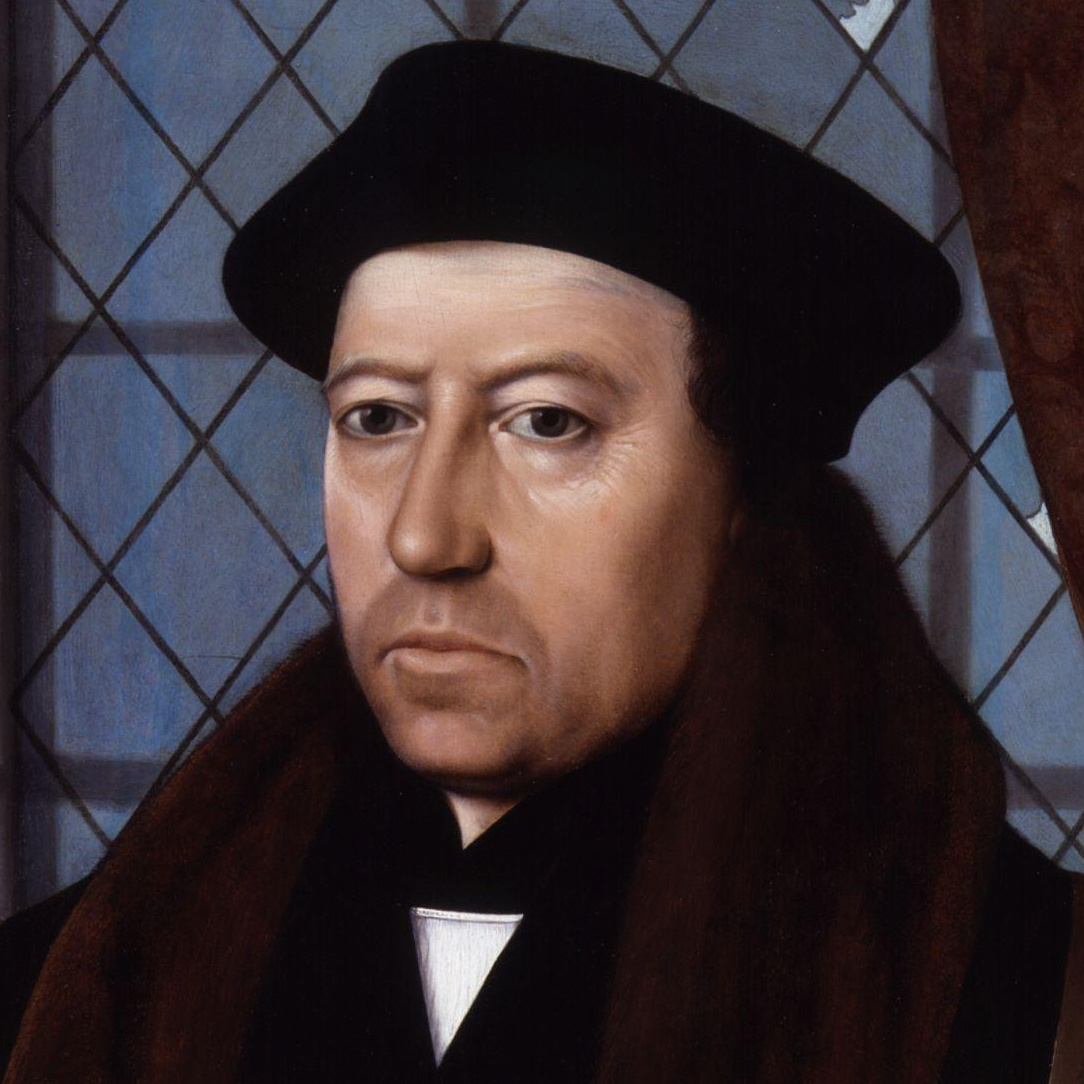
Portrait of Thomas Cranmer

The Anglicans — one common prayer, several traditions

  • Anglican churchesToday
  • Thirty-nine Articles1563–1571
  • Prayer Book1549
  • Break with Rome1534
The Book of Common Prayer gives the Anglican tradition a shared way of worship: Bible readings, prayers, baptism and the Eucharist set the rhythm of congregational life. Together with the Thirty-nine Articles, it is a key reference for Anglican identity, beyond the diversity of local practice.
This family keeps bishops and a liturgy inherited from Christian history, while receiving the convictions of the Reformation. Evangelical, Anglo-Catholic and liberal traditions are all found within it. The Anglican Communion brings together self-governing churches: the Archbishop of Canterbury does not exercise over them an authority comparable to that of the Pope.
Key point · Anglicanism cannot be reduced to a king’s decision, nor to a single way of worship. Its history also sheds light on the origins of Methodism and of English Separatism.

Convictions and church life

Baptism and communion

Children and adults alike may be baptised. The Eucharist holds an important place; emphases range from an evangelical reading to a more sacramental outlook.

Bishops and synods

Bishops exercise their ministry with priests and deacons. Synods give clergy and laity a share in the government of the Church.

A worldwide family

Anglicanism began in England and has since taken root on several continents, notably in Africa. There are also Anglican congregations in France.

Further reading: Regards protestants — The Anglicans (in French) · Church of England — The Thirty-nine Articles, especially XXV to XXVIII · Portrait of Thomas Cranmer — Gerlach Flicke, 1545, National Portrait Gallery / Wikimedia Commons, public domain.

Online guide · church families and key points · 2026 edition25 / 49

John Smyth — Attribution unconfirmed; image used for illustration

The Baptists — FEEBF, AEEBLF and some of the independent churches

Attribution not confirmed; image used for illustration. Sources

  • Baptist unionsFrance, 19th–20th c.
  • Nomain, Nord1810–1820
  • English BaptistsAmsterdam, 1609
  • Separatist PuritansEngland, c. 1580
  • Anglicanism1534
  • Reformation1517
The Baptist movement first grew out of English Separatism: in Amsterdam, in 1609, John Smyth and his group of Puritan refugees adopted believers’ baptism, then drew closer to the Mennonites. A direct Anabaptist lineage is not established; it is more accurate to speak of exchanges, convergences and a doctrinal influence that came after the first baptisms. Two streams, moreover, arose separately: the “General” Baptists, descended from Helwys’s group, which returned to England in 1612, and the “Particular” Baptists, who appeared around 1640 in a Separatist church in London. The origins of today’s Baptist churches therefore cannot all be traced to Smyth and Helwys. The theology remains largely Reformed, while the ecclesiology becomes congregationalist: each local church is autonomous.
In France, everything begins with a revival in the Nord region around 1810; the first Baptist church was constituted at Nomain around 1820. The movement grew in the 19th century with the support of American missions, came through the administrative persecutions of the Second Empire, and organised itself into several unions — among them the Fédération des Églises évangéliques baptistes de France (FEEBF, Federation of Evangelical Baptist Churches of France), a member of both the FPF and the CNEF.
Key point · the Baptists have their origins in English Separatism. Their contacts with the Mennonites and their closeness to the model of a church of professing believers are not enough to establish a direct Anabaptist lineage.

Further background

What characterises them

Baptism follows a personal profession of faith. Church membership therefore rests on a chosen commitment, not on birth alone.

Organisation and diversity

Each local church is autonomous. Federations such as the FEEBF or the AEEBLF pool training, mission and mutual support, without forming a single Baptist denomination.

A worldwide family

The Baptist movement numbers more than 50 million members worldwide. In France, the first congregations go back about two centuries; the Baptist Federation celebrated its centenary in 2022.

Source of this supplement: FEEBF — feebf.com

Further reading: S. R. Holmes, “When Did John Smyth Embrace ‘Arminianism’”, Baptist Quarterly 52 (2021) · U. Swarat, “Theological Discussions between Mennonites and Baptists”, JEBS 25 (2025) · J. R. Coggins, “The Theological Positions of John Smyth”, Baptist Quarterly 30 (1984).

Online guide · church families and key points · 2026 edition26 / 49

Frédéric Monod

The Free Evangelical Churches — UEEL, Union des Églises évangéliques libres (Union of Free Evangelical Churches)

  • UEELParis, 1849
  • Geneva Réveil1817
  • Reformed churchesFrance, 1555
  • Calvin, Geneva1536
  • Reformation1517
The “libristes”, as the Free Evangelical Churches are known in French, grew directly out of the Geneva Réveil (the 19th-century revival). In 1848–1849, Pastor Frédéric Monod and Count Agénor de Gasparin refuse to let the Reformed Church remain a “multitudinist” church — open to the whole population — with no binding confession of faith. They found a union of churches of professing believers, independent of the State: half a century before the law of 1905 separating Church and State.
Reformed in theology and congregationalist in their way of working, the Free Evangelical Churches represent the middle way of French Protestantism: fully evangelical, fully heirs of the Huguenots. Today the UEEL is a member of the FPF (Protestant Federation of France) and a full member of the CNEF (National Council of French Evangelicals) since 2019.

Further background

Why “free”?

The Union is formed in 1849 to affirm the churches’ independence from the State. The word “free” is added to its name only in 1883. It also expresses freedom on secondary questions, within the framework of a common faith.

Churches of professing believers

The congregation brings together people who personally profess their faith in Jesus Christ. Local churches subscribe to a confession of faith and support one another as members of the Union.

Place in Protestantism today

The UEEL remains a member of the Protestant Federation of France. An associate member of the CNEF from 2011 to 2019, it becomes a full member after the vote of its synod at Poitiers in 2019; the CNEF lists it among its member unions.

Source of this supplement: UEEL — ueel.org

Online guide · church families and key points · 2026 edition27 / 49

John Nelson Darby

The Brethren assemblies — CAEF and the Darbyite stream

  • CAEFunion, 20th c.
  • Open assemblies in Francevaried paths, 19th–20th c.
  • Open Brethren streamBritish milestone: 1848
  • Brethren of Dublin and Plymouth1827–1832
  • Reformation1517
The Brethren movement is born in Dublin in 1827. The first Brethren gatherings in the British Isles and the dissenting congregations that grew out of the Swiss Réveil — in Geneva from 1817, then in the canton of Vaud — have distinct local origins; links develop between these circles before Darby arrives in Geneva in 1837. A former clergyman of the Church of Ireland (Anglican), John Nelson Darby preaches in Geneva from the autumn of 1837, then elsewhere in French-speaking Switzerland, in the Ardèche and in the South of France: a church with no appointed clergy, gathered every Sunday around the Lord’s Supper, where any brother may speak. His teaching and interventions win both followers and opponents, and contribute to the splits of 1842 in Lausanne and Geneva. The movement divides in 1848, after the Bethesda affair in Bristol, into “Exclusive Brethren” (strict Darbyites) and “Open Brethren”, who are open to cooperation with other evangelicals. In Switzerland the paths vary: some open assemblies continue dissenting circles that grew out of the Réveil, while others result from later breaks with Darbyism.
Gatherings linked to Darby and his companions are attested in the Ardèche and the Drôme in 1843. After the separation of 1848, the assemblies that remain in communion with Darby belong to the so-called “Exclusive” stream. Bory also mentions a conference at Annonay in 1850. The open assemblies, whose paths vary — first foundations in the second half of the 19th century, then growth at the end of the century and in the 20th, with British, Swiss and Italian contributions, according to the histories published by the CAEF — came together in the CAEF (Communautés et assemblées évangéliques de France, Evangelical Communities and Assemblies of France), which are very active in church planting and Bible ministries. It is also to Darby that worldwide evangelicalism owes the spread of the “dispensationalist” reading of prophecy.

Further background

Life of the assembly

Local leadership is collegial, generally entrusted to a team of elders. Worship values participation, the gifts of each member and the Lord’s Supper.

Autonomy and cooperation

Government remains congregationalist, but the churches cooperate in training, mission, youth work, mutual aid and the planting of new congregations.

An important distinction

The CAEF are heirs above all of the “Open Brethren”, open to evangelical cooperation; they are not to be confused with all the so-called “Exclusive” Darbyite assemblies.

Source of this supplement: CAEF — caef.net

Further reading: A. C. Smith, “J. N. Darby in Switzerland”, Christian Brethren Review 34 (1983), pp. 53–94 · J. N. Darby, letter to G. V. Wigram, Lausanne, 21 January 1843 · Dictionary of Irish Biography — Darby · Historical Dictionary of Switzerland — Darbyites (in French) · J.-P. Bory, Histoire des C.A.E.F. (4), 1996 (in French) · (5), 1996 · (13), 1998 · R. Kozycki, Repères, 2010 (in French).

Online guide · church families and key points · 2026 edition28 / 49

GOING FURTHER

Further reading

Three key points to understand the Brethren assemblies better.
Open the topics that interest you, at your own pace.

The different streamsOpen Brethren, Exclusive streams and the CAEF heritage

The Brethren movement takes shape in the 19th century from several groups of Christians. It undergoes a major division in 1848, in the controversy surrounding the Bethesda assembly in Bristol. The disagreement concerns in particular the recognition of communion with other assemblies.

The Open Brethren welcome believers from other denominations to communion, under conditions set locally. The Exclusive streams descended from Darby’s line develop stricter rules of separation and of mutual recognition between assemblies. They later go through several divisions.

Situating the CAEF

The Communautés et Assemblées évangéliques de France belong to the heritage of the Open Brethren. They do not represent all the groups that grew out of the Brethren movement. “Darbyite”, “Brethren” and “CAEF” are therefore not interchangeable names.

Sources: Jean-Pierre Bory, Histoire des C.A.E.F. (4), 1996 (in French); Reynald Kozycki, Repères dans l’histoire des Assemblées de Frères, 2010 (in French) — accounts written from within the CAEF.

Organisation and practicesShared responsibilities, local life and communion

In the CAEF, the leadership of the church rests with a council of elders. Some congregations have a pastor, regarded as an elder among the elders. Local responsibility goes hand in hand with relations with other churches and with joint projects: autonomy does not mean an absence of cooperation.

Reading and explaining the Bible, prayer and the Lord’s Supper hold an important place. In the confession of faith of the FEF Network published by the CAEF, baptism publicly expresses the believer’s personal faith; the Lord’s Supper recalls and proclaims the death of Christ, and expresses the communion of believers.

A situated description

These points describe how the CAEF themselves say they work. They should not be applied automatically to every assembly that bears the name “Brethren”.

Sources: Reynald Kozycki, Repères dans l’histoire des Assemblées de Frères, 2010 (in French); Confession of faith of the FEF Network, article 9 (PDF published by the CAEF, in French).

What varies from one assembly to anotherReading a common heritage without assuming uniformity

The CAEF themselves present their history as a meeting of diverse influences, united by a common confession of faith and by the importance of collegial leadership. Knowing which historical family a church belongs to is a useful guide, but it does not tell the whole story of its life today.

To compare two particular assemblies, you can look at several things:

  • The leadership of the church: who takes on responsibilities, and how are decisions taken?
  • The life of worship: how is the time divided between preaching, prayer, singing and congregational participation?
  • Communion: what conditions are explained to visitors for taking part in the Lord’s Supper?
  • Outside relations: to which union or network does the congregation belong, and with whom does it cooperate?
For a fair comparison

It is helpful to read the presentation and commitments published by each congregation. The practices of one particular assembly are no basis for concluding that all the others work in the same way.

Background source: Jacques Nussbaumer, Une diversité en mouvement, Com’Union, 2020 (in French). The questions above are a suggested framework for comparing congregations.

You can close each topic and continue the journey.

John Wesley

The Methodists — UEEMF

  • UEEMFFrance, 19th–20th c.
  • French MethodismNormandy, 1791
  • WesleyLondon, 1738
  • Moravians, Pietism1675–1727
  • Anglicanism1534
  • Reformation1517
Methodism takes shape at the heart of Anglicanism with the Oxford “Holy Club”, from 1729. Influenced by the witness of the Moravian Brethren — heirs of Jan Hus and of Lutheran Pietism — John Wesley has an experience of grace at Aldersgate in 1738 that gives the movement a decisive evangelical impetus. Open-air preaching, small groups and practical holiness: Wesley systematises and spreads these evangelistic practices, though he did not invent them all.
Reaching France as early as 1791 by way of the Channel Islands, French Methodism spread to Normandy, the South of France and Alsace. The Union de l’Église évangélique méthodiste de France (UEEMF, Union of the Evangelical Methodist Church of France) carries this heritage forward — and, through the Holiness movement, Methodism would go on to exert a major influence on part of Pentecostalism.

Further background

Spiritual emphasis

Methodism unites God’s grace, personal conversion and sanctification: faith is meant to transform a person’s conduct and service of others, step by step.

A method that became a movement

Wesley organises classes, small groups, itinerant preachers and mutual support. This flexible structure sustains evangelism, training and social action.

A very wide heritage

The Holiness movement and then part of Pentecostalism grew out of the Methodist trunk. Its influence therefore reaches far beyond the churches that bear this name today.

Source of this supplement: UEEMF — ueem.umc-europe.org

Online guide · church families and key points · 2026 edition29 / 49

Douglas Scott

The Pentecostals — ADD, Vie et Lumière, the charismatic movement

  • ADD France1932–1933
  • French centresLe Havre and Paris, 1909; growth with Scott, 1930
  • International centresTopeka 1901, Azusa 1906; Great Britain from 1907
  • Holiness movement19th c.
  • Methodism1738
  • Reformation1517
After earlier beginnings, notably in Topeka in 1901, Azusa Street becomes in 1906 the great international centre of Pentecostalism — the Los Angeles revival around the African American preacher William J. Seymour — in the wake of the Holiness movement that grew out of Methodism: to salvation by faith is added the experience of baptism in the Holy Spirit, accompanied by speaking in tongues and prayer for the sick. The movement reaches Northern Europe and Great Britain from 1907 (Oslo, Sunderland), in a British Christianity marked by the Welsh Revival of 1904–1905; visitors and then British preachers (Boddy in 1909, Douglas Scott in 1927 and 1930) support the French centres.
Pentecostal centres are attested in Paris and Le Havre in 1909, notably at the Ruban Bleu (Blue Ribbon) mission; the Briton Douglas Scott stays there in 1927, and his return to Le Havre in January 1930 gives the movement a fresh impetus. The Assemblies of God of France (ADD) are organised in 1932–1933; today they are among the main evangelical unions in the country. The revival among Travellers, born in Lisieux in 1950 and then in Brest in 1952 around Clément Le Cossec, gives rise to the Vie et Lumière (“Life and Light”) mission (founded in 1957, under this name since 1961). From the 1960s and 1970s onwards, the charismatic movement spreads the same experience across all the families of churches.
Key point · Topeka (1901), Azusa Street (1906) and the French developments are distinct stages. The Methodist heritage and the Holiness movement are major influences, among others. Worldwide estimates vary widely according to the scope adopted — Pentecostals, charismatics or a wider whole — and should always be read together with their definition and their source.

Further background

Pentecostal emphasis

To conversion and the authority of the Bible are added the expectation of baptism in the Holy Spirit, the present-day exercise of spiritual gifts and prayer for the sick.

Several networks, one movement

The Assemblies of God and Vie et Lumière share a Pentecostal origin, but each has its own history, constituency and structures.

Born within existing Protestant circles

The first centres of 1909, in Le Havre (the Ruban Bleu mission) and in Paris, arise within Protestant circles that were already established; Protestants from other churches then join the movement.

From one movement to every family

From the 1960s onwards, the charismatic renewal spreads certain Pentecostal practices within Catholic, Reformed, Baptist and independent churches.

Sources of this supplement: ADDF — addfrance.fr; Fabio Morin (National Archives of the Assemblies of God of France), correspondence with the author of this guide (points that cannot be verified here); Kyu-Hyung Cho, The Move to Independence from Anglican Leadership: An Examination of the Relationship between Alexander Alfred Boddy and the Early Leaders of the British Pentecostal Denominations (1907-1930), doctoral thesis, University of Birmingham, 2009, p. 2; Confidence (Sunderland), October 1909, sections “France”, “Paris”, “Havre”; Darrin J. Rodgers, “This Week in AG History”, AG News, 29 June 2017 (after R. K. Ware, Pentecostal Evangel, 30 June 1974); Marc Rizzolio, Formation de caractère et communauté de foi chez Stanley Hauerwas, thesis, University of Strasbourg, 2020, pp. 85–87 (in French); Musée protestant, La Mission évangélique tzigane de France (founded 28 December 1957, name adopted 26 February 1961) and Clément Le Cossec (1921-2001) (a gathering of more than a thousand people and twenty baptisms in Brest in November 1954) (in French); clement-le-cossec.org (ministry in Brest from 1952). For Lisieux, the date of 1950 follows Fabio Morin’s chronology; a testimony quoted by the Musée protestant gives 1951.

Online guide · church families and key points · 2026 edition30 / 49

Menno Simons — Later depiction: no contemporary portrait is known

The Mennonites — AEEMF, one of the oldest traditions of believers’ churches

Later depiction: no contemporary portrait is known. Sources

  • AEEMFAlsace, eastern France, today
  • Refuge in Alsace16th–17th c.
  • Menno SimonsNetherlands, 1536
  • AnabaptistsZurich, 1525
  • Reformation1517
In the 16th century, the Anabaptists suffer severe persecution. Menno Simons, a former Catholic priest from Friesland who became an Anabaptist leader, consolidates a peaceful and lasting stream: the Mennonites. He does not, however, organise the whole of Anabaptism, which remains diverse. Refugee families settle from the 16th and 17th centuries in Alsace and in the principalities of the East; it is in Alsace that Jakob Ammann’s schism breaks out in 1693, the origin of the Amish.
The Mennonite churches of France (AEEMF) carry on one of the oldest believers’ church traditions within Protestantism: believers’ baptism, non-violence, simplicity and service of one’s neighbour. In the directories consulted on 28 October 2026, the AEEMF appears among the unions of the CNEF (in French) and as a member of the FPF in a probationary period (in French). These affiliations may change; the directories make it possible to check their status.

Further background

Following Jesus in practice

The Mennonite tradition insists on the life of discipleship: confessed faith, believers’ baptism, a community of brothers and sisters, service of one’s neighbour and consistency between belief and conduct.

A peace church

Non-violence, reconciliation and the historic refusal of oaths and of religious coercion give this family a distinctive place within Protestantism.

Close to the Baptists, but distinct

Baptists and Mennonites share the model of the church of professing believers and believers’ baptism. Their histories and certain ethical emphases nevertheless remain different.

Source of this supplement: AEEMF — Mennonite confession of faith, editions-mennonites.fr

Online guide · church families and key points · 2026 edition31 / 49

William J. Seymour

“Églises de la diversité” (churches with roots in migration) — born of migration, often charismatic

  • Churches with roots in migrationFrance, from 1960
  • Migration, local initiatives, transnational networks20th c.; side-by-side contributions
  • Diverse Protestant traditionsthe missions of the 19th–20th c. are one of the contributions
  • Reformation1517
The expression “Églises de la diversité” (churches with roots in migration) refers to a sociological category and to a cultural and migratory landscape, not to a denomination. These congregations, from diverse Protestant traditions, have formed through migration, local initiatives and transnational networks: some continue churches founded by Protestant missions in Africa, the Caribbean and Asia, others are sent by a mother church or arise locally from the 1960s onwards.
The groups described by the French studies cited in this guide often have a Pentecostal or charismatic outlook, a congregationalist organisation and a young membership. These tendencies do not describe every assembly: languages, liturgies, government and affiliations vary. Many join existing unions, some of them members of the CNEF; others remain independent. These congregations continue several missionary histories, rather than a single institutional branch.

Further background

A category, not a denomination

“Églises de la diversité” describes a cultural and migratory landscape. It is neither a single union nor a particular doctrine.

The missionary movement is reversed

Churches once evangelised from Europe now send pastors, missionaries and congregations to France: mission becomes truly worldwide.

Great variety

Many of these congregations are Pentecostal or charismatic, but not all. Languages, liturgies, forms of government and national affiliations can vary greatly.

Source of this supplement: an overview category specific to this guide, defined above; CNEF reference material; Antoine Nouis, “Les Églises issues de l’immigration”, Regards protestants, 19 January 2024 (section “Une mosaïque d’Églises”) (in French)

Online guide · church families and key points · 2026 edition32 / 49

Portrait · revival

Portrait of Nikolaus von Zinzendorf

Nikolaus von Zinzendorf

1700 – 1760 · Herrnhut · the Moravian revival

  • Born1700, Dresden (Saxony)
  • Where he was activeHerrnhut, then Europe, the Caribbean and America
  • What he left behindThe Moravian Church, worldwide mission and the “religion of the heart”

A Saxon count brought up in Pietism — Spener was his godfather, Francke his teacher at Halle — Zinzendorf welcomes refugees from Moravia onto his estates in 1722, heirs of Jan Hus’s Unity of the Brethren. The village they found is called Herrnhut, “the Lord’s watch”. On 13 August 1727, during a celebration of the Lord’s Supper, the divided community experiences a revival that unites it; a round-the-clock prayer chain begins that will last more than a hundred years.

From 1732, Herrnhut sends its first missionaries to the slaves of the Caribbean, then to Greenland, Africa and North America: for the first time, an entire Protestant church becomes a missionary church. Zinzendorf himself, who became a Moravian bishop and was banished from Saxony for ten years, travels ceaselessly and founds Bethlehem in Pennsylvania. His theology is a theology of the heart: a personal and tender relationship with the crucified Christ. “I have but one passion: it is He, He alone.”

It is on board a ship bound for Georgia, and then in London with the Moravian Peter Böhler, that John Wesley meets the Moravians and their assurance of salvation: his Aldersgate conversion (May 1738) follows from it, and the next summer he travels to Herrnhut. The Moravians have also left a small book read every day around the world since 1731, the Losungen, or “Daily Texts”.

Why he matters for today’s churches

Zinzendorf is the link between Hus and Wesley, and one of the great pioneers of modern Protestant mission. Personal conversion, heartfelt piety, persevering prayer and sending out ordinary believers as missionaries: everything that evangelical churches hold to be essential was lived out at Herrnhut before it spread.

But He was pierced for our transgressions, He was crushed for our iniquities; the punishment that brought us peace was upon Him, and by His stripes we are healed.

(BSB) — the crucified Christ was the centre of his preaching and his hymns
To continue

Online guide · church families and key points · 2026 edition

Portrait · the Desert

Marie Durand — Image of unknown origin, used for illustration; no contemporary portrait has been found

Marie Durand

1711 – 1776 · Aigues-Mortes · the resistance of the Desert

Image of unknown origin, used for illustration; no contemporary portrait has been found. Sources

  • Born1711, Le Bouschet-de-Pranles (Vivarais)
  • Where she was imprisonedThe Tower of Constance, Aigues-Mortes: thirty-eight years
  • What she left behindLetters, and a word carved in stone — Résister (“Resist”) — which tradition attributes to her

Marie Durand founded nothing, wrote nothing for the public and never preached. She is the sister of Pierre Durand, a clandestine pastor of the Desert, hanged in Montpellier in 1732. Arrested in 1730, at the age of nineteen, for no other crime than belonging to this family, she is imprisoned in the Tower of Constance at Aigues-Mortes, with other Protestant women. A single act of abjuration would have set her free. She remains there for thirty-eight years.
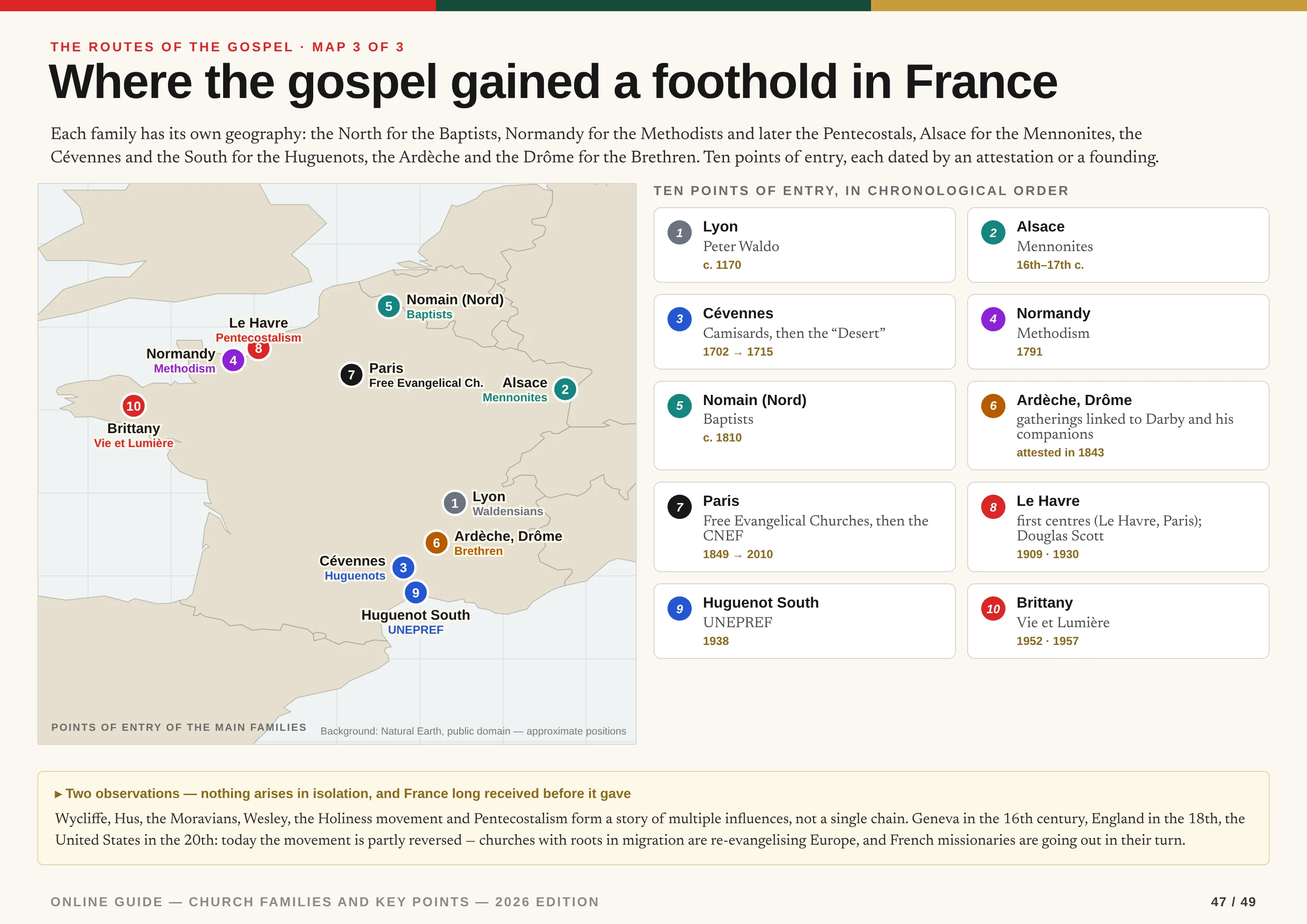
In the upper room of the tower, the word Register — “resist” in Occitan — can still be read, carved on the rim of the well; tradition attributes it to Marie Durand. Her surviving letters show her organising the life of the prisoners, comforting the oldest, pleading with the authorities, thanking the churches of Amsterdam that send help, and praying. She is released in 1768 by the Prince de Beauvau, governor of Languedoc, deeply shaken by what he discovers.

She returns to Le Bouschet, to her plundered house, and dies there in 1776, eleven years before the Edict of Tolerance that will give Protestants a legal existence again. Her birthplace is today a museum of Protestantism in the Vivarais.

Why she matters for today’s churches

This portrait is devoted to a figure of faithfulness. Among founders, reformers and preachers, Marie Durand is a reminder that the faith of the families of churches has also been upheld by believers with no role and no title, who had nothing to offer but their constancy. The Reformed of the Desert, and all the persecuted churches of today, see themselves in her.

Be faithful even unto death, and I will give you the crown of life.

(BSB) — the verse that French Protestants have associated with her faithfulness
To continue

Online guide · church families and key points · 2026 edition

Portrait · revival

Portrait of Robert Haldane

Robert Haldane

1764 – 1842 · Geneva · the Geneva Réveil

  • Born1764, London, into a Scottish family
  • Where he was activeScotland, then Geneva (1816–1817) and Montauban
  • What he left behindThe Geneva Réveil and a generation of pastors who brought revival to France

A midshipman in the Royal Navy, notably from 1780 to 1783, and later a wealthy Scottish landowner, Haldane is converted around 1795 and sells his Airthrey estate to fund the evangelisation of Scotland with his brother James Alexander, who had served with the British East India Company: schools for preachers, places of worship, the sending out of evangelists. He becomes one of the architects of the Scottish evangelical renewal, outside the established Church.

In the autumn of 1816, he arrives in Geneva, Calvin’s city, and finds an Academy where the divinity of Christ and salvation by grace are scarcely taught any longer. He opens his drawing room to the theology students and explains the Epistle to the Romans to them, evening after evening. Around his table are Merle d’Aubigné, the future historian of the Reformation, Frédéric Monod, Louis Gaussen, Henri Pyt and Ami Bost: the generation of the Réveil (the 19th-century revival). He continues his work at Montauban, alongside the Protestant faculty, until 1819.

His commentary on the Epistle to the Romans, drawn from these evenings, will remain a classic. The men awakened through him found Bible and missionary societies and free churches — in Geneva in 1849, and in France the same year with Frédéric Monod — and restore French Protestantism’s evangelical vigour.

Why he matters for today’s churches

Haldane shows that a revival can be born of a simple Bible study pursued in earnest. The Free Evangelical Churches, part of the Evangelical Reformed, the 19th-century evangelistic societies and, through them, many of today’s evangelical churches descend from that Geneva drawing room where Romans was read.

I am not ashamed of the gospel, because it is the power of God for salvation to everyone who believes, first to the Jew, then to the Greek.

(BSB) — the Epistle to the Romans was the text of his Geneva evenings
To continue

Online guide · church families and key points · 2026 edition

John and Carol Arnott1994

Catch The Fire — the neo-charismatic branch that grew out of Toronto

  • CTF Lyonreligious association, 2017
  • Catch The Fire Toronto and the Catch The Fire World networkMay 2010
  • Toronto Airport Christian Fellowshipseparation from Vineyard, Dec. 1995; name 1996
  • Toronto Blessing1994
  • Vineyard, the “Third Wave”from 1982
  • Charismatic renewalfrom 1960
  • Azusa Street1906
  • Reformation1517
On 20 January 1994, meetings led by Pastor Randy Clark at the Toronto Airport Vineyard — a church led by John and Carol Arnott — open a wave of renewal known as the “Toronto Blessing”. Prayer for healing, prophecy, the theme of the Father’s love, contemplative prayer and various bodily manifestations draw visitors from all over the world within a few months. The movement crosses many denominations and gives rise to significant theological debate, including in evangelical and charismatic circles: its participants see in it a visitation of the Holy Spirit, while others question its manifestations and its fruit.
In December 1995, Vineyard ends the Toronto church’s affiliation: its leaders, headed by John Wimber, take the view that certain manifestations had come to occupy a place that should yield to the central teachings of Scripture. The church becomes independent under the name Toronto Airport Christian Fellowship, then takes the name Catch The Fire; the Partners in Harvest network, which grew out of the same circles, is integrated into it in 2019. It is this break that makes Catch The Fire an autonomous network, and not a branch of Vineyard.
The network does not present itself as a centralised denomination but as a relational and apostolic family; in August 2026, its worldwide website lists 181 churches, ministries, missions and networks, in 30 countries and 16 languages, from Montreal to Zurich, Oslo, Sydney or Hong Kong. Local churches keep their autonomy and receive training and support from the network. Its confession of faith affirms the triune God, the authority of the Bible, the divinity and bodily resurrection of Christ, the necessity of the new birth and the present-day reality of the gifts of the Holy Spirit. It thus aligns with the shared convictions set out on page 43, while explicitly affirming points that this common foundation does not detail.

Online guide · church families and key points · 2026 edition36 / 49

Catch The Fire in France and in the charismatic landscape

As of 13 August 2026, Catch The Fire Lyon is the only French entry visible in the movement’s official directory; this may change. The Protestant evangelical religious association (an association cultuelle under French law) was formed in January 2017 in the 6th arrondissement of Lyon. The address of a meeting place is not to be confused with the association’s registered office. The congregation also offers schools and sessions on prayer, identity in Christ, inner healing and spiritual gifts. None of the public sources consulted documents an affiliation with the FPF or the CNEF.
Classical Pentecostalism1901-1906

New denominations are born: the Assemblies of God, the Church of God and, in France, the ADD.

Charismatic renewalfrom 1960

Spiritual gifts spread within existing churches, Catholic ones included.

Neo-charismatic movement1980-1990

Non-denominational networks: Vineyard, then Toronto and Catch The Fire.

Key point · Catch The Fire belongs to neo-charismatic evangelical Protestantism and shares its Trinitarian foundation. The sequence Azusa → charismatic renewal → Vineyard → Toronto describes successive influences and contexts, not a continuous institutional lineage. The Toronto church’s affiliation with the Vineyard ended in December 1995.

Further background

Structure of the network

Catch The Fire presents itself as a relational and apostolic family. Local congregations keep their autonomy while receiving support, training and international relationships.

Confessional foundation

Its confession of faith affirms in particular the triune God, the authority of the Bible, the divinity and bodily resurrection of Christ, the new birth and the present-day reality of spiritual gifts.

Its own spiritual emphasis

The language of “the Father’s love”, of identity in Christ, of inner healing and of prophetic listening strongly marks its schools and ministries.

Sources of this supplement: Catch The Fire Global and Catch The Fire Lyon

Online guide · church families and key points · 2026 edition37 / 49

Ellen G. White

The Seventh-day Adventists — a neighbouring branch, born of Millerism

  • Adventistsunion, 1863
  • Ellen Whitefrom 1845
  • MillerismMiller, 1844
  • Second Great AwakeningUSA, 1790–1840
  • Reformation1517
After the Great Disappointment of 1844, some of the Millerites conclude that the date marked not the return of Christ but a stage in his heavenly work. With Joseph Bates, James White, Ellen White and other pioneers, this group organises itself and adopts the seventh-day rest: the Seventh-day Adventist Church is officially organised in 1863. Trinitarian, it has been present in France since the end of the 19th century; a member of the Protestant Federation of France, it does not belong to the CNEF. Its position in relation to the evangelical world is classified in different ways and debated: it is close to evangelicals in its biblical piety and its evangelism, while standing apart through the Sabbath and the place it gives to the writings of Ellen White. Adventists describe themselves as Protestant Christians.

Further background

Two visible markers

The Sabbath is kept from Friday evening to Saturday evening, and the expectation of Christ’s return strongly shapes preaching, spirituality and the very name of the movement.

Faith, health and service

Adventism combines evangelism, education, health, humanitarian aid and the defence of religious freedom. These works explain a social presence wider than its local congregations.

Position in the French landscape

The Adventist Church confesses the Trinity and places itself within Protestantism; it is a member of the FPF, but does not belong to the CNEF. The writings of Ellen White keep a particular place within it.

Source of this supplement: Adventist Union — adventiste.org and ufbl.adventiste.org

This guide situates the traditions according to their Trinitarian confession — Nicaea-Constantinople (325–381) — and their relationship to Scripture. These doctrinal markers pass no judgement on the sincerity, piety or worth of individuals.

Online guide · church families and key points · 2026 edition38 / 49

Charles T. RussellJoseph F. Rutherford

Jehovah’s Witnesses — a Protestant root, a departure from the common trunk

  • Jehovah’s WitnessesRutherford, 1931
  • Bible StudentsRussell, 1879
  • Second AdventismStorrs, Barbour
  • MillerismMiller, 1844
  • Reformation1517
Jehovah’s Witnesses descend from the Second Adventist streams born of Millerism, along a path distinct from that of the Seventh-day Adventists. They share common ground with American evangelicalism: the Second Great Awakening and its dream of restoring primitive Christianity. When the predicted return of Christ in 1844 fails to happen, the Millerite movement breaks apart; it is through contact with former Millerites (George Storrs, Nelson Barbour) that Charles T. Russell forges his doctrine in the 1870s: prophetic chronologies, the annihilation of the wicked rather than hell, and the rejection of the Trinity — the Son being God’s first creation, a non-Nicene and subordinationist Christology, distinct from the Trinitarian Protestant confessions.
In 1879, Russell launches The Watchtower. After his death in 1916, Joseph Rutherford reorganises part of the Bible Students, which will take the name Jehovah’s Witnesses on 26 July 1931, in Columbus. It is a schism: several groups refuse this leadership and continue separately. Among them are the Pastoral Bible Institute (1918), Alexandre Freytag’s Friends of Man in Switzerland, Paul Johnson’s Laymen’s Home Missionary Movement (1919, known as the “Epiphany” movement), the Dawn Bible Students Association (1932) and the Free Bible Students. Several of these groups have congregations in France and in Europe. Attendance at meetings falls by nearly 75% between 1922 and 1928.

The changes under Rutherford

This reorganisation is accompanied by successive changes: the failed prophecy of Armageddon in 1925, the abandonment of Christmas (celebrated for the last time at Bethel in 1926) and of pyramidology in 1928, the abolition of the editorial committee and the adoption of the name “Jehovah’s Witnesses” in 1931, the doctrine of the “great crowd” and the refusal to salute the flag in 1935, the rejection of the cross in 1936 and theocratic government in 1938.

The divergence from the Trinitarian confession predates Rutherford: Russell already taught that the Son had received divinity as a gift and that the Holy Spirit was the manifestation of God’s power rather than a person. A fraction of the Bible Students thus becomes Jehovah’s Witnesses; the others continue along their separate paths.

Protestant churches do not recognise them as a Protestant family, and they themselves do not claim to belong to Protestantism: they present themselves as the restoration of primitive Christianity. Present in France since the beginning of the 20th century, the Witnesses belong neither to the FPF nor to the CNEF: their anti-Trinitarian doctrine places them outside confessing Protestantism, which holds the full divinity of Christ (Nicaea, 325) to be the heart of the faith. Their history, on the other hand, shows where they come from: a branch of 19th-century American Protestantism, a restorationist stream whose doctrines diverge from the Trinitarian Protestant confessions. This last assessment is a matter of theological comparison.
Key point · the same distant roots as evangelicals (American revivals, restorationism), but a doctrinal break — the Trinity — that places them outside the common Protestant trunk.

The doctrinal reference point for this comparison is the Trinitarian confession of Nicaea (325), completed at Constantinople (381). A comparison with ancient Arianism can shed light on a doctrinal point without treating the two historical situations as identical. Assessments of the relationship to sola scriptura belong to a Protestant theological reading. The difference concerns doctrines, never the worth of individuals: this appendix presents a genealogy, not a warning. The timeline and the animation set this path apart in grey, outside the common trunk.

Online guide · church families and key points · 2026 edition39 / 49

Animation · overview

From birthplaces to footholds in France

A simplified visual guide: the lines represent historical routes, not necessarily direct institutional lineages. The two “who comes from where?” summary tables set out each case in detail, with its nuances.

Plays on a loop, with pause and resume. The tables that follow remain the detailed reference.

On a small screen, use “Enlarge” and, ideally, turn your device to landscape orientation.

Reading the routes and the acronyms

* EPUdF: the present union dates from 2013; the 16th-century dates refer to its Lutheran and Reformed roots. ** Jehovah’s Witnesses: descended from one branch of the Second Adventist movements born of Millerism, they stand outside Protestantism and its Trinitarian confessions of faith, and belong neither to the FPF nor to the CNEF. *** Catch The Fire: an international neo-charismatic evangelical network, with an identified French presence in Lyon since 2017; its affiliation with the FPF or the CNEF is not documented in the public sources consulted.

The lines show a simplified historical route between a formative centre and a French point of reference. On their own, they do not prove a direct lineage, an exclusive influence or an institutional affiliation.

French milestones: first Pentecostal centres in Le Havre and Paris in 1909; growth with Douglas Scott in 1930; organisation of the ADD in 1932–1933. For Vie et Lumière: revival in Lisieux in 1950, then in Brest in 1952; mission founded in 1957; name adopted in 1961. The grey dotted line marks the comparative route of Jehovah’s Witnesses.

One shared faith,
different ways of living church life

After the lineages, the practices. This table shows tendencies: within a single family, customs and wordings can vary. A church’s name does not tell you everything about its life.

Baptism, the Lord’s Supper, organisation and worship in thirteen families and movements, and three networks or ministries presented in the journey
FamilyWho receives baptism?How is the Lord’s Supper understood?Organisation and worship
LutheransChildren and adults; God’s gift precedes the believer’s response.Real presence of Christ, who gives himself with the bread and the wine.Councils and synods; bishops in some churches. Liturgy and congregational singing.
ReformedChildren and adults; a sign of the covenant and of grace.For Calvin, communion with Christ through the Spirit. Emphases vary between streams.Local councils and synods. Preaching and Bible reading at the heart of worship.
AnglicansChildren and adults, with a profession of faith and guidance and support in the Christian life.Eucharist; a range of evangelical and Anglo-Catholic emphases.Bishops, clergy and synods. Common liturgical prayer, with varied practices.
MennonitesOn personal profession of faith; the mode varies between communities.Remembrance of Christ and communion of the church, bound up with reconciliation between brothers and sisters.Responsibility of the community and its ministers. Discipleship, peace and service.
BaptistsOn personal profession of faith, generally by immersion.A meal of remembrance and communion; conditions of admission may vary.Autonomous local church, with pastors and a council. Cooperation within unions.
Free Evangelical ChurchesIn the UEEL, on profession of faith; a baptism received in childhood may be recognised.The Lord’s Supper celebrated by the community; frequency and admission vary.Churches of professing believers, local councils and shared life within a union of churches. Preaching and witness.
Brethren assembliesIn the CAEF, believers’ baptism by immersion; some Darbyite streams differ.The breaking of bread is central, often weekly. Admission varies between assemblies.Collegial leadership by elders. Participation of several members; varied customs.
MethodistsChildren and adults in the Methodist tradition; diversity between unions.A means of grace: Christ nourishes the faith of the community.Churches linked by conferences or synods. Singing, training and social commitment.
PentecostalsBelievers’ baptism, generally by immersion; distinct from baptism in the Spirit.Remembrance of Christ’s death and fellowship between believers.Varied organisations. A prominent place for praise, prayer and spiritual gifts.
Vie et LumièreBy immersion, for adults who confess their faith; this is the only form they accept.Remembrance of Christ’s death and fellowship between believers, in the Pentecostal tradition.Pastors and preachers from Traveller communities. Large gatherings (Nevoy) and itinerant missions in summer.
Churches with roots in migrationMost often believers’ baptism by immersion; churches with Reformed, Lutheran or Methodist roots in the Global South also baptise children.According to the family of origin: a meal of remembrance and communion, or a sacrament.Often autonomous, around a pastor and a council; unions, the CNEF or independence. Extended praise, prayer, languages of origin.
Catch The FireBelievers’ baptism by immersion, in the name of the Father, the Son and the Holy Spirit.One of the two ordinances instituted by Christ, together with baptism.Relational network: autonomous local churches, supported by the network. Praise, prayer for individuals, emphasis on the Father’s love.
Seventh-day AdventistsOn profession of faith, by immersion, after biblical preparation.Remembrance and communion with Christ; foot-washing accompanies the celebration.Local churches linked in federations and unions. Sabbath worship, on Saturday.
Contemporary networks and ministries — presented in the appendices; they are not families in the same sense as those above
CMFI / CMCIBy immersion; its confession of faith makes it a step required of every disciple.The confession of faith affirms the Lord’s Supper without spelling out how it is understood.A leader of the ministry and his team; “no human spiritual head”, Christ being the head of the Church. Prayer, discipleship, church planting.
HopeslandBy immersion, a “public testimony” of the believer’s commitment.The public texts consulted do not specify how it is understood.An association (2025) and a network of partner communities, organised according to the “five ministries” of Ephesians 4:11. Gifts of the Spirit, healing, deliverance.
Ellel MinistriesNot applicable: Ellel is a ministry serving the churches, not a church; baptism is a matter for each participant’s own church.Its statements of faith do not mention it; Ellel refers each participant to their local church.Training and prayer centres (in France, Saint-Laurent-du-Pont), open to Christians from various churches. Inner healing, deliverance, discipleship.
Three points to keep in mind when reading the table

Believers’ baptism concerns a person who confesses their own faith; it is not reserved for adults alone. The word “sacrament” is usual among Lutherans, the Reformed, Anglicans and Methodists; several evangelical circles prefer “ordinance”. Finally, the churches born of migration and the charismatic renewals may belong to several families: their diversity cannot be confined to a single line.

Sources and scope of the table

The pages of the journey give the context of each family. This table brings their practices side by side without presenting any one union as representative of all the others. For the recent networks and the ministries presented in the appendices, it relies on their own statements of faith: when a cell indicates that the texts do not specify a point, this is a silence of the public sources, not an absence of practice. Jehovah’s Witnesses are presented separately, because they do not share the common Trinitarian faith. To know a local church, its confession of faith and its leaders remain the most precise sources.

Further reading: Musée protestant — Baptism among Protestants (in French) · Lutheran World Federation — Lutheran identity · Church of England — The Thirty-Nine Articles, especially XXV to XXVIII · Regards protestants — The Reformed (in French) · FEEBF — Confession of faith and organisation (in French) · UEEL — Texts of the Union (2021, in French) · CAEF / Servir — Salvation, baptism and the Lord’s Supper (in French) · Mennonite World Conference — Shared Convictions · United Methodist Church — Understanding baptism · Adventist Church — Fundamental beliefs, baptism and the Lord’s Supper (in French) · Musée protestant — The Gypsy Evangelical Mission of France (in French) · Catch The Fire Boulder — What We Believe (confession of one church in the network) · CMCI Sud France — Confession of faith (in French) · Hopesland Ministries — Who we are (in French) · Ellel Ministries — About · Jehovah’s Witnesses — Why dedicate yourself to God and be baptised? (in French) · Jehovah’s Witnesses — The Lord’s Evening Meal (in French).

Online guide · church families and key points · 2026 edition40 / 49

Summary table: who comes from where?


One row per family: where and when the movement was born, its arrival in France, its main root. The portraits read from left to right, from the one closest to us back to the oldest root. Contacts and influences do not necessarily amount to a direct institutional lineage.

Evangelical Reformed
(UNEPREF)

Birth

Geneva, 1536

In France

Paris, 1555
(Huguenots)

Root

Calvin — magisterial Reformation

Antoine Court — No portrait of Antoine Court has been found: his initials take the place of a faceJohn CalvinMartin Luther

United Lutherans and Reformed
(EPUdF)*

Birth

1517 / 1536

In France

16th c.;
union in 2013

Root

Luther and Calvin

John CalvinMartin Luther

Mennonites (AEEMF)

Birth

Zurich, 1525

In France

Alsace, 16th–
17th c.

Root

Radical Reformation (Anabaptism)

Menno Simons — later depiction: no contemporary portrait is knownMartin Luther

Baptists (FEEBF,
AEEBLF…)

Birth

Amsterdam, 1609

In France

Nomain,
c. 1810–1820

Root

Origin: English Separatism. Doctrinal influence of the Waterlander Mennonites on the first group after the baptisms

Origins of the first Baptist group, c. 1609John Smyth — Attribution unconfirmed; image used for illustrationEnglish Puritans and Separatists
c. 1580–1607
English Reformation
1534

Free Evangelical Churches (UEEL)

Birth

Paris, 1849

In France

Paris, 1849

Root

Huguenots + Geneva Réveil

Frédéric MonodRobert HaldaneJohn Calvin

Brethren assemblies
(CAEF)

Birth

Dublin, Plymouth,
1827–1832

In France

First open assemblies planted in the second half of the 19th c.; growth in the 20th c.

Root

Open Brethren stream; British, Swiss and Italian influences; they claim the heritage of the Swiss Réveil. Distinct from the Darbyite assemblies

How the CAEF belong to the Open Brethren streamOpen assemblies in France
varied paths
Open Brethren stream
British milestone: 1848
Brethren of Dublin and Plymouth
1827–1832

Methodists (UEEMF)

Birth

Oxford, 1729;
Aldersgate, 1738

In France

Normandy, 1791

Root

Wesley — Anglicanism + Moravians

John WesleyNikolaus von ZinzendorfMartin Luther

Online guide · church families and key points · 2026 edition41 / 49

Who comes from where? — continued


The Pentecostal and charismatic families, and the Adventists; the Jehovah’s Witnesses are shown separately, outside the common trunk. The international centres of Pentecostalism are distinct from the founding of the French organisations: the ADD in 1932–1933; the Gypsy mission in 1957, which became Vie et Lumière in 1961.

Assemblies of God
(ADD)

Centres of the movement

Topeka (1901), Azusa Street (1906); Great Britain from 1907

In France

Centres attested in Le Havre and Paris, 1909; Scott 1927 and 1930; union 1932–1933

Root

Pentecostalism; the Holiness movement that grew out of Methodism, a major influence among others

Centres and linksDouglas ScottFrench centres
1909 · growth 1930
British Pentecostalism
1907 · Boddy in Le Havre 1909
American centres
1901–1906

Vie et Lumière
(Travellers)

Centres of the movement

Assemblies of God of France (1932–1933)

In France

Revival: 1950–1952; mission: 1957; name: 1961

Root

French Pentecostalism; a mission born within the Assemblies of God

Origin of the missionClément Le CossecAssemblies of God of France
1932–1933
French centres
1909 · growth 1930

Charismatic
renewal

Birth

California, 1960; worldwide wave 1960–1980

In France

From the
1960s

Root

A current: the influence of Pentecostalism on pre-existing churches (Catholic, Reformed, Baptist, independent) that it did not found

Influence on pre-existing churchesExisting churches
all families
Pentecostalism
from 1901

Churches with roots
in migration

Birth

Communities from a variety of Protestant traditions, formed through migration, local initiatives and transnational networks

In France

From the 1960s, with migration

Root

A category, not a denomination: several histories; the missions of the 19th–20th centuries are one of the contributions; often Pentecostal or charismatic in outlook

Contributions side by side, not a genealogyMigrationLocal
initiatives
Transnational
networks
Missionary
contributions

Catch The Fire
(international network)***

Birth

Toronto, 1994

In France

Lyon, 2017

Root

Charismatic renewal, via Vineyard

John and Carol Arnott

Seventh-day
Adventists

Birth

United States,
1844–1863

In France

Late 19th c.

Root

Millerism — Second Great Awakening

Ellen G. WhiteMartin Luther

Outside the common trunk: the Jehovah’s Witnesses, born of the same Millerite soil as the Adventists, do not claim to be Protestant and are not recognised as such. See the comparative appendix →

*The EPUdF belongs to historic Protestantism (FPF), not to the CNEF; it is included here so that readers can place the Protestant family as a whole.

***Catch The Fire is an international neo-charismatic evangelical network; its officially identified presence in France has been in Lyon since 2017. Its affiliation with the FPF or the CNEF is not documented in the public sources consulted.

Online guide · church families and key points · 2026 edition42 / 49

Pl. 40 — Umbrella bodiesSurvey · France · 1905 / 2010Scale 1:1

Page I · overview

The two main umbrella bodies

Two distinct bodies, with a real area of overlap. The FEEBF illustrates dual membership; other unions also belong to both bodies.

For more on these three acronyms FPF · CNEF · FEEBF

A · 1905

FPF

Protestant Federation of France

Lutheran and Reformed streamsevangelical streams

B · 2010

CNEF

National Council of French Evangelicals

church unionsevangelical ministries

An example

FEEBF

an example of dual membership

Survey note

The FEEBF is an example of dual membership. The CNEF brings together church unions and evangelical Protestant ministries; the expression “churches of professing believers” does not give an exhaustive legal definition of it. The diagram is simplified: the size of the circles does not represent membership figures.

Dual memberships

Eight unions, not just one example

The FEEBF is not alone in belonging to both bodies. The CNEF directory lists these eight unions in its “pôle évangélique de la FPF” (the FPF’s evangelical section):

AEEMF
Association des Églises évangéliques mennonites de France (Association of Evangelical Mennonite Churches of France)In the FPF: probationary member
CÉPÉE
Communion d’Églises protestantes évangéliques (Communion of Evangelical Protestant Churches)
ERNC
Églises du réseau nouvelles connexions (churches of the New Connections network)
FEEBF
Fédération des Églises évangéliques baptistes de France (Federation of Evangelical Baptist Churches of France)
UEEAF
Union des Églises évangéliques arméniennes de France (Union of Armenian Evangelical Churches of France)
UEEL
Union des Églises évangéliques libres de France (Union of Free Evangelical Churches of France)
UEEMF
Union de l’Église évangélique méthodiste de France (Union of the Evangelical Methodist Church of France)
UNEPREF
Union nationale des Églises protestantes réformées évangéliques de France (National Union of Evangelical Reformed Protestant Churches of France)

This list was consulted on · Check the CNEF directory (in French). Memberships may change; this list does not describe every relationship between the two bodies. Status of the AEEMF: list of FPF members (in French), consulted on 28 October 2026.

Key points · heritage and unity

A shared Christian heritage, four pillars of unity

The main Protestant families presented here share a common Christian heritage, rooted in the early creeds. The four reference points below shed light on what draws them together, across the diversity of their traditions and of their statements of faith.

01
Faith in God, Father, Son and Holy Spirit

A Trinitarian reference point shared by the major Protestant confessions, rooted in the creeds of the early Church.

02
A reference to the Scriptures

The Bible nourishes faith. Protestant traditions offer diverse readings and interpretations of it.

03
Salvation by grace, through faith

The FPF charter and the CNEF statement of faith affirm salvation received through faith, as a gift of God.

04
A communion to be lived out

Dialogue, mutual aid and cooperation give life to this unity, while respecting the identities of the churches and unions.

This shared heritage finds expression within distinct institutional frameworks. In the CNEF, members share the Evangelical Alliance’s Statement of Faith. In the FPF, they subscribe to a common charter while keeping their own statements of faith. These four pillars are an educational summary of the shared heritage — not a common text that members of both bodies sign up to, nor a description of the personal faith of each member.

Sources: FPF — convictions and creeds, charter (in French); CNEF — common statement of faith (in French); World Evangelical Alliance — Trinitarian statement of faith. Checked on 28 October 2026. See also the presentation of the FEEBF (in French).

Online guide · church families and key points · 2026 edition43 / 49
Pl. 41 — Shared ministriesTraining · translating · planting · servingScale 1:1

Page II · networks of cooperation

Shared ministries: training, sending, serving

Lineage is not traced through church unions alone. For a century and a half, the families have met above all in ministries that none of them could have sustained alone — and it is often there that closer ties began, well before the official structures.

Training

Bible institutes and theological faculties where Baptists, members of the Free Evangelical Churches, Brethren, Methodists and Pentecostals study side by side. This cooperation predates the 1960s: the Nogent Bible Institute has been interdenominational since 1921.

Translating and distributing

Bible societies, publishing houses, bookshops: translating and distributing the Bible gradually becomes a shared, interdenominational undertaking. Lefèvre d’Étaples predates the formation of most of the families presented here.

Church planting

Church-planting missions — Perspectives and many others — working in towns with no evangelical witness.

Serving

Mutual aid, hospital and prison chaplaincies, care for the most vulnerable: the Mission populaire (Robert McAll, Belleville, 1872) and the Salvation Army (in France since 1881) are two major expressions of this social action, among others; they are not its only origins.

Reading notes

Working together without becoming identical

A shared ministry comes into being when a need goes beyond the means of a single family of churches. It brings skills and resources together around a specific mission, without erasing the convictions or the responsibilities of each partner.

CRIT. 01

A defined aim

Training, translating, sending or serving: this is the common objective. Agreement concerns this task first; it does not presuppose complete uniformity of doctrine, liturgy or church government.

CRIT. 02

Identifiable governance

A faculty, a mission or a social ministry normally has its own leaders, statutes and oversight rules. Taking part in its work does not mean becoming a member of a new church.

CRIT. 03

A real historical effect

The relationships of trust built up in day-to-day work can pave the way for wider rapprochement. But long-standing cooperation does not, on its own, prove a present-day affiliation.

Shared ministry ≠ church union

A ministry gathers people or institutions around a service; a church union organises a lasting church membership. Some ministries begin within one family and then open up to others; some remain deliberately interdenominational.

Three useful questions

Who is legally responsible for the ministry?

What specific mission does it share?

What does taking part really mean?

Online guide · church families and key points · 2026 edition44 / 49
Animation · reading a profile

Tracing a lineage, link by link

Each profile reads from left to right: from today’s union back to its roots, all the way to the Reformation. The animation traces the chains of seven families, one after another.

The Baptists Hover to pause — pages 24 and 26 to 31 remain the reference.
The routes of the gospel: the Atlantic round trip

The Holiness movement is a major influence, but Pentecostalism is not the outcome of a single causal chain running from Wesley; the map distinguishes the American centres, the spread to Great Britain (1907) and the arrival of British preachers in France (1930).

Animation · the three maps

Routes in motion

On a geographical background, the arrows of the three maps are drawn one by one, in chronological order: European roots, the Atlantic round trip, then points of entry into France.

Simplified geographical background: Natural Earth, public domain. Positions are approximate; pages 45 to 47 remain the reference.

Five common misconceptions

Five things people often say, and how the history of the families helps answer them.

Misconception 1

“Evangelicals are an American thing.”

The Mennonites arrived in Alsace in the 16th century, Brethren gatherings are attested in the Ardèche in 1843, the Free Evangelical Churches were born in Paris in 1849, and the evangelical Reformed churches claim the Huguenot heritage of the Churches of the Desert. The American contribution is real — the Baptist missions, Pentecostalism — but it came late and only in part.

Misconception 2

“Evangelical and Protestant are two different things.”

The evangelical families in this document belong to the history that grew out of the Reformation, and several unions belong to both the FPF and the CNEF. “Evangelical” refers to a sensibility within Protestantism. The neighbouring groups covered in the appendices nevertheless have their own trajectories and do not all descend directly from the families of the Reformation.

Misconception 3

“Our church is the one most faithful to the early Church.”

Every family has a history, pioneers, institutions and turning points — our own included. Diffuse movements often have several pioneers rather than a single founder. This takes nothing away: it is in fact the best protection against the illusion of having been born straight out of the Book of Acts.

Misconception 4

“Jehovah’s Witnesses are an evangelical church.”

They share historical roots with 19th-century American evangelicalism, but their rejection of the Trinity places them outside Protestantism and its Trinitarian confessions of faith. Knowing their genealogy avoids two mistakes: confusing them with us, or denying that they come from somewhere.

Misconception 5

“Shared influences mean that the churches are identical or belong to the same organisation.”

Noticing shared influences does not mean that the churches are identical, nor that they all belong to the same organisation. Historical, theological or spiritual closeness can exist without any legal or federative link, or any institutional succession.

Online guide · church families and key points · 2026 edition48 / 49

FREQUENTLY ASKED QUESTIONS

Frequently asked questions

Seven questions often asked about the Protestant churches, with a short answer and the page to read next.
Bible verses are quoted from the Berean Standard Bible (BSB) unless otherwise stated.

Are Jehovah’s Witnesses Protestants?Shared roots, a break over the Trinity

Neither the Protestant churches nor the Witnesses themselves say so. They emerged from the American revivals of the 19th century, but they reject the Trinity, which all the Protestant families confess.

The debate often turns on the prologue of John, already rendered « et Dieu estoit la parolle » in the Olivétan Bible (1535): word for word “and God was the Word”, which modern English translations give as “and the Word was God” (John 1:1).

John 1:1 · Berean Standard Bible (BSB)

In the beginning was the Word, and the Word was with God, and the Word was God.

Read the comparative appendix on Jehovah’s Witnesses →

Are Adventists Protestants?Trinitarian, members of the FPF

Yes: the Seventh-day Adventist Church confesses the Trinity and is a member of the Protestant Federation of France, without belonging to the CNEF. It is distinguished by the Sabbath and by the place it gives to the writings of Ellen White.

It should not be confused with Jehovah’s Witnesses, another branch that came out of Millerism.

Read the page on the Adventists →

What are the Brethren assemblies?Dublin 1827, Darby, the Lord’s Supper at the centre

An evangelical movement born in Dublin in 1827, historically committed to the participation of all believers, to shared leadership and to the Lord’s Supper every Sunday; present-day practices vary from one stream to another, and the CAEF quite often have pastors. The movement readily appeals to a promise of Jesus, quoted here in Darby’s own translation; the participation of each person in worship refers to 1 Corinthians 14:26.

Matthew 18:20 · Darby Translation (1890)

For where two or three are gathered together unto my name, there am I in the midst of them.

Read the page on the Brethren assemblies →

Anglicans and Protestants: what is the difference?Heirs of the Reformation, with bishops

The Anglicans are among the heirs of the Reformation: they received its convictions through the Book of Common Prayer (1549) and the Thirty-nine Articles. At the same time, they have kept bishops and a liturgy inherited from Christian history.

Evangelical, Anglo-Catholic and liberal strands are all found within it.

Read the page on the Anglicans →

What is the Toronto Blessing?The 1994 renewal and the Catch The Fire network

A charismatic renewal that began on 20 January 1994 at the Toronto Airport Vineyard church and later became the Catch The Fire network. Its participants see it as a visitation of the Holy Spirit; others, including among evangelicals, debate its manifestations.

Both attitudes appeal to the same passage:

1 Thessalonians 5:19-21 · Berean Standard Bible (BSB)

Do not extinguish the Spirit. Do not treat prophecies with contempt, but test all things. Hold fast to what is good.

Read the page on Catch The Fire →

Are “evangelical” and “Protestant” the same thing?A sensibility within Protestantism

In the sense used here, evangelicals are part of Protestantism, but not all Protestants are evangelicals. “Evangelical” refers to a sensibility within Protestantism, not alongside it: the evangelical families come out of the history opened by the Reformation, and several unions belong to both the FPF and the CNEF.

Read misconception 2, further up this page →

What are the different Protestant churches?Families formed in layers

Lutherans, Reformed, Anglicans, Mennonites, Baptists, Methodists, Free Evangelical Churches, Brethren, Pentecostals and other families, each with its own colour in the guide.

Their identity has formed in layers: the Reformation, revivals, missions, migration, church unions.

Read the page on the Protestant families →

You can close each question and continue through the guide.

ADD
Assemblées de Dieu de France (Assemblies of God of France; Pentecostal, 1932)
AEEBLF
Association évangélique d’Églises baptistes de langue française (Evangelical Association of French-speaking Baptist Churches)
AEEMF
Association des Églises évangéliques mennonites de France (Association of Evangelical Mennonite Churches of France)
CAEF
Communautés et assemblées évangéliques de France (Communities and Evangelical Assemblies of France; Open Brethren)
CÉPÉE
Communion d’Églises protestantes évangéliques (Communion of Evangelical Protestant Churches; in the FPF’s evangelical section; member of the CNEF)
CMFI / CMCI
Christian Missionary Fellowship International / Communauté missionnaire chrétienne internationale (movement founded by Z. T. Fomum; see the appendices)
CNEF
Conseil national des évangéliques de France (National Council of French Evangelicals, 2010)
CTF
Catch The Fire (international neo-charismatic network, Toronto; in Lyon since 2017)
EPUdF
Église protestante unie de France (United Protestant Church of France; Reformed + Lutherans, 2013)
ERNC
Églises du réseau nouvelles connexions (churches of the New Connections network; in the FPF’s evangelical section; member of the CNEF)
FEEBF
Fédération des Églises évangéliques baptistes de France (Federation of Evangelical Baptist Churches of France)
FLTE
Faculté libre de théologie évangélique (Free Faculty of Evangelical Theology, Vaux-sur-Seine, 1965)
FPF
Fédération protestante de France (Protestant Federation of France, 1905)
PCC
Presbyterian Church in Cameroon (see the appendices)
UEEAF
Union des Églises évangéliques arméniennes de France (Union of Armenian Evangelical Churches of France; in the FPF’s evangelical section; member of the CNEF)
UEEL
Union des Églises évangéliques libres (Union of Free Evangelical Churches; the “libristes”, 1849)
UEEMF
Union de l’Église évangélique méthodiste de France (Union of the Evangelical Methodist Church of France)
UEPAL
Union des Églises protestantes d’Alsace et de Lorraine (Union of Protestant Churches of Alsace and Lorraine; Lutherans and Reformed, 2006)
UNEPREF
Union nationale des Églises protestantes réformées évangéliques de France (National Union of Evangelical Reformed Protestant Churches of France)

Online guide · church families and key points · 2026 edition

From the historical overview to the contemporary appendices

The timeline ends. The mission continues.

The glossary closes the main guide. The appendices now leave the overview behind to follow three trajectories and three ministries whose influence or activity continues today. Their presence here does not make them equivalent models, nor an exhaustive sample of contemporary Protestantism.

Zacharias Tanee Fomum · 1945–2009

CMFI · CMCI

Un fondateur décédé dont le mouvement missionnaire, les communautés et les écrits continuent d’agir aujourd’hui.

Mouvement missionnaire et implantation d’Églises

Peter Horrobin · né en 1943

Ellel Ministries

Un fondateur britannique ayant transmis la direction internationale ; le réseau poursuit ses activités de formation et de ministère de prière.

Œuvre paraecclésiale internationale

Cyril Cerdan

Hopesland Ministries

Un missionnaire et formateur français lié à une association déclarée et à un réseau de communautés actuellement actif.

Association, ministère et réseau de communautés

An unfinished task

Evangelising today’s world is a task still to be pursued.

In the missionary perspective that drives these ministries, proclaiming the gospel does not belong only to the past. Languages, territories, generations and social settings remain little reached, or receive a Christian message that is hard to access or poorly understood. “Completing evangelisation” means neither conquering nor making everyone the same: it means making the gospel accessible and intelligible, bearing witness to it with respect, and embodying it through training, sending, service and care for the most vulnerable.

The thread opened by at the beginning of the guide returns here: the story told is not only a memory but also a present responsibility. The appendices show three particular responses to this responsibility, without claiming to sum up every current form of mission.

Annexe · hors série principale

Trois trajectoires et trois œuvres contemporaines

Les onze annexes qui suivent documentent séparément Zacharias Tanee Fomum et la CMFI–CMCI, Peter Horrobin et Ellel Ministries, puis Cyril Cerdan et Hopesland Ministries. Ce rapprochement éditorial sert la comparaison ; il n’établit entre eux aucune filiation ni affiliation institutionnelle.

Annexe 1 / 11 · hors numérotation des pages

Frise — Zacharias Tanee Fomum et la CMFI

Complément de la frise · Cameroun · XXe–XXIe siècle

Zacharias Tanee Fomum
et la naissance de la CMFI

Une trajectoire camerounaise à la croisée du presbytérianisme, du réveil évangélique, d’un milieu pentecôtiste et d’un projet missionnaire autonome.

Birth

20 juin, au Cameroun, dans une famille presbytérienne ; son père Solomon est pasteur.

biographie affiliée
Conversion personnelle

Il date sa « nouvelle naissance » du 13 juin, à onze ans.

témoignage CMFI
Consécration

Il situe au 1er octobre son engagement total au service de Jésus-Christ.

témoignage CMFI
Saint-Esprit

Il rapporte un remplissage particulier du Saint-Esprit le 24 octobre.

témoignage CMFI
Doctorat

Doctorat de chimie organique à Makerere University.

carrière attestée
Yaoundé et CMFI

Professeur à l’Université de Yaoundé (actuelle Yaoundé I) ; fondation de la CMFI le 12 mai selon le mouvement.

sources croisées
Du réveil à la rupture

Ancien de la paroisse anglophone de Djoungolo (Yaoundé), il y lance en 1976 un réveil « Born-again » et rebaptise par immersion. La PCC l’exclut ensuite de ses cultes ; il parle d’excommunication.

étude universitaire
Full Gospel Mission

Il y dirige l’évangélisation pendant sept ans, puis la quitte en 1985 pour fonder son propre mouvement. Aucune exclusion n’est rapportée.

étude universitaire
D.Sc.

Doctor of Science décerné par Durham University, selon sa biographie scientifique.

universitaire
Décès

14 mars, à 63 ans. Le mouvement missionnaire lui survit.

date confirmée
Tradition réformée→Presbytérianisme camerounais, jusque vers 1978→Full Gospel Mission, 1978–1985→CMFI autonome

Lecture : la ligne du bas décrit un itinéraire institutionnel simplifié, non une filiation mécanique. Une recherche universitaire situe Fomum d’abord dans la Presbyterian Church in Cameroon, puis à la Full Gospel Mission (1978–1985), avant la création de son propre mouvement à Yaoundé. Le détail de cette rupture — un réveil « Born-again » lancé en 1976 dans la paroisse anglophone de Djoungolo (aujourd’hui congrégation PCC de Bastos), puis l’interdiction de participer aux cultes de la PCC après des rebaptêmes par immersion — est établi par la thèse de Robert Mbe Akoko sur le pentecôtisme camerounais (Leiden, 2007, p. 147-149) ; Fomum en donne sa propre version dans La Révélation : une nécessité, où il écrit avoir été « excommunié de la dénomination de mon père » source interne. Les dates de fondation diffèrent : la CMFI retient le 12 mai 1975, A. Ukah indique 1978, et Akoko situe la fondation en 1985, à la sortie de la Full Gospel Mission. La date de 1975 désigne sans doute un premier groupe, l’autonomie institutionnelle étant plus tardive.

Annexe 2 / 11 · hors numérotation des pages

Galerie — Zacharias Tanee Fomum

Galerie des portraits · Afrique centrale · Cameroun

1945–2009 · scientifique camerounais, prédicateur, auteur et fondateur de la Christian Missionary Fellowship International (CMFI), appelée Communauté Missionnaire Chrétienne Internationale (CMCI) en français.

Scientifiquechimie organique, recherche et formation universitaire
Évangélisteconversion, repentance et annonce de l’Évangile
Formateurdiscipulat reproductif, prière, jeûne et mission
Auteurspiritualité, sanctification et combat spirituel

Prudence documentaire : la carrière universitaire et les dates publiques sont corroborées par des sources académiques ou contemporaines. Les épisodes intérieurs et plusieurs grands totaux proviennent surtout de la CMFI ou de ministères proches ; ils sont donc présentés ici avec leur statut de source.

Annexe 3 / 11 · hors numérotation des pages

Fiche de présentation — CMFI / CMCI

Annexes contemporaines · fiche de présentation

CMFI / CMCI

Le mouvement naît à Yaoundé en 1975, date retenue par la CMFI, autour de Zacharias Tanee Fomum. Il combine un cœur évangélique, une spiritualité pentecôtiste-charismatique et une stratégie missionnaire de discipulat.

Accents théologiques et pratiques

Convictions et vie chrétienne

Conversion et repentanceNouvelle naissance personnelle, foi en Jésus-Christ et rupture avec le péché.

Sainteté exigeanteObéissance radicale, consécration, discipline personnelle et « mort à soi ».

Prière et pratiques spirituelles

Prière et jeûnePratiques intensives considérées comme centrales pour la vie chrétienne et la mission.

Saint-Esprit et missionRemplissage, puissance pour le témoignage, évangélisation et combat spirituel.

Formation et discipulat

Le mouvement est organisé pour former des disciples et implanter des Églises. Le discipulat s’inscrit dans une vie communautaire et le développement d’assemblées locales.

Mission et vie d’Église

La CMFI — ou CMCI dans l’espace francophone — se présente comme un mouvement international d’implantation d’Églises. Les statistiques mondiales actuelles sont auto-déclarées et changent ; elles ne sont pas utilisées ici comme preuve historique.

Origines et organisation

Racines familiales

Milieu presbytérien camerounais : Fomum grandit dans la famille d’un pasteur presbytérien et appartient d’abord à cette Église.

Passage pentecôtiste

Une recherche universitaire le situe ensuite à la Full Gospel Mission (1978–1985), contexte pentecôtiste classique important pour comprendre son langage sur le Saint-Esprit.

Fondation autonome

Il ne reprend pas simplement une dénomination étrangère : il crée à Yaoundé une œuvre camerounaise propre, structurée autour de la prière, du discipulat et de la mission.

Appellations du mouvement

CMFI · anglais : Christian Missionary Fellowship International — nom anglais et sigle international du mouvement.

CMCI · français : Communauté Missionnaire Chrétienne Internationale — appellation française employée dans les pays francophones.

À retenir : CMFI et CMCI ne désignent pas deux mouvements différents. Ce sont les formes anglaise et française du même mouvement fondé par Zacharias Tanee Fomum ; l’usage du sigle varie selon la langue et la branche locale.

Positionnement dans le paysage chrétien

Un mouvement évangélique de réveil, africain et missionnaire, de sensibilité pentecôtiste-charismatique. Il ne descend pas directement d’Azusa Street ou des Assemblées de Dieu : sa généalogie immédiate passe par le presbytérianisme camerounais, un passage de sept ans par la Full Gospel Mission, puis une fondation indépendante.

Repères de lecture

Une étude de terrain publiée sur le pentecôtisme camerounais rapporte qu’au milieu des années 2000 la CMFI rejetait explicitement l’étiquette d’« Évangile de prospérité ». Cette observation datée ne suffit pas, à elle seule, à décrire toutes les assemblées actuelles.

Consulter les sources de ce dossier

Annexe 4 / 11 · hors numérotation des pages

Récapitulatif — influences et position de Fomum

Récapitulatif · filiation, influences, position

De quelle influence
vient Fomum ?

Il faut distinguer la lignée institutionnelle de ses lectures et modèles personnels. Un auteur peut être influencé par quelqu’un sans appartenir à son Église ni recevoir de lui une succession officielle.

Lignée d’Église

Presbytérianisme camerounais → Full Gospel Mission → CMFI autonome. C’est le trajet le mieux documenté par une étude universitaire indépendante. Le premier passage n’est pas un simple départ : la Presbyterian Church in Cameroon interdit ses activités après qu’il eut rebaptisé par immersion des membres de cette Église, et Fomum parle lui-même d’excommunication. Le second, en revanche, est un départ volontaire en 1985, sans mesure disciplinaire attestée.

Influence majeure déclarée

Watchman Nee est présenté dans le livre autobiographique consacré à ses influences comme son « père spirituel » et son influence principale : vie intérieure, croix, brisement de l’homme extérieur, consécration et vie d’Église.

Réveil occidental

John Wesley, Charles Finney et Charles Spurgeon sont explicitement cités parmi les influences occidentales : sainteté, conversion, réveil, prédication et évangélisation.

Prière

E. M. Bounds est associé par la CMFI à un tournant de 1970, notamment par la lecture de Power Through Prayer : la prière devient une discipline structurante et une marque du mouvement.

Réveil africain

Festo Kivengere, figure du réveil évangélique d’Afrique de l’Est, est également nommé parmi les influences africaines. Cela inscrit Fomum dans une histoire de réveil qui n’est pas seulement importée d’Europe ou d’Amérique.

Conclusion historique et théologique

Fomum appartient nettement à l’évangélisme par l’autorité biblique, la conversion, la croix et la mission ; il relève aussi d’une sensibilité pentecôtiste-charismatique par son expérience du Saint-Esprit et son passage à la Full Gospel Mission. Sa synthèse propre est particulièrement marquée par Watchman Nee, le réveil de sainteté, la prière intensive et un discipulat missionnaire très exigeant.

Comparer bibliquement : ses appels à la conversion, à la prière, au jeûne, à la sainteté et à la mission ont de nombreux parallèles bibliques. L’examen doit ensuite porter sur la manière dont l’autorité pastorale, les vœux, les pratiques ascétiques, le combat spirituel et les récits d’expériences sont encadrés par le Nouveau Testament — sans confondre intensité spirituelle et preuve automatique de justesse.

Annexe 5 / 11 · hors numérotation des pages

Frise — Peter Horrobin et Ellel Ministries

Complément de la frise · Angleterre · XXe–XXIe siècle

Peter Horrobin
et la naissance d’Ellel Ministries

Une trajectoire britannique qui relie formation scientifique, édition évangélique, prière pour la restauration des personnes et création d’un ministère international non confessionnel.

Birth

Novembre, à Bolton dans le Lancashire, au sein d’un foyer chrétien évangélique.

biographie de l’auteur
Oxford

Fin de ses études de chimie et de recherches en microbiologie à Christ Church, Oxford.

biographie de l’auteur
Vision de restauration

En restaurant une Alvis ancienne, il rapporte avoir reçu l’appel à se consacrer aux « vies brisées ».

récit autobiographique
The Christian Trust

Création de l’organisme caritatif destiné à porter un futur ministère de guérison et d’évangélisation.

biographie de l’auteur
Mission England

Engagement régional dans la campagne de Billy Graham et contribution à l’origine du recueil Mission Praise.

biographie de l’auteur
Ellel Grange

Achat du domaine le 31 octobre ; ouverture du premier centre et naissance institutionnelle d’Ellel Ministries.

site officiel Ellel
Ellel France

Création de l’association Ellel Ministries France à Saint-Laurent-du-Pont.

RNA · Sirene
Transmission

Après trente-six ans, Peter Horrobin quitte la direction internationale d’Ellel Ministries.

biographie actualisée
Évangélisme britannique→Vision et prière · 1970→The Christian Trust · 1977→Ellel Ministries · 1986

Lecture : la ligne du bas décrit un itinéraire personnel et institutionnel, non une nouvelle dénomination protestante. Le récit de l’appel de 1970 appartient au témoignage de Peter Horrobin et d’Ellel ; l’achat d’Ellel Grange en 1986 et la structure française de 2011 sont des repères institutionnels distincts.

Annexe 6 / 11 · hors numérotation des pages

Galerie — Peter Horrobin

Galerie des portraits · Évangélisme britannique

Né en 1943 · scientifique de formation, enseignant, éditeur, auteur et fondateur d’Ellel Ministries, qu’il a dirigé internationalement jusqu’en 2022.
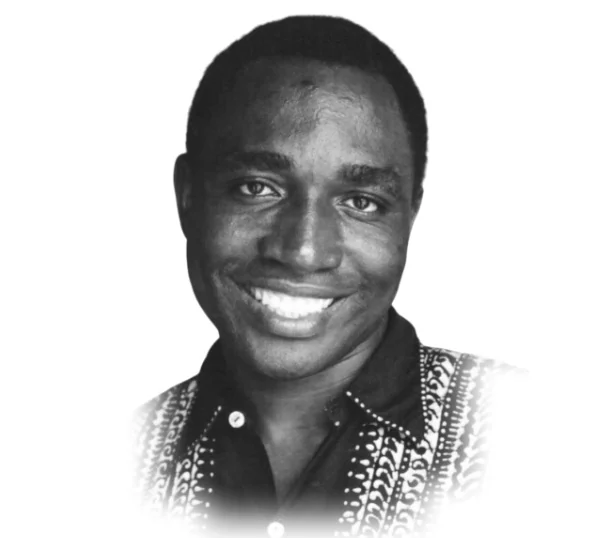
Scientifique et enseignantchimie, microbiologie et enseignement supérieur
Éditeurédition technique, librairie et compilation de recueils
FondateurEllel Ministries et développement international de centres
Auteur et formateurouvrages et enseignements sur guérison, délivrance et discipulat

Prudence documentaire : les dates de formation, de carrière, de fondation et de transmission sont publiquement situables. Le récit de l’appel reçu en restaurant l’Alvis appartient au témoignage spirituel de Peter Horrobin et aux sources officielles d’Ellel ; il est présenté ici comme tel. La photographie provient de la page biographique officielle d’Ellel UK.

Annexe 7 / 11 · hors numérotation des pages

Fiche de présentation — Ellel Ministries

Annexes contemporaines · fiche de présentation

Ellel Ministries

Fondé dans le nord-ouest de l’Angleterre par Peter Horrobin, Ellel se définit comme un ministère chrétien international non confessionnel qui cherche à servir l’ensemble du Corps du Christ.

Accents théologiques et pratiques

Convictions et vie chrétienne

L’enseignement sur le Royaume de Dieu et le service de l’ensemble du Corps du Christ structurent la présentation du ministère, qui se définit comme chrétien international non confessionnel.

Prière et pratiques spirituelles

Guérison intérieure, prière, délivrance, restauration, discipulat et formation. Ces termes décrivent la doctrine et la pratique revendiquées par Ellel ; ils ne constituent pas une évaluation clinique.

Formation et discipulat

Former à la relation d’aide et à l’accompagnement, accueillir et soutenir des personnes en détresse, et promouvoir des actions de bienfaisance et de formation, en lien avec Ellel Ministries International.

Mission et vie d’Église

Ellel affirme travailler avec et pour des Églises de plusieurs dénominations. Son rôle déclaré est celui d’une œuvre de service et de formation, non celui d’une union d’Églises.

Origines et organisation

Origine

Le ministère commence en 1986 à Ellel Grange, près de Lancaster. Le siège international demeure associé à ce centre anglais.

Fonction principale

Accueillir, enseigner sur le Royaume de Dieu, proposer un ministère de prière aux personnes en demande et former des chrétiens à l’accompagnement.

International

Un réseau de centres et d’équipes dans plusieurs pays, reliés à Ellel Ministries International. Le nombre et la liste des implantations sont des données évolutives.

In France

Ellel Ministries France est une association déclarée, créée le 25 juillet 2011.

Positionnement dans le paysage chrétien

Une organisation chrétienne paraecclésiale et interconfessionnelle de formation et de ministère de prière. « Paraecclésiale » signifie qu’elle agit à côté des Églises et à leur service ; cela ne veut dire ni « Église locale », ni « dénomination », ni « fédération d’Églises ».

Repères de lecture

Les expressions « guérison » et « délivrance » sont ici rapportées comme le vocabulaire religieux propre au ministère. Elles ne désignent pas un service de santé et ne remplacent pas un suivi médical, psychologique ou social professionnel.

Consulter les sources de ce dossier

Annexe 8 / 11 · hors numérotation des pages

Comparaison de statut — Ellel, CMFI / CMCI et Hopesland

Proximité spirituelle et formes d’organisation

Trois œuvres évangéliques,
des statuts distincts

La prière, le discipulat et la mission apparaissent dans la présentation d’Ellel Ministries, de la CMFI–CMCI et de Hopesland Ministries. Leurs fonctions et leurs formes d’organisation restent distinctes.

CritèreEllel MinistriesCMFI / CMCIHopesland Ministries
Nature Ministère chrétien international non confessionnel ; œuvre paraecclésiale de service. Mouvement évangélique missionnaire autonome, organisé pour former des disciples et implanter des Églises. Association chrétienne portant un ministère missionnaire et de formation, ainsi qu’un réseau de communautés partenaires.
Fonction Enseignement, formation, retraites, accompagnement et ministère de prière. Évangélisation, discipulat, vie communautaire et développement d’assemblées locales. Évangélisation, missions, aide humanitaire, formations bibliques et discipulat.
Public Des chrétiens venant d’Églises diverses ; Ellel affirme travailler avec les Églises locales. Des membres, disciples, responsables et assemblées rattachés au mouvement selon ses structures nationales et locales. Des participants aux formations et rencontres, ainsi que les communautés partenaires présentées par l’œuvre.
Appartenance Participer à une formation ou recevoir un accompagnement n’établit pas, à lui seul, une appartenance ecclésiale. L’appartenance se rapporte normalement à une communauté ou à une structure du mouvement. Le site dit réunir des communautés démarrées ou formées au travers du ministère. Participer à une formation ne suffit pas à établir une affiliation.
France Association déclarée, créée le 25 juillet 2011. Cette forme juridique soutient une activité de ministère et de formation. Les structures juridiques peuvent varier selon les pays et les assemblées ; le statut religieux pertinent reste celui d’un mouvement d’implantation d’Églises. Association déclarée active depuis le 27 février 2025.
Trois modes d’organisation

Ellel accompagne des personnes issues de plusieurs Églises ; la CMFI–CMCI constitue et développe ses propres communautés ; Hopesland associe un ministère de mission et de formation à un réseau de communautés partenaires.

La formation annoncée par Hopesland avec un responsable d’Ellel constitue une coopération ponctuelle ; elle ne démontre ni fusion, ni affiliation, ni identité doctrinale complète.

Note de méthode : il faut distinguer le statut juridique d’une entité locale, sa fonction religieuse et son éventuelle affiliation. Une association déclarée peut soutenir des activités très différentes ; cette forme juridique ne suffit donc pas à établir un même statut ecclésial pour ces trois œuvres.

Annexe 9 / 11 · hors numérotation des pages

Frise — Cyril Cerdan et Hopesland Ministries

Complément de la frise · France · XXIe siècle

Cyril Cerdan
et le développement de Hopesland

Une trajectoire missionnaire française qui associe témoignage de conversion, formation biblique, action humanitaire, pratiques charismatiques et constitution récente d’une association et d’un réseau de communautés.

Parcours personnel

La biographie officielle évoque un parcours personnel difficile avant sa conversion, rapporté dans son témoignage.

témoignage officiel
Conversion

Il dit avoir rencontré le Christ et avoir été libéré de ses addictions et de ses « liens » spirituels.

témoignage officiel
Formation et appel

Le site mentionne une formation théologique, une reconnaissance dans le ministère et un appel à « équiper les saints ».

site Hopesland
Missions humanitaires

Il est présenté comme missionnaire engagé dans l’action humanitaire et président d’Empreinte d’Espoir.

sites officiels
Association Hopesland

Hopesland Ministries est active depuis le 27 février comme association déclarée, RNA W261006729.

répertoire Sirene
Réseau de communautés

Hopesland dit réunir des communautés partenaires ; Cyril Cerdan est aussi présenté comme pasteur de Parole de Vie.

site Hopesland
Formations et missions

Le calendrier mentionne France, Suisse, Luxembourg et La Réunion, avec enseignements, guérison et délivrance.

calendrier officiel
Coopération avec ELLEL

Une formation mensuelle est annoncée à Saint-Laurent-du-Pont avec Patrick Chambron et Cyril Cerdan.

calendrier officiel
Conversion revendiquée · 2010→Missions humanitaires · dès 2014→Association Hopesland · 2025→Réseau et formations · 2026

Lecture : cette frise distingue le témoignage spirituel de Cyril Cerdan, les affirmations doctrinales de Hopesland et les repères administratifs vérifiables. Le titre d’« apôtre » appartient à la communication du ministère ; il ne correspond pas à un statut juridique ni à une fonction reconnue par l’ensemble des Églises protestantes.

Annexe 10 / 11 · hors numérotation des pages

Galerie — Cyril Cerdan

Galerie des portraits · Évangélisme charismatique français

Missionnaire principal de Hopesland Ministries, formateur et responsable de réseau ; sa communication emploie également le titre d’« apôtre », présenté ici comme un titre interne au ministère.

Missionnaireévangélisation, campagnes et actions humanitaires en France et dans les nations
Pasteurprésenté par Hopesland comme pasteur principal de Parole de Vie
Formateurdiscipulat, Bible, prophétie, guérison et délivrance
« Apôtre »titre revendiqué dans la communication du réseau, sans portée administrative générale

Prudence documentaire : le parcours antérieur à 2010, la conversion, la délivrance et l’appel relèvent du récit autobiographique diffusé par Hopesland. L’existence juridique de l’association depuis 2025 et le calendrier public sont vérifiables séparément. La photographie provient du site de la Rencontre Foi, Guérison et Délivrance 2025.

Annexe 11 / 11 · hors numérotation des pages

Fiche de présentation — Hopesland Ministries

Annexes contemporaines · fiche de présentation

Hopesland Ministries

Hopesland — et non « Homeland » — se présente comme une œuvre chrétienne missionnaire et humanitaire voulant « impacter les nations par l’Évangile », tout en réunissant un réseau de communautés partenaires.

Accents théologiques et pratiques

Convictions et vie chrétienne

Salut par grâce au moyen de la foi, Jésus-Christ comme unique médiateur, baptême par immersion, ouverture aux dons du Saint-Esprit et recours aux « cinq ministères » d’.

Prière et pratiques spirituelles

Guérison, délivrance, prophétie, « signes, miracles et prodiges », formation de disciples et dimension dite apostolique. Il s’agit du vocabulaire religieux revendiqué par l’œuvre.

Formation et discipulat

Évangélisation, missions, aide humanitaire, formations bibliques, discipulat et organisation de réunions en France et à l’étranger.

Mission et vie d’Église

Le site dit rassembler des communautés partenaires démarrées ou formées au travers du ministère sous le nom Hopesland. L’association et le réseau religieux sont donc liés, mais ne doivent pas être confondus avec une fédération protestante.

Origines et organisation

Statut administratif

Association déclarée active depuis le 27 février 2025.

Orientation

Le classement descriptif le plus proche est évangélique charismatique, à accent pentecôtisant et apostolique-prophétique. C’est une analyse de ses croyances et pratiques publiées, non l’affirmation d’une affiliation dénominationnelle officielle.

Calendrier 2026

Le programme publié mentionne notamment Saint-Laurent-du-Pont, Le Creusot, plusieurs lieux en Suisse, le Luxembourg et La Réunion, ainsi que des formations en présence ou à distance.

Lien avec ELLEL

Hopesland annonce une formation biblique mensuelle à Saint-Laurent-du-Pont avec Patrick Chambron, présenté comme responsable d’ELLEL Ministries, et Cyril Cerdan. Cette coopération ponctuelle ne démontre ni fusion, ni affiliation, ni identité doctrinale complète.

Positionnement dans le paysage chrétien

Une association chrétienne portant un ministère missionnaire et de formation, ainsi qu’un réseau de communautés à identité évangélique charismatique. Hopesland n’est pas, d’après les éléments consultés, une union nationale d’Églises comparable à la FPF ou au CNEF.

Repères de lecture

Les termes « guérison », « délivrance », « prophétie », « miracles » et « apôtre » sont rapportés comme le vocabulaire de Hopesland. Ils ne constituent ni une validation médicale des témoignages publiés, ni une appréciation de l’autorité spirituelle revendiquée. Toute situation de santé requiert un accompagnement professionnel approprié.

Consulter les sources de ce dossier

A last word before the sources

Gathering with Christ

He who is not with Me is against Me, and he who does not gather with Me scatters.
(BSB)

This saying gives no licence to hand out hasty verdicts on the people or ministries presented here. In its context, Jesus calls each person to take a stand in response to his work. Placed here, it is a reminder that what ultimately matters is neither the prestige of a name nor the growth of an organisation, but discerning what truly leads to Christ, gathers people around him and bears fruit in truth, love and service. The sources that follow give readers the means to pursue this discernment.

Sources

Bible quotations in the English edition are taken from the Berean Standard Bible (BSB), which is in the public domain: “The Holy Bible, Berean Standard Bible, BSB is produced in cooperation with Bible Hub, Discovery Bible, OpenBible.com, and the Berean Bible Translation Committee.” berean.bible. Matthew 18:20 is quoted from J. N. Darby’s translation (1890), also in the public domain. The Greek (Tischendorf, 8th edition) and Hebrew (Leningrad Codex) texts shown in the verse panels are in the public domain.

The key points in this guide draw on the official websites of the unions and movements presented, on academic research and on the Musée virtuel du protestantisme (virtual museum of Protestantism). Some local founding dates may vary by a few years depending on the source. The maps were drawn from public-domain geographical data; the positions of the centres are approximate. When a movement tells its own story, academic research makes it possible to measure the gap between the internal account and the documented history: both are useful, but they are not read in the same way.

Sources de l’annexe hors série

Sources on the families and the ties between them

Iconography of the medallion portraits

For several early figures, no portrait made in their lifetime is known or has been found: the medallions say so in a short caption. References consulted on 20 October 2026:

Background historical references

  • Sébastien Fath, Une autre manière d’être chrétien en France. Socio-histoire de l’implantation baptiste (1810-1950) [Another way of being Christian in France: a social history of the establishment of Baptist churches in France, 1810–1950], Labor et Fides.
  • Sébastien Fath and Jean-Paul Willaime (eds.), La nouvelle France protestante. Essor et recomposition au XXIe siècle [The new Protestant France: growth and reconfiguration in the 21st century], Labor et Fides.
  • André Encrevé (ed.), Les protestants [The Protestants] (Dictionnaire du monde religieux dans la France contemporaine), Beauchesne.
  • Patrick Cabanel, Histoire des protestants en France, XVIe-XXIe siècle [A history of Protestants in France, 16th–21st century], Fayard.
  • Jean Baubérot, Histoire du protestantisme [A history of Protestantism], PUF, “Que sais-je ?”.
  • Musée virtuel du protestantisme (Virtual Museum of Protestantism) — thematic and biographical entries (in French).

A word for the author?

Leave me a message

An error to report, an omission, a question, or simply a word of encouragement: this guide is meant to be corrected and enriched. Your message is sent to me privately; it is not published on the site.

Privacy: your message is routed to the author’s inbox by the technical provider Web3Forms and is used only to reply to you. The content and any contact details you enter are passed to the author via Web3Forms to handle your request and are not published on this site. First name and email are optional; you can ask for your message to be deleted using this same form. Web3Forms keeps a copy of messages under its own privacy policy.