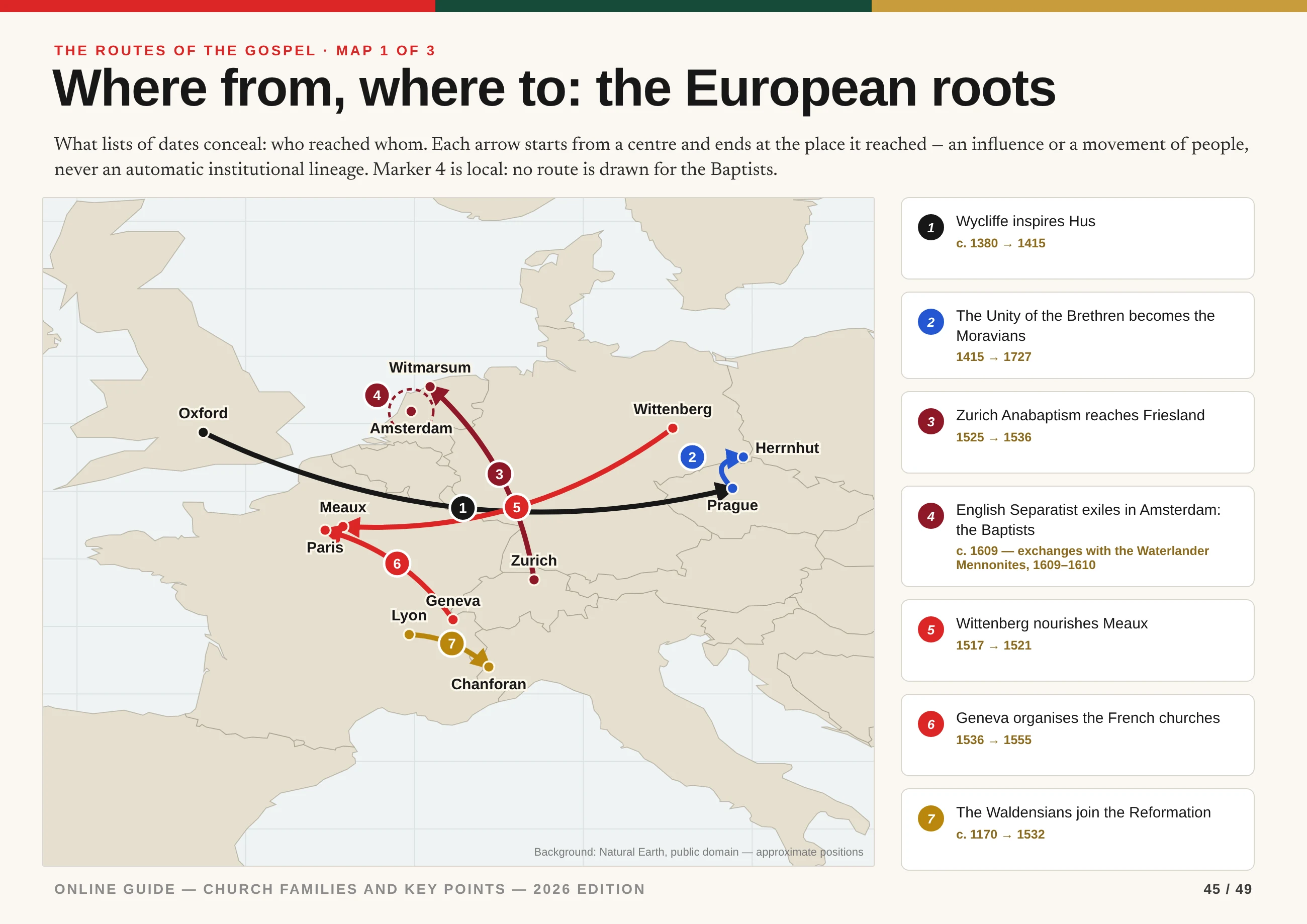
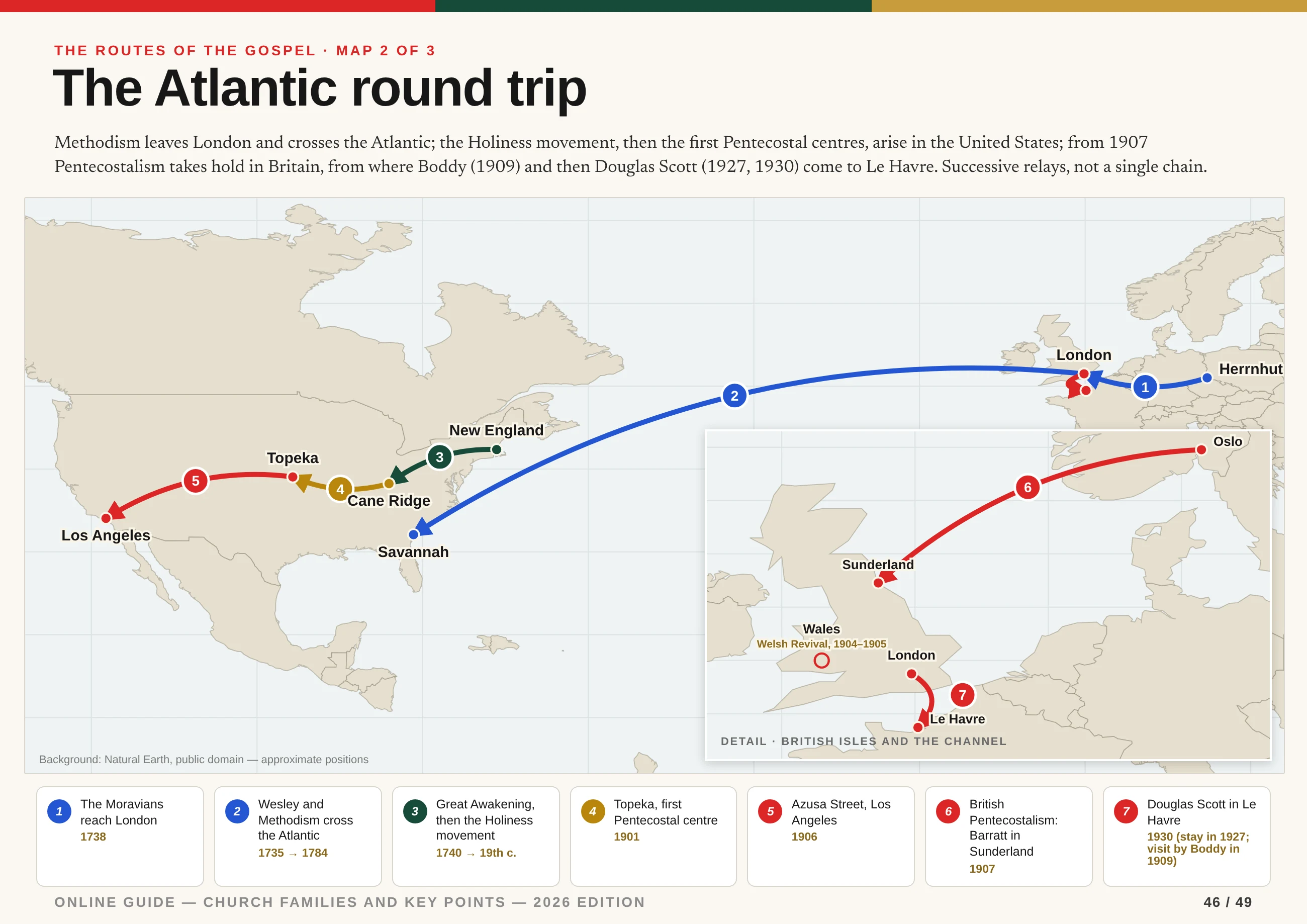
A simplified visual guide: the lines represent historical routes, not necessarily direct institutional lineages. The two “who comes from where?” summary tables set out each case in detail, with its nuances.
Plays on a loop, with pause and resume. The tables that follow remain the detailed reference.
On a small screen, use “Enlarge” and, ideally, turn your device to landscape orientation.
Reading the routes and the acronyms
* EPUdF: the present union dates from 2013; the 16th-century dates refer to its Lutheran and Reformed roots. ** Jehovah’s Witnesses: descended from one branch of the Second Adventist movements born of Millerism, they stand outside Protestantism and its Trinitarian confessions of faith, and belong neither to the FPF nor to the CNEF. *** Catch The Fire: an international neo-charismatic evangelical network, with an identified French presence in Lyon since 2017; its affiliation with the FPF or the CNEF is not documented in the public sources consulted.
The lines show a simplified historical route between a formative centre and a French point of reference. On their own, they do not prove a direct lineage, an exclusive influence or an institutional affiliation.
French milestones: first Pentecostal centres in Le Havre and Paris in 1909; growth with Douglas Scott in 1930; organisation of the ADD in 1932–1933. For Vie et Lumière: revival in Lisieux in 1950, then in Brest in 1952; mission founded in 1957; name adopted in 1961. The grey dotted line marks the comparative route of Jehovah’s Witnesses.
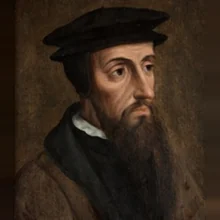
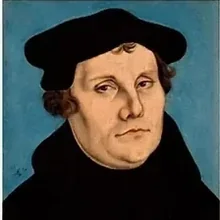
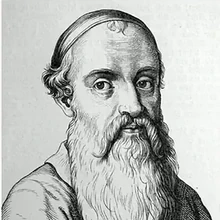
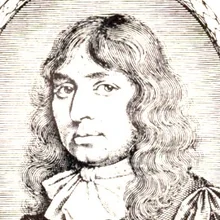
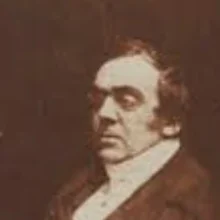
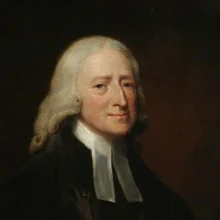
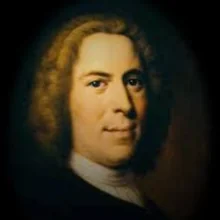
One row per family: where and when the movement was born, its arrival in France, its main root. The portraits read from left to right, from the one closest to us back to the oldest root. Contacts and influences do not necessarily amount to a direct institutional lineage.
Evangelical Reformed (UNEPREF)
Birth
Geneva, 1536
In France
Paris, 1555 (Huguenots)
Root
Calvin — magisterial Reformation
››
United Lutherans and Reformed (EPUdF)*
Birth
1517 / 1536
In France
16th c.; union in 2013
Root
Luther and Calvin
›
Mennonites (AEEMF)
Birth
Zurich, 1525
In France
Alsace, 16th– 17th c.
Root
Radical Reformation (Anabaptism)
›
Baptists (FEEBF, AEEBLF…)
Birth
Amsterdam, 1609
In France
Nomain, c. 1810–1820
Root
Origin: English Separatism. Doctrinal influence of the Waterlander Mennonites on the first group after the baptisms
Origins of the first Baptist group, c. 1609›English Puritans and Separatists c. 1580–1607›English Reformation 1534
Free Evangelical Churches (UEEL)
Birth
Paris, 1849
In France
Paris, 1849
Root
Huguenots + Geneva Réveil
››
Brethren assemblies (CAEF)
Birth
Dublin, Plymouth, 1827–1832
In France
First open assemblies planted in the second half of the 19th c.; growth in the 20th c.
Root
Open Brethren stream; British, Swiss and Italian influences; they claim the heritage of the Swiss Réveil. Distinct from the Darbyite assemblies
How the CAEF belong to the Open Brethren streamOpen assemblies in France varied paths›Open Brethren stream British milestone: 1848›Brethren of Dublin and Plymouth 1827–1832
Methodists (UEEMF)
Birth
Oxford, 1729; Aldersgate, 1738
In France
Normandy, 1791
Root
Wesley — Anglicanism + Moravians
››
Online guide · church families and key points · 2026 edition41 / 49
The Pentecostal and charismatic families, and the Adventists; the Jehovah’s Witnesses are shown separately, outside the common trunk. The international centres of Pentecostalism are distinct from the founding of the French organisations: the ADD in 1932–1933; the Gypsy mission in 1957, which became Vie et Lumière in 1961.
Assemblies of God (ADD)
Centres of the movement
Topeka (1901), Azusa Street (1906); Great Britain from 1907
In France
Centres attested in Le Havre and Paris, 1909; Scott 1927 and 1930; union 1932–1933
Root
Pentecostalism; the Holiness movement that grew out of Methodism, a major influence among others
Centres and links›French centres 1909 · growth 1930›British Pentecostalism 1907 · Boddy in Le Havre 1909›American centres 1901–1906
Vie et Lumière (Travellers)
Centres of the movement
Assemblies of God of France (1932–1933)
In France
Revival: 1950–1952; mission: 1957; name: 1961
Root
French Pentecostalism; a mission born within the Assemblies of God
Origin of the mission›Assemblies of God of France 1932–1933›French centres 1909 · growth 1930
Charismatic renewal
Birth
California, 1960; worldwide wave 1960–1980
In France
From the 1960s
Root
A current: the influence of Pentecostalism on pre-existing churches (Catholic, Reformed, Baptist, independent) that it did not found
Influence on pre-existing churchesExisting churches all families›Pentecostalism from 1901
Churches with roots in migration
Birth
Communities from a variety of Protestant traditions, formed through migration, local initiatives and transnational networks
In France
From the 1960s, with migration
Root
A category, not a denomination: several histories; the missions of the 19th–20th centuries are one of the contributions; often Pentecostal or charismatic in outlook
Contributions side by side, not a genealogyMigration·Local initiatives·Transnational networks·Missionary contributions
Catch The Fire (international network)***
Birth
Toronto, 1994
In France
Lyon, 2017
Root
Charismatic renewal, via Vineyard
Seventh-day Adventists
Birth
United States, 1844–1863
In France
Late 19th c.
Root
Millerism — Second Great Awakening
›
Hors du tronc commun : les Témoins de Jéhovah, nés du même terreau millérite que les adventistes, ne se réclament pas du protestantisme et n’y sont pas reconnus. Voir l’annexe comparative →
*The EPUdF belongs to historic Protestantism (FPF), not to the CNEF; it is included here so that readers can place the Protestant family as a whole.
***Catch The Fire is an international neo-charismatic evangelical network; its officially identified presence in France has been in Lyon since 2017. Its affiliation with the FPF or the CNEF is not documented in the public sources consulted.
Online guide · church families and key points · 2026 edition42 / 49
The FEEBF is an example of dual membership. The CNEF brings together church unions and evangelical Protestant ministries; the expression “churches of professing believers” does not give an exhaustive legal definition of it. The diagram is simplified: the size of the circles does not represent membership figures.
Dual memberships
Eight unions, not just one example
The FEEBF is not alone in belonging to both bodies. The CNEF directory lists these eight unions in its “pôle évangélique de la FPF” (the FPF’s evangelical section):
AEEMF
Association des Églises évangéliques mennonites de France (Association of Evangelical Mennonite Churches of France)In the FPF: probationary member
CÉPÉE
Communion d’Églises protestantes évangéliques (Communion of Evangelical Protestant Churches)
ERNC
Églises du réseau nouvelles connexions (churches of the New Connections network)
FEEBF
Fédération des Églises évangéliques baptistes de France (Federation of Evangelical Baptist Churches of France)
UEEAF
Union des Églises évangéliques arméniennes de France (Union of Armenian Evangelical Churches of France)
UEEL
Union des Églises évangéliques libres de France (Union of Free Evangelical Churches of France)
UEEMF
Union de l’Église évangélique méthodiste de France (Union of the Evangelical Methodist Church of France)
UNEPREF
Union nationale des Églises protestantes réformées évangéliques de France (National Union of Evangelical Reformed Protestant Churches of France)
This list was consulted on · Check the CNEF directory (in French). Memberships may change; this list does not describe every relationship between the two bodies. Status of the AEEMF: list of FPF members (in French), consulted on 28 October 2026.
Key points · heritage and unity
A shared Christian heritage, four pillars of unity
The main Protestant families presented here share a common Christian heritage, rooted in the early creeds. The four reference points below shed light on what draws them together, across the diversity of their traditions and of their statements of faith.
01
Faith in God, Father, Son and Holy Spirit
A Trinitarian reference point shared by the major Protestant confessions, rooted in the creeds of the early Church.
02
A reference to the Scriptures
The Bible nourishes faith. Protestant traditions offer diverse readings and interpretations of it.
03
Salvation by grace, through faith
The FPF charter and the CNEF statement of faith affirm salvation received through faith, as a gift of God.
04
A communion to be lived out
Dialogue, mutual aid and cooperation give life to this unity, while respecting the identities of the churches and unions.
This shared heritage finds expression within distinct institutional frameworks. In the CNEF, members share the Evangelical Alliance’s Statement of Faith. In the FPF, they subscribe to a common charter while keeping their own statements of faith. These four pillars are an educational summary of the shared heritage — not a common text that members of both bodies sign up to, nor a description of the personal faith of each member.
Lineage is not traced through church unions alone. For a century and a half, the families have met above all in ministries that none of them could have sustained alone — and it is often there that closer ties began, well before the official structures.
ITraining
Bible institutes and theological faculties where Baptists, members of the Free Evangelical Churches, Brethren, Methodists and Pentecostals study side by side. This cooperation predates the 1960s: the Nogent Bible Institute has been interdenominational since 1921.
IITranslating and distributing
Bible societies, publishing houses, bookshops: translating and distributing the Bible gradually becomes a shared, interdenominational undertaking. Lefèvre d’Étaples predates the formation of most of the families presented here.
IIIChurch planting
Church-planting missions — Perspectives and many others — working in towns with no evangelical witness.
IVServing
Mutual aid, hospital and prison chaplaincies, care for the most vulnerable: the Mission populaire (Robert McAll, Belleville, 1872) and the Salvation Army (in France since 1881) are two major expressions of this social action, among others; they are not its only origins.
Reading notes
Working together without becoming identical
A shared ministry comes into being when a need goes beyond the means of a single family of churches. It brings skills and resources together around a specific mission, without erasing the convictions or the responsibilities of each partner.
CRIT. 01
A defined aim
Training, translating, sending or serving: this is the common objective. Agreement concerns this task first; it does not presuppose complete uniformity of doctrine, liturgy or church government.
CRIT. 02
Identifiable governance
A faculty, a mission or a social ministry normally has its own leaders, statutes and oversight rules. Taking part in its work does not mean becoming a member of a new church.
CRIT. 03
A real historical effect
The relationships of trust built up in day-to-day work can pave the way for wider rapprochement. But long-standing cooperation does not, on its own, prove a present-day affiliation.
Shared ministry ≠ church union
A ministry gathers people or institutions around a service; a church union organises a lasting church membership. Some ministries begin within one family and then open up to others; some remain deliberately interdenominational.
Three useful questions
Who is legally responsible for the ministry?
What specific mission does it share?
What does taking part really mean?
Online guide · church families and key points · 2026 edition44 / 49
Animation · reading a profile
Tracing a lineage, link by link
Each profile reads from left to right: from today’s union back to its roots, all the way to the Reformation. The animation traces the chains of seven families, one after another.
The BaptistsSurvolez pour mettre en pause — les pages 23 à 30 font référence.
The Holiness movement is a major influence, but Pentecostalism is not the outcome of a single causal chain running from Wesley; the map distinguishes the American centres, the spread to Great Britain (1907) and the arrival of British preachers in France (1930).
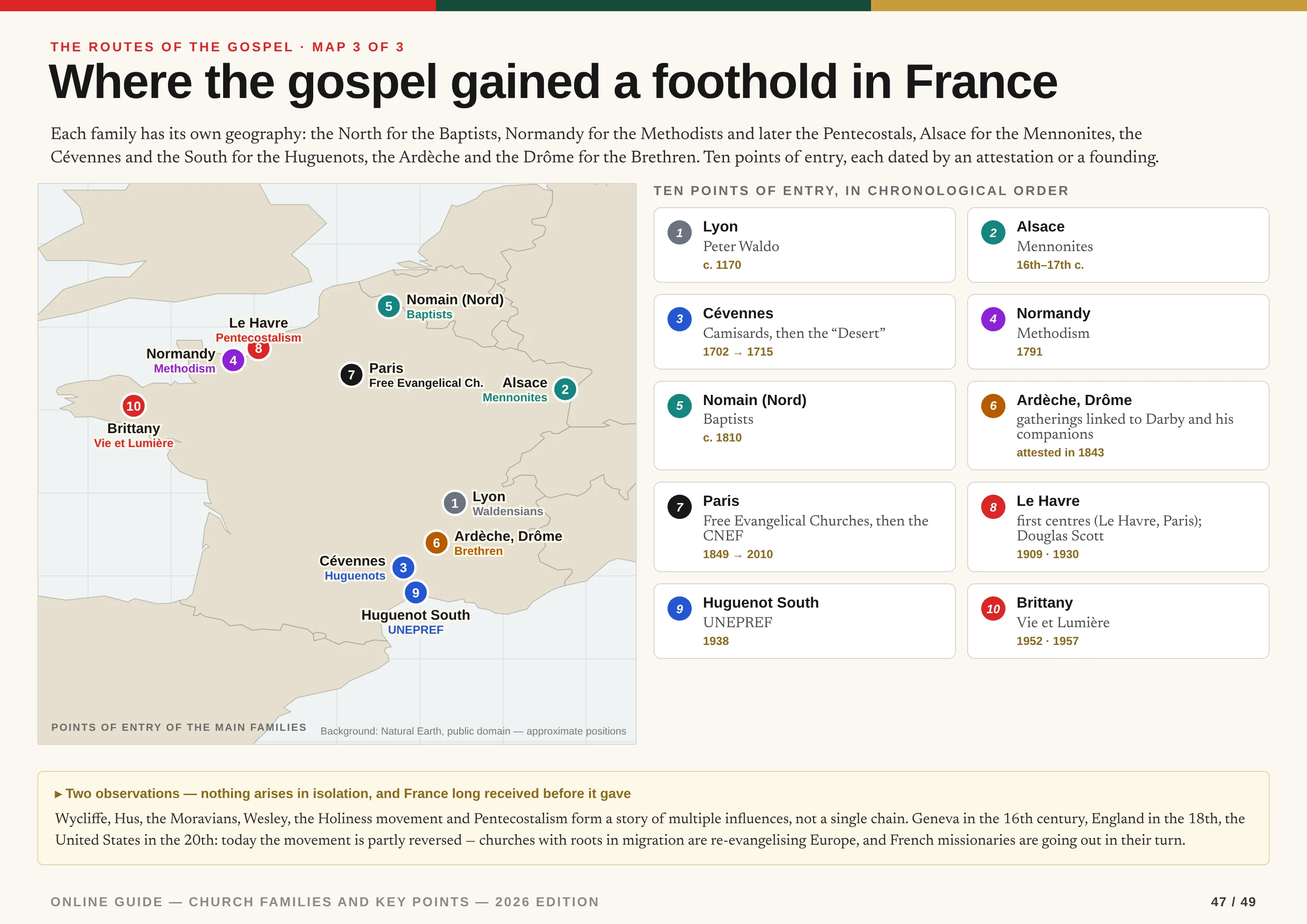
Ten points of entry into France, each dated by an attestation or a founding; for the Ardèche and the Drôme, 1843 is the date of an attestation (a letter from Darby), not of a founding.
Animation · the three maps
Routes in motion
On a geographical background, the arrows of the three maps are drawn one by one, in chronological order: European roots, the Atlantic round trip, then points of entry into France.
Fond géographique simplifié : Natural Earth, domaine public. Les positions restent approximatives ; les pages 42 à 44 font référence.
Sébastien Fath, Une autre manière d’être chrétien en France. Socio-histoire de l’implantation baptiste (1810-1950) [Another way of being Christian in France: a social history of the establishment of Baptist churches in France, 1810–1950], Labor et Fides.
Sébastien Fath and Jean-Paul Willaime (eds.), La nouvelle France protestante. Essor et recomposition au XXIe siècle [The new Protestant France: growth and reconfiguration in the 21st century], Labor et Fides.
André Encrevé (ed.), Les protestants [The Protestants] (Dictionnaire du monde religieux dans la France contemporaine), Beauchesne.
Patrick Cabanel, Histoire des protestants en France, XVIe-XXIe siècle [A history of Protestants in France, 16th–21st century], Fayard.
Jean Baubérot, Histoire du protestantisme [A history of Protestantism], PUF, “Que sais-je ?”.
Musée virtuel du protestantisme (Virtual Museum of Protestantism) — thematic and biographical entries (in French).
 ›
 ›
 ›
 ›English Puritans and Separatists
 ›
 ›
 ›
 ›