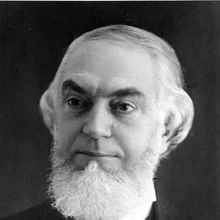
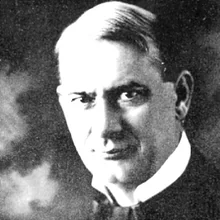
Jehovah’s Witnesses descend from the Second Adventist streams born of Millerism, along a path distinct from that of the Seventh-day Adventists. They share common ground with American evangelicalism: the Second Great Awakening and its dream of restoring primitive Christianity. When the predicted return of Christ in 1844 fails to happen, the Millerite movement breaks apart; it is through contact with former Millerites (George Storrs, Nelson Barbour) that Charles T. Russell forges his doctrine in the 1870s: prophetic chronologies, the annihilation of the wicked rather than hell, and the rejection of the Trinity — the Son being God’s first creation, a non-Nicene and subordinationist Christology, distinct from the Trinitarian Protestant confessions.
In 1879, Russell launches The Watchtower. After his death in 1916, Joseph Rutherford reorganises part of the Bible Students, which will take the name Jehovah’s Witnesses on 26 July 1931, in Columbus. It is a schism: several groups refuse this leadership and continue separately. Among them are the Pastoral Bible Institute (1918), Alexandre Freytag’s Friends of Man in Switzerland, Paul Johnson’s Laymen’s Home Missionary Movement (1919, known as the “Epiphany” movement), the Dawn Bible Students Association (1932) and the Free Bible Students. Several of these groups have congregations in France and in Europe. Attendance at meetings falls by nearly 75% between 1922 and 1928.
The changes under Rutherford
This reorganisation is accompanied by successive changes: the failed prophecy of Armageddon in 1925, the abandonment of Christmas (celebrated for the last time at Bethel in 1926) and of pyramidology in 1928, the abolition of the editorial committee and the adoption of the name “Jehovah’s Witnesses” in 1931, the doctrine of the “great crowd” and the refusal to salute the flag in 1935, the rejection of the cross in 1936 and theocratic government in 1938.
The divergence from the Trinitarian confession predates Rutherford: Russell already taught that the Son had received divinity as a gift and that the Holy Spirit was the manifestation of God’s power rather than a person. A fraction of the Bible Students thus becomes Jehovah’s Witnesses; the others continue along their separate paths.
Protestant churches do not recognise them as a Protestant family, and they themselves do not claim to belong to Protestantism: they present themselves as the restoration of primitive Christianity. Present in France since the beginning of the 20th century, the Witnesses belong neither to the FPF nor to the CNEF: their anti-Trinitarian doctrine places them outside confessing Protestantism, which holds the full divinity of Christ (Nicaea, 325) to be the heart of the faith. Their history, on the other hand, shows where they come from: a branch of 19th-century American Protestantism, a restorationist stream whose doctrines diverge from the Trinitarian Protestant confessions. This last assessment is a matter of theological comparison.
Key point · the same distant roots as evangelicals (American revivals, restorationism), but a doctrinal break — the Trinity — that places them outside the common Protestant trunk.
The doctrinal reference point for this comparison is the Trinitarian confession of Nicaea (325), completed at Constantinople (381). A comparison with ancient Arianism can shed light on a doctrinal point without treating the two historical situations as identical. Assessments of the relationship to sola scriptura belong to a Protestant theological reading. The difference concerns doctrines, never the worth of individuals: this appendix presents a genealogy, not a warning. The timeline and the animation set this path apart in grey, outside the common trunk.