The historical timeline

The historical journey

Explore the main stages of Protestant history: forerunners, the Reformation, revivals, Pentecostalism and church unions in France.

Three and a half centuries separate Waldo from Wittenberg. What the forerunners had carried, sometimes at the cost of their lives, Luther, Zwingli and Calvin would secure on the scale of whole peoples.

The fathers of Protestantism

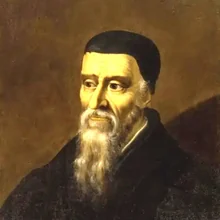
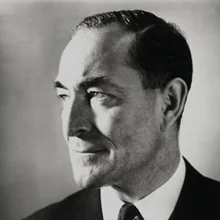
Martin Luther1483-1546Read his page
Ulrich Zwingli1484-1531Read his page
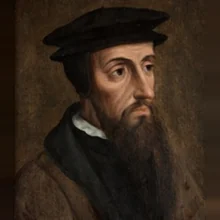
John Calvin1509-1564Read his page

What Luther, Zwingli and Calvin did

Three men, three countries, one conviction: Scripture before the institution. Within a quarter of a century, they turned an internal protest within the Roman Church into organised churches, each with a confession of faith, a liturgy and trained pastors.

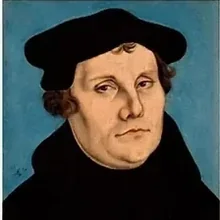
Martin Luther

1483-1546 · Wittenberg, Saxony

Augustinian monk and professor of theology. On 31 October 1517 his Ninety-five Theses challenge the trade in indulgences; the printing press spreads them across Europe within a few weeks. Summoned to recant before the emperor at the Diet of Worms in 1521, he refuses. In hiding at the Wartburg, he translates the New Testament into German (1522), then the whole Bible (1534). German translations already existed, but the clarity and exceptional circulation of his greatly widened direct access to the biblical text. His discovery fits in one sentence — salvation is received by faith, as a gift, not earned by works.

From him come the Lutheran churches.

Ulrich Zwingli

1484-1531 · Zurich

Priest and preacher at the Grossmünster from 1519, he expounds Scripture book by book, from the first verse to the last, and has removed from worship whatever the Bible does not prescribe: images, organs, the Mass. More radical than Luther on some points, he breaks with him at the Marburg Colloquy in 1529: for Zwingli, the Lord’s Supper is a memorial and not a real presence. He dies at the Battle of Kappel in 1531.

From him comes the Swiss Reformed branch. In Zurich, several of those close to him — Conrad Grebel, Felix Manz — judging the reform too slow, break with him over infant baptism and baptise adults from 1525: this circle is one of the first organised centres of Anabaptism.

John Calvin

1509-1564 · Noyon, then Geneva

A Frenchman, trained as a lawyer, exiled for his faith. In 1536, at twenty-six, he publishes the Institutes of the Christian Religion, the first comprehensive exposition of the Reformed faith; he will translate it into French himself in 1541, making his language a language of theology. In Geneva he gives the church a lasting organisation — pastors, teachers, elders, deacons — and in 1559 founds an Academy that will train pastors for the whole of Europe, many of whom will go back to evangelise France at the risk of their lives.

From him come the Reformed churches, including the French Huguenots.

None of the three was seeking to found a denomination in today’s sense. The break with the Catholic Church nevertheless took different forms: Luther’s excommunication in 1521, the gradual civic adoption of the Reformation in Zurich, Calvin’s separation from the Catholic Church in 1534. The families described in this guide arise from this movement — most often after their deaths, sometimes in disagreement with them, always claiming the same authority: that of Scripture.

Three reference points to keep your bearings

The “magisterial” Reformation (Luther, Calvin, Anglicanism) reforms territorial churches, supported by the civil authorities: church membership goes hand in hand with territory and infant baptism. The “radical” Reformation (the Anabaptists, 1525) gives the church of professing believers a lasting institutional form in the 16th century: one enters it through personal faith, marked by believers’ baptism. The revivals (Pietism, Methodism, the Geneva Réveil (the 19th-century revival), Pentecostalism) periodically rekindle the flame of personal conversion within both models. Present-day French evangelicalism was born of the meeting of these three currents.

These three reference points — two models of church (territorial, and of professing believers) and one phenomenon that runs through both (the revivals) — are enough to read the whole timeline. Here is why they are needed.

Four pitfalls to avoid

Four pitfalls recur in any history of Protestantism. Knowing them in advance is usually enough to avoid them.

  1. Words change their meaning. In 1520 “evangelical” meant “faithful to the gospel”, and so Lutheran; today it names a family of churches. “Reformed” refers both to the 16th-century movement and to a present-day French denomination. The glossary of terms clarifies the meaning in each context.
  2. Lineages do not form a tree. The families borrow from one another: Methodism nourishes Pentecostalism, which then returns to Reformed churches through the charismatic renewal. Hence the first reference point: think in terms of two models of church rather than separate branches.
  3. Revivals come back. Pietism, Methodism, the Geneva Réveil, Azusa Street: the same impulse resurfaces across four centuries. Hence the third reference point: a revival is not a new family but a phenomenon that runs through the existing families.
  4. Many names, many acronyms. Twenty-four figures and some twenty acronyms appear throughout the guide. The gallery of faces (pages 12 to 16) and the glossary are there so that they are not confused.

Two pitfalls concern vocabulary, two the way we picture history: the glossary answers the first, the three reference points the second.

Colour code of the families

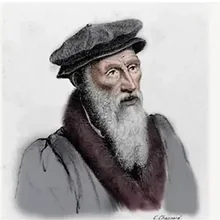
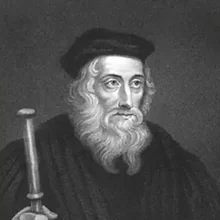
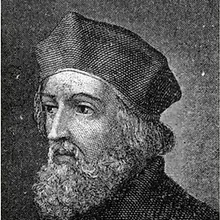
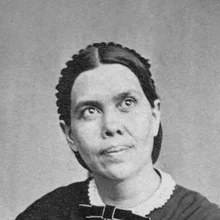
  • General history, civil powerPeter Waldo, Wycliffe, Jan Hus
  • Reformed and Lutherans (Huguenots)John Calvin, Antoine Court
  • Anabaptists, Mennonites, BaptistsMenno Simons, John Smyth
  • Free Evangelical Churches and Brethren assembliesFrédéric Monod, J. N. Darby
  • Moravians, Methodists, revivalsJohn Wesley, Robert Haldane
  • Pentecostals and charismaticsDouglas Scott, Clément Le Cossec
  • Shared structuresFPF 1905, CNEF 2010
  • Millerism and AdventismWilliam Miller, Ellen White
The colour code of the eight families, shown in large format on page 11. Click on a portrait to open the page of the corresponding family.
Animation · at a glance

The timeline in motion

Eight coloured threads organise the historical milestones of the journey. The turquoise thread groups traditions that share baptism on profession of faith; it does not represent a single lineage between them. The nine pages that follow tell the story of this picture in detail.

The drawing starts when the timeline comes into view — page 1 is the reference.

The timeline: from the forerunners to the CNEF

Each family follows its own coloured thread; the grey thread carries general history and civil power. On the left: the date, the place and the face of the figure concerned. In the centre, each thread begins at its family’s first event and runs to its last; a dot marks the event, and the heading takes up the family’s colour.

  1. c. 1170LyonPeter Waldo — Later depiction: no contemporary portrait is known

    general history and civil power — Peter Waldo and the Waldensians

    A wealthy merchant of Lyon gives away his goods and preaches the gospel in the language of the people. Excommunicated in 1184, the “Poor of Lyon” survive for three centuries in the Alpine valleys — and will join the Reformation at the Synod of Chanforan (1532).

  2. c. 1380OxfordJohn Wycliffe — Later depiction: no contemporary portrait is known

    general history and civil power — John Wycliffe

    The Oxford theologian places Scripture above the pope and launches the first complete translation of the Bible into English, completed after his death by those close to him. His followers, the Lollards, persecuted, will survive underground until the Reformation.

  3. 1415ConstanceJan Hus — Later depiction: no contemporary portrait is known

    general history and civil power — Jan Hus at the stake

    Having come to the council with an imperial safe-conduct that would not be honoured, the Prague preacher, a disciple of Wycliffe, is burned on 6 July 1415. His followers will found the Unity of the Brethren in 1457 — from which the Moravian Brethren descend.

Online guide · timeline · 2026 edition1 / 49

  1. 1517WittenbergPortrait of Martin Luther

    Lutheran Reformation — Luther’s 95 Theses

    An Augustinian monk challenges the trade in indulgences; the printing press spreads the text across Europe within a few weeks. Excommunicated in 1521, Luther translates the New Testament at the Wartburg in eleven weeks: the people can read Scripture in their own language.

  2. 1521Meaux

    Reformed — The Meaux circle

    Around Bishop Briçonnet, Lefèvre d’Étaples translates the New Testament into French (1523). The first dawn of the gospel movement in France; repression follows from 1523 with the first French martyr, Jean Vallière, burned in Paris.

  3. 1525Zurich

    Anabaptists and Baptists — The birth of Anabaptism

    On 21 January 1525, Grebel and Manz baptise adults on profession of faith: a break with the state church. Zurich is one of the first centres of Anabaptism. The Mennonite and Baptist traditions share baptism on profession of faith, but their historical trajectories are distinct: the first Baptists emerged from English Separatist circles.

  4. 1532Chanforan, PiedmontGuillaume Farel — Anonymous 16th-century portrait (Bibliothèque de Genève); attribution unconfirmed

    Reformed — The Waldensians join the Reformation

    Guillaume Farel, the evangelist of French-speaking Switzerland, persuades the Synod of Chanforan that the heirs of Peter Waldo should join the Reformation and fund the first French Bible translated from the Hebrew and Greek — Olivétan’s, printed in Neuchâtel in 1535. Four years after Chanforan, it is Farel who will keep Calvin in Geneva.

  5. 1534 · 1559London

    English institutional marker — The English Reformation

    In 1534 the Act of Supremacy makes Henry VIII head of the Church of England: an institutional break with Rome, without major doctrinal change. The doctrinal and liturgical transformations come later — the Book of Common Prayer (1549), the Elizabethan Settlement (1559), the Thirty-nine Articles (1563-1571). The first Baptists emerged at the beginning of the 17th century from English Separatist circles. Methodism, for its part, was born in the 18th century as a revival movement within the Church of England. This grey marker sets the institutional context of the English Reformation; the Anglican family is presented on its own page.

  6. 1536Basel, then GenevaPortrait of John Calvin

    Reformed — Calvin publishes the Institutes

    Exiled after the Affair of the Placards (1534) and the repression that followed, Calvin publishes in Basel the Institutes of the Christian Religion: the French-speaking Reformation has its theology. Geneva becomes the hub of French Protestantism.

Online guide · timeline · 2026 edition2 / 49

  1. 1555Paris

    Reformed — The Reformed churches organise

    After a first properly constituted church in Meaux around 1546, Paris acquires a pastor, elders and deacons in 1555; other churches follow. In 1559 the first national synod adopts a common confession of faith — ratified at La Rochelle in 1571 — and a presbyterian-synodal discipline. On the eve of the Wars of Religion there would be between 1,200 and 2,000 Reformed churches, depending on the sources: this is the Huguenot people.

  2. 1572Paris

    general history and civil power — The St Bartholomew’s Day Massacre

    After ten years of civil wars opened by the massacre of Wassy (1562), thousands of Huguenots are massacred in Paris and in the provinces. French Protestantism will never fully recover demographically.

  3. 1598Nantes

    general history and civil power — The Edict of Nantes

    Henry IV grants the Reformed freedom of conscience, worship authorised place by place, access to public offices and fortified towns of refuge. Declared “perpetual and irrevocable”, this peace settlement remains a concession from the king — and what one king grants, another can take back.

  4. 1609AmsterdamJohn Smyth — Attribution unconfirmed; image used for illustration

    Anabaptists and Baptists — The first Baptist church

    John Smyth, an English Separatist exiled in Amsterdam, baptises himself and then his congregation — probably at the beginning of 1609 —: believers’ baptism and a Reformed heritage. In the months that follow, exchanges with the Mennonites of the city transform his theology and lead him to seek admission among them. Helwys and a minority refuse this union and pursue a distinct Baptist path: back in London in 1612, Helwys founds the first Baptist church in England there and calls for freedom of conscience for all.

  5. 1685Fontainebleau

    general history and civil power — The Revocation of the Edict of Nantes

    Louis XIV outlaws Protestantism: churches razed, pastors banished, children forcibly baptised. Some 200,000 Huguenots leave for Switzerland, the United Provinces, Prussia and England — this is the Refuge; those who stay pray in secret, at the risk of being sentenced to the galleys.

Side note: Meaux, around 1546 — the first properly constituted Reformed church in the kingdom, on the Strasbourg model.

Online guide · timeline · 2026 edition3 / 49

  1. 1715Les Montèzes, CévennesAntoine Court — No portrait of Antoine Court has been found: his initials take the place of a face

    Reformed — The “Desert”: Antoine Court

    Antoine Court, aged twenty, convenes the first clandestine synod, thirteen years after the armed revolt of the Camisards (1702-1710). For seventy years, the churches “of the Desert” hold worship in the scrubland, at the risk of their pastors’ lives.

  2. 1727Herrnhut, SaxonyPortrait of Nikolaus von Zinzendorf

    revivals and Methodism — The Moravian revival

    Heirs of Jan Hus, given refuge by Count Zinzendorf, experience on 13 August 1727 a revival that reconciles them. They launch a chain of prayer kept up day and night for a hundred years and, from 1732, send out their first missionaries — to the West Indies, then to Greenland.

  3. 1730Aigues-MortesMarie Durand — Image of unknown origin, used for illustration; no contemporary portrait has been found

    Reformed — The Tower of Constance: Marie Durand

    Imprisoned at nineteen because she is the sister of a pastor of the Desert, Marie Durand refuses to abjure and spends thirty-eight years in the tower of Aigues-Mortes. The word carved into the well-curb is usually transcribed “REGISTER”, an Occitan form of “résister” (resist); “resister” is a modernised reading of it. Traditionally attributed to the women held captive there, this carving cannot be attributed with certainty to Marie Durand herself.

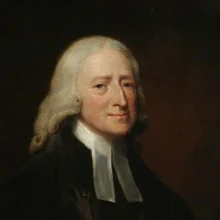
  4. 1738LondonPortrait of John Wesley

    revivals and Methodism — John Wesley’s conversion

    Through contact with the Moravians, Wesley feels his heart “strangely warmed” on 24 May 1738, at Aldersgate Street, during a reading of Luther’s preface to the Epistle to the Romans. This experience gives a decisive evangelical impetus to the Methodist movement, already begun at Oxford in 1729: open-air preaching, small groups, practical holiness and the hymns of his brother Charles.

  5. 1740New England

    revivals and Methodism — The Great Awakening

    Whitefield preaches in the open air to immense crowds; Jonathan Edwards writes to distinguish true conversion from mere excitement. The revival cuts across all the denominations: it is the matrix of modern evangelicalism.

Online guide · timeline · 2026 edition4 / 49

  1. 1787Versailles

    general history and civil power — The Edict of Toleration

    Louis XVI restores civil status to Protestants — legal recognition of births, marriages and deaths — but not yet freedom of worship: that will come with the Declaration of Rights of 1789. The Organic Articles (1802) will then organise the Reformed and Lutheran churches.

  2. 1791Normandy

    revivals and Methodism — Methodism arrives in France

    William Mahy, a native of Guernsey, is sent to the Continent: the Methodist Conference of 1791 enters “France” in its records. From Normandy the movement will spread to the South; a French Methodist union will take shape in the 19th century.

  3. 1810Nomain, Nord

    Anabaptists and Baptists — The first French Baptists

    A rural revival spreads through the Nord; the evangelist Henri Pyt, who came out of the Geneva Réveil (the revival of the 1810s–1820s), settles there in 1819, and around 1820 the first Baptist church in France is born. American missions will later come to support the movement.

  4. 1817GenevaPortrait of Robert Haldane

    revivals and Methodism — The Geneva Réveil

    Under the impetus of the Scotsman Robert Haldane, who reads the Epistle to the Romans with them, César Malan, Frédéric Monod and Merle d’Aubigné receive a decisive impulse. Adolphe Monod later becomes a major French figure of the Réveil, without belonging to the same first Genevan circle. Conversion and the authority of Scripture lie at the heart of this renewal, which spreads to the churches of France.

  5. 1832Plymouth, then SwitzerlandPortrait of John Nelson Darby

    Brethren and Free Evangelical Churches — John Darby and the “Brethren”

    The “Brethren” movement, born in Dublin and then in Plymouth, preaches a church without clergy, gathered around the Lord’s Supper. J. N. Darby, a former minister of the (Anglican) Church of Ireland, will carry it to French-speaking Switzerland from 1837, from where it will spread to the Ardèche, the Drôme and the South of France.

Online guide · timeline · 2026 edition5 / 49

  1. 1844United StatesPortrait of Ellen White

    Millerism and Adventism — The Millerite “Great Disappointment”

    The Baptist preacher William Miller announces Christ’s return for 1843-1844; his followers will later fix the date of 22 October 1844. The expectation fails; from the fragmented movement emerge the Seventh-day Adventists (Ellen White) — and the soil from which the Jehovah’s Witnesses will later spring.

  2. 1848British Isles

    Brethren and Free Evangelical Churches — “Exclusive” and “Open” Brethren

    The Brethren movement divides: the “exclusive” Darbyites refuse all communion with other churches; the “open” Brethren, around George Müller in Bristol, accept cooperation. It is from the open stream, through varied paths in France, that the CAEF will be born; the assemblies that follow Darby in the separation of 1848 belong to the exclusive stream.

  3. 1849ParisPortrait of Frédéric Monod

    Brethren and Free Evangelical Churches — Union of Free Evangelical Churches

    At the synod of 1848 the Reformed Church refuses to adopt a confession of faith; Frédéric Monod and Agénor de Gasparin leave it for churches of professing believers, free from the state and its stipend. These are the “libristes” — today’s UEEL.

  4. 1879 → 1931Pittsburgh, Columbus

    Outside the common trunk

    outside the common trunk — From the Bible Students to the Jehovah’s Witnesses

    Arising from part of Charles T. Russell’s Bible Students (1879), Joseph Rutherford’s movement takes the name Jehovah’s Witnesses in 1931. It does not claim to be Protestant, and Protestantism does not recognise it.

    Read the comparative appendix →

  5. 1905Paris

    shared structures — Separation of the Churches and the State

    The law ends the system of officially recognised religions: the churches lose their state stipend and gain the freedom to organise themselves. The same year sees the birth of the Protestant Federation of France (FPF), which will gradually bring together many families, without uniting them all.

Online guide · timeline · 2026 edition6 / 49

  1. 1904-1905Wales

    Pentecostals and charismatics — The Welsh Revival

    Around the young Evan Roberts, a revival of prayer and conversions spreads through the mining valleys of Wales and leaves a lasting mark on British Christianity, from which several Pentecostal preachers active in France will come. Pentecostalism gains a foothold in Britain from 1907 (Sunderland, around Alexander Boddy); Boddy visits Le Havre in 1909, and it is from this British milieu that Douglas Scott will come, in 1927 and then in 1930.

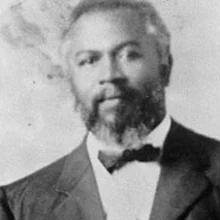
  2. 1906Los AngelesPortrait of William Seymour

    Pentecostals and charismatics — Azusa Street: Pentecostalism

    In an old building on Azusa Street, the Black preacher William Seymour leads a revival marked by the baptism in the Holy Spirit and speaking in tongues, where white and Black people pray together in the midst of segregation. Arising from the Holiness movement — itself a child of Methodism — it will reach the whole world within a generation. Its echo reaches Northern Europe and Britain from 1907; France will later receive British preachers.

  3. 1909Le Havre, Paris

    Pentecostals and charismatics — The first Pentecostal centres in France

    The mission opened in 1887 among the Bretons of Le Havre, in a Methodist, Baptist and Reformed setting, officially becomes a Pentecostal centre around Hélène Biolley, François-Marie Le Quéré, Jacques Chaumet and Félix Gallice. The same year, a Pentecostal centre is officially established in Paris around Michel Mast: some thirty members at first.

  4. 1921Nogent-sur-MarnePortrait of Ruben Saillens

    Anabaptists and Baptists — The Nogent Bible Institute

    Ruben Saillens, a Baptist pastor and preacher of the Réveil, opens a Bible institute where, for a century, pastors from almost every French evangelical family will be trained. Forty years before Vaux-sur-Seine, training is already the first common ground.

  5. 1930Le Havre, RouenPortrait of Douglas Scott

    Pentecostals and charismatics — Douglas Scott in France

    Having come to learn French before leaving for the Congo, the British preacher Douglas Scott is welcomed in Le Havre by Hélène Biolley, who runs the Ruban Bleu temperance café there. His ministry of evangelism and healing spurs the growth of French Pentecostalism: very soon some 800 people from all over France, including Protestant theologians, crowd into Le Havre.

  6. 1932-1933France

    Pentecostals and charismatics — The birth of the Assemblies of God of France

    The Assemblies of God organise: a first convention, a common confession of faith, a journal. Eight churches in 1933, some thirty in 1941 — today one of the main evangelical unions in France.

Side note: Topeka, 1901 (Kansas).

Online guide · timeline · 2026 edition7 / 49

  1. 1938France, the South

    Reformed — Reformed reunification — and the UNEPREF

    The French Reformed churches unite in a single church. Some of the churches of the South refuse a union without a binding confession of faith: they form an independent Evangelical Reformed union, today the UNEPREF.

  2. 1950-1952Lisieux, BrestPortrait of Clément Le Cossec

    Pentecostals and charismatics — The Gypsy revival: Vie et Lumière

    The first signs go back to 1950, in Lisieux, in A. Gichtenaere’s Assembly of God: after a healing experienced as a miracle, the first Gypsies are converted. In 1952, in Brest, the Breton pastor Clément Le Cossec sees a genuine revival arise among them; in November 1954, a thousand Gypsies gather there for baptisms on the shore. The mission is founded on 28 December 1957 under the name “La Délivrance”; its general assembly adopts the name Vie et Lumière (“Life and Light”) on 26 February 1961. A testimony by Wasso Ferret, cited by the Musée protestant, places a healing in Lisieux in 1951: both dates are found in the sources. (The term “Gypsy” follows the usage of the movement’s historical English-language publications.)

  3. 1957France

    Brethren and Free Evangelical Churches — A wave of church planting

    France Mission, then Perspectives, the CAEF — assemblies descended from the Open Brethren, organised as a union — and many ministries plant churches in towns with no evangelical witness. This milestone brings together several initiatives: France Mission, Perspectives and the CAEF each have their own history.

  4. 1960California, then France

    Pentecostals and charismatics — The charismatic renewal and the “Églises de la diversité”

    An Episcopalian priest in California announces to his parish that he has received the baptism in the Holy Spirit: the charismatic current spreads beyond the Pentecostal churches. In France it meets the churches born of migration — from the French Caribbean, Africa and Asia. The charismatic renewal and these migrations are nevertheless two distinct phenomena, contemporary but independent.

  5. 1965Vaux-sur-Seine

    shared structures — A shared faculty

    The Faculté libre de théologie évangélique (Free Faculty of Evangelical Theology) opens its doors and becomes a major stage in the shared training of Baptists, Free Evangelical Churches, Brethren and Pentecostals. This cooperation has precedents: the Nogent Bible Institute had already been interdenominational since 1921.

  6. 1973Leuenberg, Switzerland

    Lutherans and Reformed — The Leuenberg Agreement

    In the 16th century, disagreement over the Lord’s Supper had notably separated Luther and Zwingli. At Leuenberg, in 1973, the signatory churches affirm that agreement on the gospel makes it possible to move beyond the old doctrinal condemnations. This communion makes possible mutual welcome at the Lord’s Supper and the recognition of ministries.

    An agreement of communion is not yet a merger. Each church keeps its history and its organisation. The process nevertheless opens the way to institutional unions: the UEPAL, in Alsace-Moselle, in 2006, and the EPUdF, in 2013, are two distinct expressions of it. Not all Protestant families are signatories of the Agreement.

    Further reading: Musée protestant — The Leuenberg Agreement (in French) · Musée protestant — The Lutheran and Reformed union in France (in French).

    The Lutherans · The Reformed

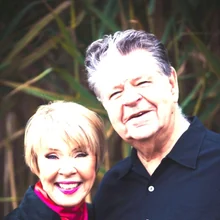
  7. 1994Toronto, CanadaPortrait of John and Carol Arnott

    Pentecostals and charismatics — The “Toronto Blessing” and Catch The Fire

    Meetings led by Randy Clark at the Toronto Airport Vineyard open, in 1994, a wave of renewal that draws visitors from all over the world. In December 1995 the Association of Vineyard Churches ends this church’s affiliation. It becomes Toronto Airport Christian Fellowship in 1996, then Catch The Fire Toronto in 2010-2011, at the head of an international neo-charismatic network — present in France, in Lyon, since 2017. A spiritual influence can therefore continue after an institutional tie is broken: Catch The Fire is not a branch of the Vineyard, which is not answerable for its development after 1995.

Online guide · timeline · 2026 edition8 / 49

  1. 2010Paris

    shared structures — The founding of the CNEF

    Founded in June 2010, the Conseil national des évangéliques de France (National Council of French Evangelicals) brings together more than 70% of evangelical Protestant churches — Baptists, Free Evangelical Churches, ADD, CAEF, Methodists, Evangelical Reformed, Vie et Lumière… A historic first.

  2. 2013Lyon

    Reformed — The birth of the EPUdF

    The Reformed Church of France and the Evangelical Lutheran Church of France unite at the synod of Lyon; the UEPAL, in Alsace-Moselle, remains distinct. The Evangelical Reformed (UNEPREF), for their part, remain a separate union, a member of the CNEF.

  3. TodayFrance

    shared structures — A growing landscape

    In August 2026 the CNEF reports 2,530 places of worship, 36 member unions and 173 member associations, and a growing number of new church plants. Eight centuries after Waldo, the question is no longer “Will we survive?” but “Will we be able to remain brothers and sisters?”

Online guide · timeline · 2026 edition9 / 49

What came before us

1st century

“We are all heirs of those who went before us; each in turn receives, examines, reforms and passes on.”

What lies ahead

Today

Eight centuries after Waldo, the question is no longer “Will we survive?” but “Will we be able to remain brothers and sisters?”

End of the timeline

Sources and key references

Bibliography of the journey

  • Sébastien Fath, Une autre manière d’être chrétien en France. Socio-histoire de l’implantation baptiste (1810-1950) [Another way of being Christian in France: a social history of the establishment of Baptist churches in France, 1810–1950], Labor et Fides.
  • Sébastien Fath and Jean-Paul Willaime (eds.), La nouvelle France protestante. Essor et recomposition au XXIe siècle [The new Protestant France: growth and reconfiguration in the 21st century], Labor et Fides.
  • André Encrevé (ed.), Les protestants [The Protestants] (Dictionnaire du monde religieux dans la France contemporaine), Beauchesne.
  • Patrick Cabanel, Histoire des protestants en France, XVIe-XXIe siècle [A history of Protestants in France, 16th–21st century], Fayard.
  • Jean Baubérot, Histoire du protestantisme [A history of Protestantism], PUF, “Que sais-je ?”.
  • Musée virtuel du protestantisme (Virtual Museum of Protestantism) — thematic and biographical entries (in French).

See all the sources of the journey

Further reading