The Adventists

Comparative overview

Discover the origins of the Seventh-day Adventists, Millerism, Ellen White and their distinctive convictions.

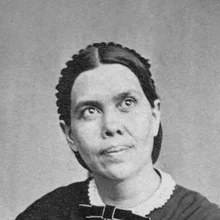
Ellen G. White

The Seventh-day Adventists — a neighbouring branch, born of Millerism

  • Adventistsunion, 1863
  • Ellen Whitefrom 1845
  • MillerismMiller, 1844
  • Second Great AwakeningUSA, 1790–1840
  • Reformation1517
After the Great Disappointment of 1844, some of the Millerites conclude that the date marked not the return of Christ but a stage in his heavenly work. With Joseph Bates, James White, Ellen White and other pioneers, this group organises itself and adopts the seventh-day rest: the Seventh-day Adventist Church is officially organised in 1863. Trinitarian, it has been present in France since the end of the 19th century; a member of the Protestant Federation of France, it does not belong to the CNEF. Its position in relation to the evangelical world is classified in different ways and debated: it is close to evangelicals in its biblical piety and its evangelism, while standing apart through the Sabbath and the place it gives to the writings of Ellen White. Adventists describe themselves as Protestant Christians.

Further background

Two visible markers

The Sabbath is kept from Friday evening to Saturday evening, and the expectation of Christ’s return strongly shapes preaching, spirituality and the very name of the movement.

Faith, health and service

Adventism combines evangelism, education, health, humanitarian aid and the defence of religious freedom. These works explain a social presence wider than its local congregations.

Position in the French landscape

The Adventist Church confesses the Trinity and places itself within Protestantism; it is a member of the FPF, but does not belong to the CNEF. The writings of Ellen White keep a particular place within it.

Source of this supplement: Adventist Union — adventiste.org and ufbl.adventiste.org

This guide situates the traditions according to their Trinitarian confession — Nicaea-Constantinople (325–381) — and their relationship to Scripture. These doctrinal markers pass no judgement on the sincerity, piety or worth of individuals.

Online guide · church families and key points · 2026 edition38 / 49

Sources and key references

Bibliography of the journey

  • Sébastien Fath, Une autre manière d’être chrétien en France. Socio-histoire de l’implantation baptiste (1810-1950) [Another way of being Christian in France: a social history of the establishment of Baptist churches in France, 1810–1950], Labor et Fides.
  • Sébastien Fath and Jean-Paul Willaime (eds.), La nouvelle France protestante. Essor et recomposition au XXIe siècle [The new Protestant France: growth and reconfiguration in the 21st century], Labor et Fides.
  • André Encrevé (ed.), Les protestants [The Protestants] (Dictionnaire du monde religieux dans la France contemporaine), Beauchesne.
  • Patrick Cabanel, Histoire des protestants en France, XVIe-XXIe siècle [A history of Protestants in France, 16th–21st century], Fayard.
  • Jean Baubérot, Histoire du protestantisme [A history of Protestantism], PUF, “Que sais-je ?”.
  • Musée virtuel du protestantisme (Virtual Museum of Protestantism) — thematic and biographical entries (in French).

See all the sources of the journey

Further reading