Read each diagram from left to right, tracing the present-day church union (shown in colour) back to its roots in the Reformation. The dates indicate when each link in the chain emerged.
The Baptists — FEEBF, AEEBLF and some of the independent churches
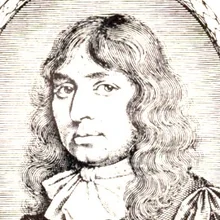
Attribution not confirmed; image used for illustration. Sources
Baptist unionsFrance, 19th–20th c.‹
Nomain, Nord1810–1820‹
English BaptistsAmsterdam, 1609‹
Separatist PuritansEngland, c. 1580‹
Anglicanism1534‹
Reformation1517
The Baptist movement first grew out of English Separatism: in Amsterdam, in 1609, John Smyth and his group of Puritan refugees adopted believers’ baptism, then drew closer to the Mennonites. A direct Anabaptist lineage is not established; it is more accurate to speak of exchanges, convergences and a doctrinal influence that came after the first baptisms. Two streams, moreover, arose separately: the “General” Baptists, descended from Helwys’s group, which returned to England in 1612, and the “Particular” Baptists, who appeared around 1640 in a Separatist church in London. The origins of today’s Baptist churches therefore cannot all be traced to Smyth and Helwys. The theology remains largely Reformed, while the ecclesiology becomes congregationalist: each local church is autonomous.
In France, everything begins with a revival in the Nord region around 1810; the first Baptist church was constituted at Nomain around 1820. The movement grew in the 19th century with the support of American missions, came through the administrative persecutions of the Second Empire, and organised itself into several unions — among them the Fédération des Églises évangéliques baptistes de France (FEEBF, Federation of Evangelical Baptist Churches of France), a member of both the FPF and the CNEF.
Key point · the Baptists have their origins in English Separatism. Their contacts with the Mennonites and their closeness to the model of a church of professing believers are not enough to establish a direct Anabaptist lineage.
Further background
What characterises them
Baptism follows a personal profession of faith. Church membership therefore rests on a chosen commitment, not on birth alone.
Organisation and diversity
Each local church is autonomous. Federations such as the FEEBF or the AEEBLF pool training, mission and mutual support, without forming a single Baptist denomination.
A worldwide family
The Baptist movement numbers more than 50 million members worldwide. In France, the first congregations go back about two centuries; the Baptist Federation celebrated its centenary in 2022.
Sébastien Fath, Une autre manière d’être chrétien en France. Socio-histoire de l’implantation baptiste (1810-1950) [Another way of being Christian in France: a social history of the establishment of Baptist churches in France, 1810–1950], Labor et Fides.
Sébastien Fath and Jean-Paul Willaime (eds.), La nouvelle France protestante. Essor et recomposition au XXIe siècle [The new Protestant France: growth and reconfiguration in the 21st century], Labor et Fides.
André Encrevé (ed.), Les protestants [The Protestants] (Dictionnaire du monde religieux dans la France contemporaine), Beauchesne.
Patrick Cabanel, Histoire des protestants en France, XVIe-XXIe siècle [A history of Protestants in France, 16th–21st century], Fayard.
Jean Baubérot, Histoire du protestantisme [A history of Protestantism], PUF, “Que sais-je ?”.
Musée virtuel du protestantisme (Virtual Museum of Protestantism) — thematic and biographical entries (in French).