The Mennonites

Families of churches

The Mennonites: Anabaptist origins, Menno Simons, believers’ baptism, non-violence and their presence in France.

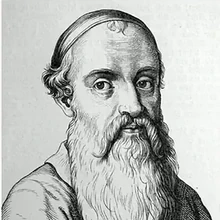
Menno Simons — Later depiction: no contemporary portrait is known

The Mennonites — AEEMF, one of the oldest traditions of believers’ churches

Later depiction: no contemporary portrait is known. Sources

  • AEEMFAlsace, eastern France, today
  • Refuge in Alsace16th–17th c.
  • Menno SimonsNetherlands, 1536
  • AnabaptistsZurich, 1525
  • Reformation1517
In the 16th century, the Anabaptists suffer severe persecution. Menno Simons, a former Catholic priest from Friesland who became an Anabaptist leader, consolidates a peaceful and lasting stream: the Mennonites. He does not, however, organise the whole of Anabaptism, which remains diverse. Refugee families settle from the 16th and 17th centuries in Alsace and in the principalities of the East; it is in Alsace that Jakob Ammann’s schism breaks out in 1693, the origin of the Amish.
The Mennonite churches of France (AEEMF) carry on one of the oldest believers’ church traditions within Protestantism: believers’ baptism, non-violence, simplicity and service of one’s neighbour. In the directories consulted on 28 October 2026, the AEEMF appears among the unions of the CNEF (in French) and as a member of the FPF in a probationary period (in French). These affiliations may change; the directories make it possible to check their status.

Further background

Following Jesus in practice

The Mennonite tradition insists on the life of discipleship: confessed faith, believers’ baptism, a community of brothers and sisters, service of one’s neighbour and consistency between belief and conduct.

A peace church

Non-violence, reconciliation and the historic refusal of oaths and of religious coercion give this family a distinctive place within Protestantism.

Close to the Baptists, but distinct

Baptists and Mennonites share the model of the church of professing believers and believers’ baptism. Their histories and certain ethical emphases nevertheless remain different.

Source of this supplement: AEEMF — Mennonite confession of faith, editions-mennonites.fr

Online guide · church families and key points · 2026 edition31 / 49

Sources and key references

Bibliography of the journey

  • Sébastien Fath, Une autre manière d’être chrétien en France. Socio-histoire de l’implantation baptiste (1810-1950) [Another way of being Christian in France: a social history of the establishment of Baptist churches in France, 1810–1950], Labor et Fides.
  • Sébastien Fath and Jean-Paul Willaime (eds.), La nouvelle France protestante. Essor et recomposition au XXIe siècle [The new Protestant France: growth and reconfiguration in the 21st century], Labor et Fides.
  • André Encrevé (ed.), Les protestants [The Protestants] (Dictionnaire du monde religieux dans la France contemporaine), Beauchesne.
  • Patrick Cabanel, Histoire des protestants en France, XVIe-XXIe siècle [A history of Protestants in France, 16th–21st century], Fayard.
  • Jean Baubérot, Histoire du protestantisme [A history of Protestantism], PUF, “Que sais-je ?”.
  • Musée virtuel du protestantisme (Virtual Museum of Protestantism) — thematic and biographical entries (in French).

See all the sources of the journey