The Pentecostals

Families of churches

An overview of Pentecostalism, Azusa Street, the Assemblies of God, Vie et Lumière and the charismatic movements.

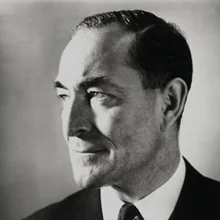
Douglas Scott

The Pentecostals — ADD, Vie et Lumière, the charismatic movement

  • ADD France1932–1933
  • French centresLe Havre and Paris, 1909; growth with Scott, 1930
  • International centresTopeka 1901, Azusa 1906; Great Britain from 1907
  • Holiness movement19th c.
  • Methodism1738
  • Reformation1517
After earlier beginnings, notably in Topeka in 1901, Azusa Street becomes in 1906 the great international centre of Pentecostalism — the Los Angeles revival around the African American preacher William J. Seymour — in the wake of the Holiness movement that grew out of Methodism: to salvation by faith is added the experience of baptism in the Holy Spirit, accompanied by speaking in tongues and prayer for the sick. The movement reaches Northern Europe and Great Britain from 1907 (Oslo, Sunderland), in a British Christianity marked by the Welsh Revival of 1904–1905; visitors and then British preachers (Boddy in 1909, Douglas Scott in 1927 and 1930) support the French centres.
Pentecostal centres are attested in Paris and Le Havre in 1909, notably at the Ruban Bleu (Blue Ribbon) mission; the Briton Douglas Scott stays there in 1927, and his return to Le Havre in January 1930 gives the movement a fresh impetus. The Assemblies of God of France (ADD) are organised in 1932–1933; today they are among the main evangelical unions in the country. The revival among Travellers, born in Lisieux in 1950 and then in Brest in 1952 around Clément Le Cossec, gives rise to the Vie et Lumière (“Life and Light”) mission (founded in 1957, under this name since 1961). From the 1960s and 1970s onwards, the charismatic movement spreads the same experience across all the families of churches.
Key point · Topeka (1901), Azusa Street (1906) and the French developments are distinct stages. The Methodist heritage and the Holiness movement are major influences, among others. Worldwide estimates vary widely according to the scope adopted — Pentecostals, charismatics or a wider whole — and should always be read together with their definition and their source.

Further background

Pentecostal emphasis

To conversion and the authority of the Bible are added the expectation of baptism in the Holy Spirit, the present-day exercise of spiritual gifts and prayer for the sick.

Several networks, one movement

The Assemblies of God and Vie et Lumière share a Pentecostal origin, but each has its own history, constituency and structures.

Born within existing Protestant circles

The first centres of 1909, in Le Havre (the Ruban Bleu mission) and in Paris, arise within Protestant circles that were already established; Protestants from other churches then join the movement.

From one movement to every family

From the 1960s onwards, the charismatic renewal spreads certain Pentecostal practices within Catholic, Reformed, Baptist and independent churches.

Sources of this supplement: ADDF — addfrance.fr; Fabio Morin (National Archives of the Assemblies of God of France), correspondence with the author of this guide (points that cannot be verified here); Kyu-Hyung Cho, The Move to Independence from Anglican Leadership: An Examination of the Relationship between Alexander Alfred Boddy and the Early Leaders of the British Pentecostal Denominations (1907-1930), doctoral thesis, University of Birmingham, 2009, p. 2; Confidence (Sunderland), October 1909, sections “France”, “Paris”, “Havre”; Darrin J. Rodgers, “This Week in AG History”, AG News, 29 June 2017 (after R. K. Ware, Pentecostal Evangel, 30 June 1974); Marc Rizzolio, Formation de caractère et communauté de foi chez Stanley Hauerwas, thesis, University of Strasbourg, 2020, pp. 85–87 (in French); Musée protestant, La Mission évangélique tzigane de France (founded 28 December 1957, name adopted 26 February 1961) and Clément Le Cossec (1921-2001) (a gathering of more than a thousand people and twenty baptisms in Brest in November 1954) (in French); clement-le-cossec.org (ministry in Brest from 1952). For Lisieux, the date of 1950 follows Fabio Morin’s chronology; a testimony quoted by the Musée protestant gives 1951.

Online guide · church families and key points · 2026 edition30 / 49

Sources and key references

Bibliography of the journey

  • Sébastien Fath, Une autre manière d’être chrétien en France. Socio-histoire de l’implantation baptiste (1810-1950) [Another way of being Christian in France: a social history of the establishment of Baptist churches in France, 1810–1950], Labor et Fides.
  • Sébastien Fath and Jean-Paul Willaime (eds.), La nouvelle France protestante. Essor et recomposition au XXIe siècle [The new Protestant France: growth and reconfiguration in the 21st century], Labor et Fides.
  • André Encrevé (ed.), Les protestants [The Protestants] (Dictionnaire du monde religieux dans la France contemporaine), Beauchesne.
  • Patrick Cabanel, Histoire des protestants en France, XVIe-XXIe siècle [A history of Protestants in France, 16th–21st century], Fayard.
  • Jean Baubérot, Histoire du protestantisme [A history of Protestantism], PUF, “Que sais-je ?”.
  • Musée virtuel du protestantisme (Virtual Museum of Protestantism) — thematic and biographical entries (in French).

See all the sources of the journey