The Free Evangelical Churches (UEEL)

Families of churches

Discover the history of the Free Evangelical Churches, their link with the revivals and the Union of Free Evangelical Churches (UEEL).

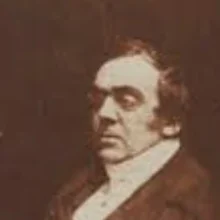
Frédéric Monod

The Free Evangelical Churches — UEEL, Union des Églises évangéliques libres (Union of Free Evangelical Churches)

  • UEELParis, 1849
  • Geneva Réveil1817
  • Reformed churchesFrance, 1555
  • Calvin, Geneva1536
  • Reformation1517
The “libristes”, as the Free Evangelical Churches are known in French, grew directly out of the Geneva Réveil (the 19th-century revival). In 1848–1849, Pastor Frédéric Monod and Count Agénor de Gasparin refuse to let the Reformed Church remain a “multitudinist” church — open to the whole population — with no binding confession of faith. They found a union of churches of professing believers, independent of the State: half a century before the law of 1905 separating Church and State.
Reformed in theology and congregationalist in their way of working, the Free Evangelical Churches represent the middle way of French Protestantism: fully evangelical, fully heirs of the Huguenots. Today the UEEL is a member of the FPF (Protestant Federation of France) and a full member of the CNEF (National Council of French Evangelicals) since 2019.

Further background

Why “free”?

The Union is formed in 1849 to affirm the churches’ independence from the State. The word “free” is added to its name only in 1883. It also expresses freedom on secondary questions, within the framework of a common faith.

Churches of professing believers

The congregation brings together people who personally profess their faith in Jesus Christ. Local churches subscribe to a confession of faith and support one another as members of the Union.

Place in Protestantism today

The UEEL remains a member of the Protestant Federation of France. An associate member of the CNEF from 2011 to 2019, it becomes a full member after the vote of its synod at Poitiers in 2019; the CNEF lists it among its member unions.

Source of this supplement: UEEL — ueel.org

Online guide · church families and key points · 2026 edition27 / 49

Sources and key references

Bibliography of the journey

  • Sébastien Fath, Une autre manière d’être chrétien en France. Socio-histoire de l’implantation baptiste (1810-1950) [Another way of being Christian in France: a social history of the establishment of Baptist churches in France, 1810–1950], Labor et Fides.
  • Sébastien Fath and Jean-Paul Willaime (eds.), La nouvelle France protestante. Essor et recomposition au XXIe siècle [The new Protestant France: growth and reconfiguration in the 21st century], Labor et Fides.
  • André Encrevé (ed.), Les protestants [The Protestants] (Dictionnaire du monde religieux dans la France contemporaine), Beauchesne.
  • Patrick Cabanel, Histoire des protestants en France, XVIe-XXIe siècle [A history of Protestants in France, 16th–21st century], Fayard.
  • Jean Baubérot, Histoire du protestantisme [A history of Protestantism], PUF, “Que sais-je ?”.
  • Musée virtuel du protestantisme (Virtual Museum of Protestantism) — thematic and biographical entries (in French).

See all the sources of the journey