Portrait: Marie Durand
Portrait · the Desert
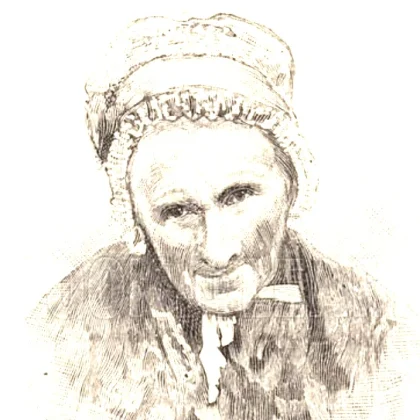
Marie Durand
1711 – 1776 · Aigues-Mortes · the resistance of the Desert
Image of unknown origin, used for illustration; no contemporary portrait has been found. Sources
- Born1711, Le Bouschet-de-Pranles (Vivarais)
- Where she was imprisonedThe Tower of Constance, Aigues-Mortes: thirty-eight years
- What she left behindLetters, and a word carved in stone — Résister (“Resist”) — which tradition attributes to her
Marie Durand founded nothing, wrote nothing for the public and never preached. She is the sister of Pierre Durand, a clandestine pastor of the Desert, hanged in Montpellier in 1732. Arrested in 1730, at the age of nineteen, for no other crime than belonging to this family, she is imprisoned in the Tower of Constance at Aigues-Mortes, with other Protestant women. A single act of abjuration would have set her free. She remains there for thirty-eight years.
In the upper room of the tower, the word Register — “resist” in Occitan — can still be read, carved on the rim of the well; tradition attributes it to Marie Durand. Her surviving letters show her organising the life of the prisoners, comforting the oldest, pleading with the authorities, thanking the churches of Amsterdam that send help, and praying. She is released in 1768 by the Prince de Beauvau, governor of Languedoc, deeply shaken by what he discovers.
She returns to Le Bouschet, to her plundered house, and dies there in 1776, eleven years before the Edict of Tolerance that will give Protestants a legal existence again. Her birthplace is today a museum of Protestantism in the Vivarais.
Why she matters for today’s churches
This portrait is devoted to a figure of faithfulness. Among founders, reformers and preachers, Marie Durand is a reminder that the faith of the families of churches has also been upheld by believers with no role and no title, who had nothing to offer but their constancy. The Reformed of the Desert, and all the persecuted churches of today, see themselves in her.
Be faithful even unto death, and I will give you the crown of life.
(BSB) — the verse that French Protestants have associated with her faithfulness
Online guide · church families and key points · 2026 edition