Portrait: Nikolaus von Zinzendorf
Portrait · revival
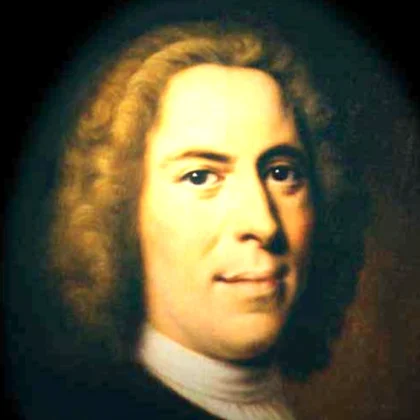
Nikolaus von Zinzendorf
1700 – 1760 · Herrnhut · the Moravian revival
- Born1700, Dresden (Saxony)
- Where he was activeHerrnhut, then Europe, the Caribbean and America
- What he left behindThe Moravian Church, worldwide mission and the “religion of the heart”
A Saxon count brought up in Pietism — Spener was his godfather, Francke his teacher at Halle — Zinzendorf welcomes refugees from Moravia onto his estates in 1722, heirs of Jan Hus’s Unity of the Brethren. The village they found is called Herrnhut, “the Lord’s watch”. On 13 August 1727, during a celebration of the Lord’s Supper, the divided community experiences a revival that unites it; a round-the-clock prayer chain begins that will last more than a hundred years.
From 1732, Herrnhut sends its first missionaries to the slaves of the Caribbean, then to Greenland, Africa and North America: for the first time, an entire Protestant church becomes a missionary church. Zinzendorf himself, who became a Moravian bishop and was banished from Saxony for ten years, travels ceaselessly and founds Bethlehem in Pennsylvania. His theology is a theology of the heart: a personal and tender relationship with the crucified Christ. “I have but one passion: it is He, He alone.”
It is on board a ship bound for Georgia, and then in London with the Moravian Peter Böhler, that John Wesley meets the Moravians and their assurance of salvation: his Aldersgate conversion (May 1738) follows from it, and the next summer he travels to Herrnhut. The Moravians have also left a small book read every day around the world since 1731, the Losungen, or “Daily Texts”.
Why he matters for today’s churches
Zinzendorf is the link between Hus and Wesley, and one of the great pioneers of modern Protestant mission. Personal conversion, heartfelt piety, persevering prayer and sending out ordinary believers as missionaries: everything that evangelical churches hold to be essential was lived out at Herrnhut before it spread.
But He was pierced for our transgressions, He was crushed for our iniquities; the punishment that brought us peace was upon Him, and by His stripes we are healed.
(BSB) — the crucified Christ was the centre of his preaching and his hymns
Online guide · church families and key points · 2026 edition