Portrait: Robert Haldane
Portrait · revival
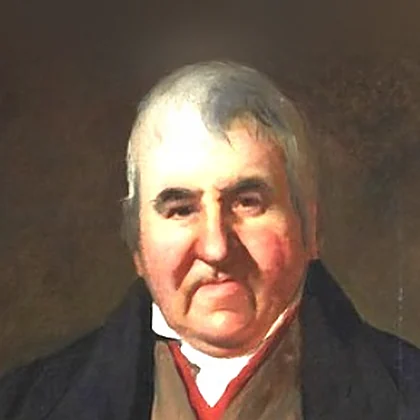
Robert Haldane
1764 – 1842 · Geneva · the Geneva Réveil
- Born1764, London, into a Scottish family
- Where he was activeScotland, then Geneva (1816–1817) and Montauban
- What he left behindThe Geneva Réveil and a generation of pastors who brought revival to France
A midshipman in the Royal Navy, notably from 1780 to 1783, and later a wealthy Scottish landowner, Haldane is converted around 1795 and sells his Airthrey estate to fund the evangelisation of Scotland with his brother James Alexander, who had served with the British East India Company: schools for preachers, places of worship, the sending out of evangelists. He becomes one of the architects of the Scottish evangelical renewal, outside the established Church.
In the autumn of 1816, he arrives in Geneva, Calvin’s city, and finds an Academy where the divinity of Christ and salvation by grace are scarcely taught any longer. He opens his drawing room to the theology students and explains the Epistle to the Romans to them, evening after evening. Around his table are Merle d’Aubigné, the future historian of the Reformation, Frédéric Monod, Louis Gaussen, Henri Pyt and Ami Bost: the generation of the Réveil (the 19th-century revival). He continues his work at Montauban, alongside the Protestant faculty, until 1819.
His commentary on the Epistle to the Romans, drawn from these evenings, will remain a classic. The men awakened through him found Bible and missionary societies and free churches — in Geneva in 1849, and in France the same year with Frédéric Monod — and restore French Protestantism’s evangelical vigour.
Why he matters for today’s churches
Haldane shows that a revival can be born of a simple Bible study pursued in earnest. The Free Evangelical Churches, part of the Evangelical Reformed, the 19th-century evangelistic societies and, through them, many of today’s evangelical churches descend from that Geneva drawing room where Romans was read.
I am not ashamed of the gospel, because it is the power of God for salvation to everyone who believes, first to the Jew, then to the Greek.
(BSB) — the Epistle to the Romans was the text of his Geneva evenings
Online guide · church families and key points · 2026 edition